How to Move a Washing Machine or Dishwasher
Step by step, from draining it the day before to the first test wash at the new house, using the makers’ own instructions.

To move a washing machine, drain it, refit the transit bolts that lock the drum, secure the hoses and keep it upright. A dishwasher is the same, minus the bolts. Both are heavy, so move one with two people and a sack truck, as the makers and the HSE advise. Moving house with Wolves Removals? Have it disconnected and drained, and our crew does the carrying. This guide follows the UK manuals and support pages of seven appliance makers, plus HSE advice on lifting.
The quick answer
1. First
Drain it
Some water always stays inside
2. Washing machines
Bolts in
Refit the transit bolts
3. Both machines
Upright
No maker we read says to lay it down
4. Moving it
Two people
and a sack truck
Moving a dishwasher? It has no transit bolts, and its own steps are below.
Sources: UK manuals from seven appliance makers, and the HSE, checked October 2026.
How do you prepare a washing machine for moving?
Disconnect it and drain the water that’s left, then lock the drum with its transit bolts. Do it the day before, with a bowl and old towels ready.
Empty and spin.
Take everything out of the drum. Run a rinse and spin with it empty, so most of the water is pumped out.
Water off, plug out.
Turn off the tap on the water supply, then unplug the machine at the wall.
Disconnect the hoses.
Undo the inlet hose from the tap and the drain hose from the waste pipe. Hold both over the bowl: water will run out.
Drain the rest.
Open the filter cover, usually at the bottom front. Drain through the emergency hose if yours has one, or ease the pump filter out slowly over the bowl. Some water always stays in the pump and hoses.
Fit the transit bolts.
Screw them back into the holes at the back. That locks the drum for the journey.
Secure the loose parts.
Fix the hoses and cable to the back so nothing trails or gets trapped. If it is going in a van, wrap it in a moving blanket or an old duvet to protect the panels.
Cold weather?
If the machine will sit in a cold van or a storage container, drain it as fully as you can. Makers warn that frozen water can split hoses and damage the pump.
Do you need transit bolts to move a washing machine?
Yes. Every maker we checked says to refit the transit bolts before the machine moves again, and that includes a house move. Washer dryers have them too.
The drum hangs on its suspension. Without the bolts it can move about on every bump, and the makers say the machine can be damaged in transit. Run it with the bolts still in, though, and it will shake and bang, and can damage itself. One maker says that also voids the warranty.
Seen from behind: transit bolts (white), with the water inlet and the cable. Positions vary by model.
Transit bolts at a glance
What they do: lock the drum so it can’t swing on its suspension in transit.
How many: usually three to five, screwed into the back.
Where to keep them: with the manual, once they’re out.
Lost them? Buy the replacement kit for your exact model before moving day.
Moved in? Take them out before the first wash, and fit the plastic caps.
Do dishwashers have transit bolts?
No. None of the dishwasher manuals we read has them. To move a dishwasher, empty it, secure the loose parts and keep it upright.
Empty it.
Take out the plates, cutlery and anything loose, and secure the baskets.
Disconnect it.
Unplug it and turn off the water. Undo the supply and drain hoses over a bowl, and let the water left inside run out.
Secure it.
Fix the hoses and cable to the machine so nothing trails, then wrap it in a moving blanket or an old duvet.
Don’t lift a dishwasher by its door or front panel. The makers say it’s too heavy to move on your own.
Can you lay a washing machine or dishwasher on its side to transport it?
No. Keep both upright: none of the makers we read says to lay either one down. One says that if a washing machine tilts past 40 degrees, water left inside can leak out. Dishwasher makers say to keep it upright so water left inside can’t run into the controls.
Upright
Yes
The makers’ advice for both machines.
On its side
Not advised
No maker we read allows it. Water left inside can leak out or reach the controls.
On its back
Not advised
Not for the journey. A short tilt by two people, to reach the feet, is the only exception.
Whatever carries it needs room for it to stand up, and straps to stop it tipping. In a car, that means standing upright and strapped in; if it won’t fit standing up, use a van.
How do you move a washing machine to clean behind it without damaging the floor?
Turn off the tap and unplug the machine first, because the hoses and cable only reach so far. Then ease it out with two people, a little at a time. If it sits under a worktop, pull it straight out so the top doesn’t catch the worktop edge. Don’t move it by the door or lift it by the top: the makers warn against both.
Protect the floor before you start. Lay a sheet of hardboard or thick cardboard in front of it. With two people, tilt it back slightly to get the front feet onto the sheet, then ease it out so the feet slide on the board, not the floor. Pull it straight towards you rather than twisting it, which drags the feet sideways across wood, vinyl or tiles.
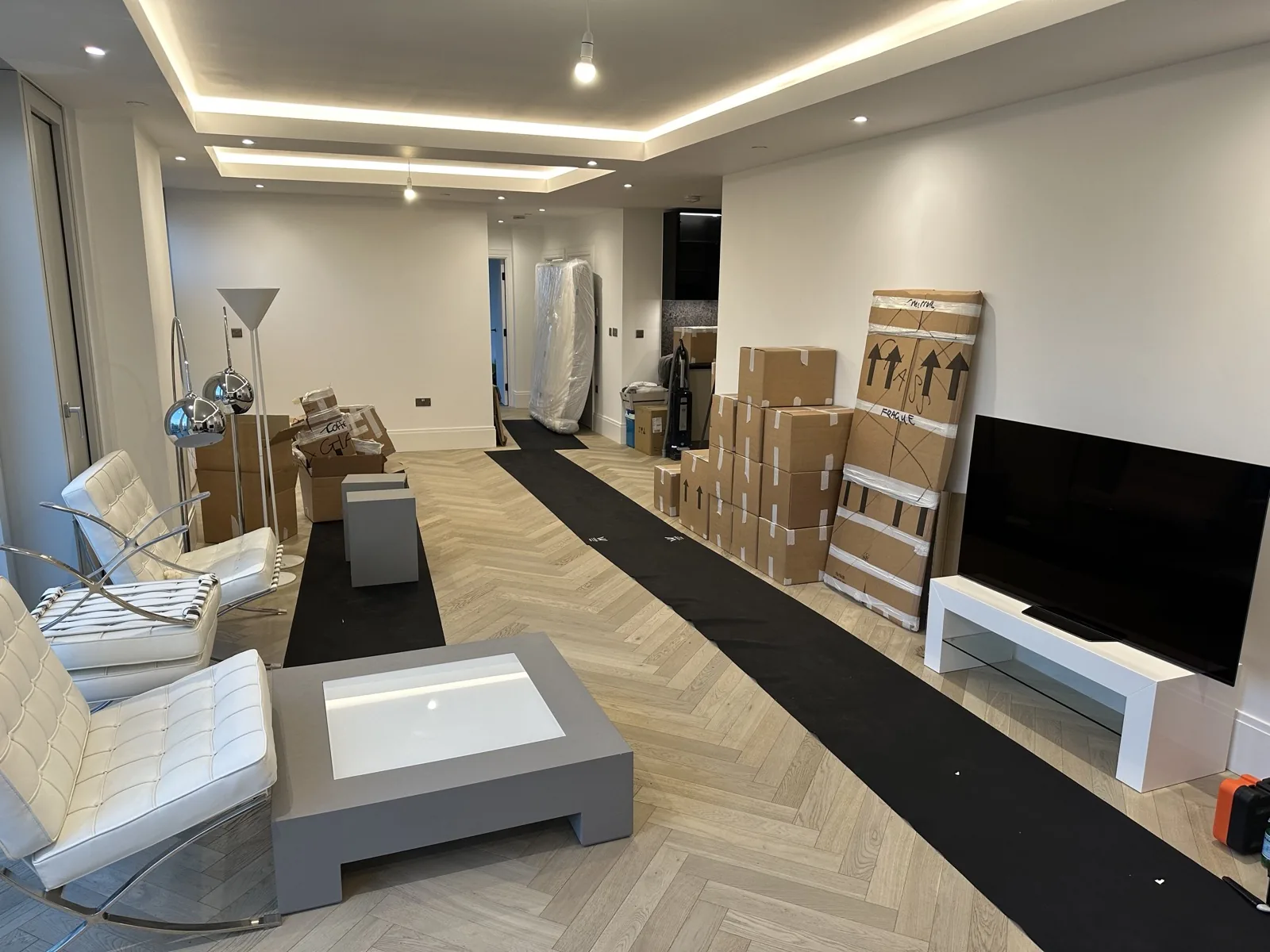
When you push it back, check the hoses aren’t kinked or trapped behind it. Then check it’s still level.
Can you move a washing machine on your own?
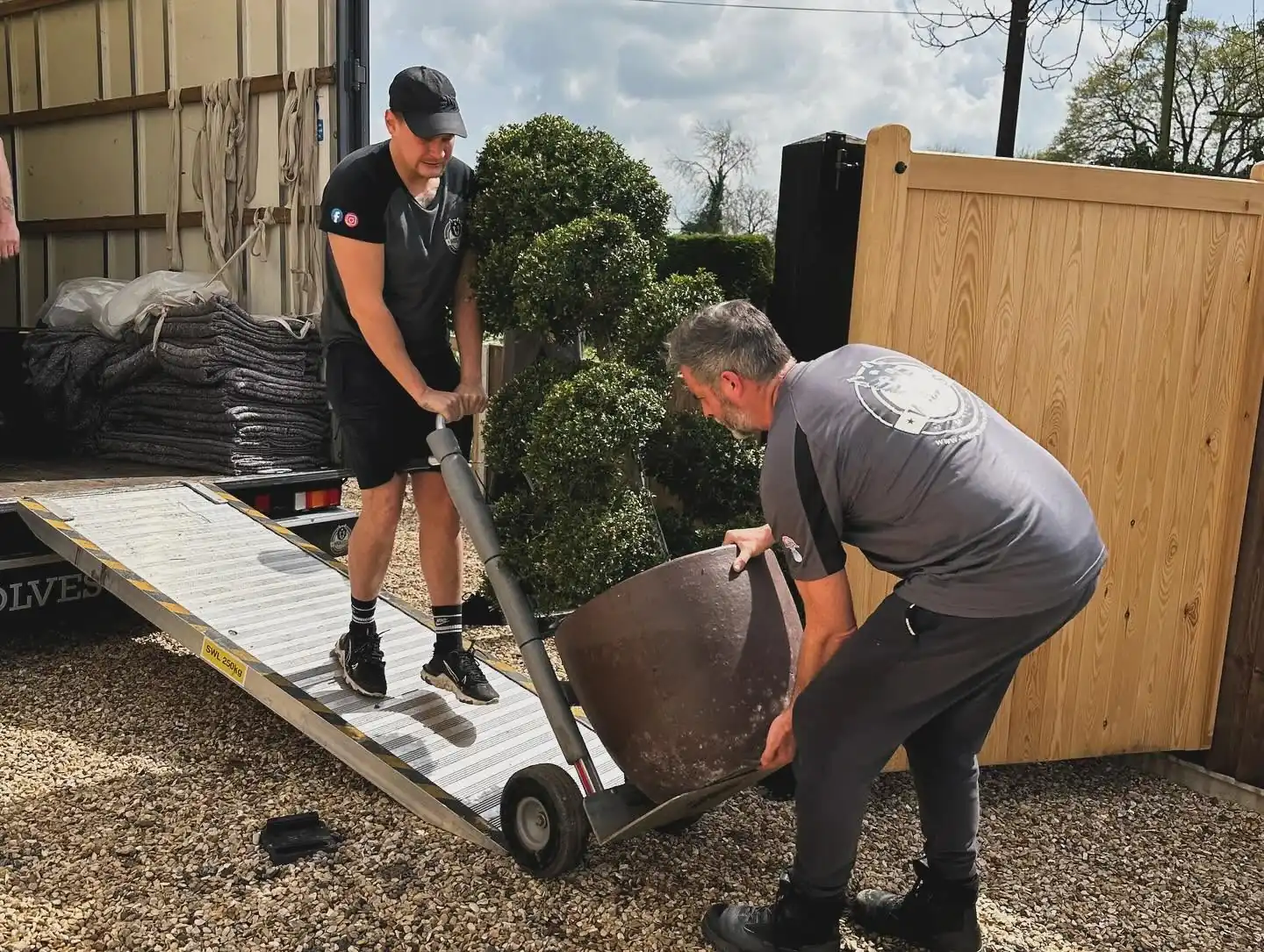
Not safely. The 60cm washing machines we checked weigh 55 to 95kg on the makers’ spec sheets and manuals, and full-size dishwashers 32 to 55kg. That is well beyond one person. To move one, two people tip it back onto a sack truck, strap it on and wheel it, rather than carrying it by hand.
Washing machine
55–95 kg
60cm freestanding models, makers’ figures
Dishwasher
32–55 kg
Full-size 60cm models, makers’ figures
HSE highest guideline (men)
25 kg
One person, load held close at waist height. Not a safe limit.
Sources: weights from makers’ UK spec sheets and manuals, checked October 2026; HSE leaflet INDG143.
The HSE’s lifting guidelines (PDF) go no higher than 25kg for men and 16kg for women, and only with the load held close at waist height. They are not safe limits. The HSE suggests a sack truck or trolley where you can, because it can greatly reduce the effort of moving a load along the floor.
In new homes in England, the building regulations (Approved Document M, PDF) set a clear opening of at least 750mm for doors to the kitchen and living rooms on the entrance floor, so a 60cm machine should get through. The clear opening is narrower than the door itself, though, and older homes can be tighter. Measure the tightest door before moving day.
What do you do with a washing machine at the new house?
Take the transit bolts out before anything else. Then connect and level the machine, or have a plumber or competent installer do it, and run a short empty wash to check for leaks.
Bolts out.
Remove the transit bolts and push the plastic caps into the holes. Keep the bolts with the manual for next time.
New hoses.
Several makers say not to reuse old inlet hoses, so fit new ones. Set the drain hose at the height your manual gives.
Check for a shut-off valve.
The water fittings regulations say a home’s water system needs enough servicing valves to shut off the water when a fitting is maintained or replaced. If there isn’t one for the machine, that’s a plumber’s job.
Level it.
Adjust the feet with a spirit level on top, then tighten the lock nuts.
Plug it in.
Use a wall socket, not an extension lead. Electrical Safety First says these machines draw a lot of power.
Test run.
If it got very cold on the way, let it reach room temperature first. Then run a short cycle with nothing in it and check underneath for drips.
How do you take out an integrated dishwasher?
Turn off the power and water, undo the hoses and the screws that hold it to the units, remove the kickboard and slide it out slowly. An integrated dishwasher is screwed into the kitchen units, with a cupboard door fixed to its front. In order:
Turn it off.
Unplug it and turn off the water. Undo the drain and supply hoses.
Free it.
Remove the screws holding it to the kitchen units (your manual shows where). Take off the kickboard (plinth) below it.
Ease it out.
Slide it out slowly, feeding the hoses through behind it. Bag and label the screws and brackets.
Measure the gap in the new kitchen weeks before the move. An integrated dishwasher is fixed to its units, so it needs a space the same size.
Do removal companies disconnect washing machines?
Wolves Removals crews move them, but don’t disconnect or connect them. On a house move, our crews carry the machine, protect it, secure it in the van and put it where you want it. They don’t do plumbing or electrical work. Have it disconnected and drained before moving day, and book a plumber or competent installer at the other end: Electrical Safety First’s advice is to have it fitted by one.
On a house move, you don’t need a separate washing machine moving service. Tell us about it at the survey, and the time is planned and priced into your written quote for house removals. Moving a fridge as well? Our guide to moving a fridge freezer covers the wait before you switch it on.
What if you’re replacing your washing machine or dishwasher instead?
When you buy a new one, the seller must give you a free way to get rid of your old machine of the same type. GOV.UK guidance says shops must give you at least 28 days to bring it in, and can charge to collect it from your home. Some smaller and online-only sellers send you to a council recycling centre instead. Most councils also collect large items like washing machines, for a fee. If you pay anyone else to take it away, check they are a registered waste carrier.
Ready to book the rest of the move? Ask us for a free survey and written quote.
About this guide. The draining, transit-bolt, positioning and fitting steps come from the UK manuals and support pages of seven appliance makers, checked in October 2026. The lifting advice is the HSE’s; the floor and wrapping tips are general good practice, not maker instructions. We don’t name them, because each one’s advice is for its own machines; where your manual differs, follow your manual. Other sources: the HSE, Approved Document M (England), the Water Supply (Water Fittings) Regulations 1999, Electrical Safety First and GOV.UK.
The Wolves Removals Team
Family-run removals · Ashington, West Sussex
We have moved families and businesses across West and East Sussex, Surrey, Hampshire and Kent since 2016, from our Ashington base. We are fully insured, Checkatrade-verified and a LAPADA Approved Service Provider for antiques and fine art. More about us, or read our reviews.
How to Move a Washing Machine or Dishwasher — FAQs
Yes. Water left inside can leak in the van, and it can freeze and split the hoses in cold weather. Run a rinse and spin with the drum empty, then drain the rest through the filter at the bottom. Expect a little to stay in the pump.
No. Keep it upright. The dishwasher makers we read warn that water left inside can run into the controls if it isn’t.
Only if it can stand upright and be strapped so it can’t tip. The machines we checked are about 85cm tall and 60cm wide, so measure the boot opening and headroom first. None of the makers we read says to lay one down, and at 55 to 95kg it needs two people and a sack truck to load. A dishwasher is the same: upright and strapped.
Buy the replacement kit for your exact model before moving day. The makers sell them; match the kit to the model number on the machine’s rating label.
Once the transit bolts are out, it is level and the hoses are on, run a short empty cycle and check for leaks. If it spent time in the cold, let it warm to room temperature first. One maker says to wait a few hours after any installation.
Keep it upright. A new machine comes with its transit bolts fitted: leave them in until it is in place, then take them out before the first wash.
On a house move with Wolves Removals, moving it is part of the job. Tell us about it at the survey, and the time is planned and priced into your written quote. Our crews don’t disconnect or refit it: disconnect and drain it beforehand, and book a plumber or competent installer to refit it.