The Best Places to Work Remotely
Remote working has gone from a rare perk to a normal part of working life for millions of people, and with that freedom comes a genuine question: where, exactly, should you actually do your work? The kitchen table is convenient but rarely ideal, and not everyone thrives staring at the same four walls every day. The best place to work remotely depends on the task in hand, your temperament and the day's demands. This guide runs through the strongest options, what each does well, and how to choose between them so your working day is productive rather than a daily battle with distraction.
Published 2023-04-22 · Wolves Removals
Moving House Soon? Get a Free Quote
Get a fast, fixed price from your local Sussex removals team.
Why where you work remotely matters
When you can work from anywhere, the temptation is to work nowhere in particular, drifting between the sofa, the bed and a corner of the dining table depending on who else is home. The trouble is that your surroundings shape your focus more than most of us admit. The right environment helps you settle quickly, concentrate deeply and switch off properly at the end of the day. The wrong one leaves you fidgety, distracted and oddly tired despite achieving very little.
There is no single best place to work remotely, because the ideal spot changes with the task. Heads-down writing wants quiet and few interruptions; a brainstorm benefits from a change of scene; back-to-back video calls need decent internet and a tidy background. The skill of remote working is matching the place to the job, and having a few reliable options to choose between. Here are the strongest, with honest notes on what each is good and bad for.

1. A dedicated home office
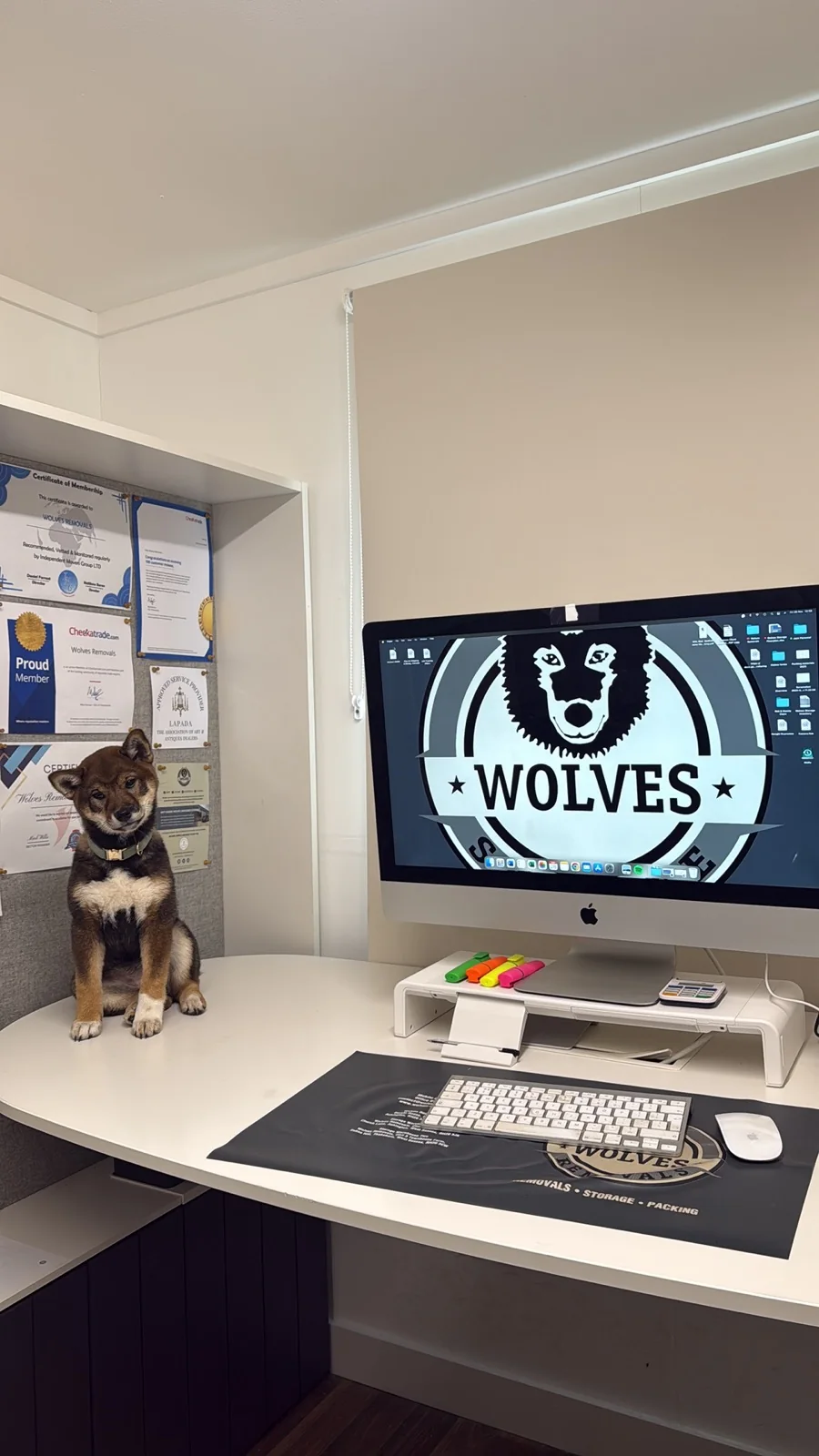
For most people who work from home regularly, a proper home office is the gold standard. A defined space, ideally a room with a door, separates work from the rest of your life in a way nothing else quite manages. You control the lighting, the temperature, the noise and the ergonomics, and over time your brain learns to associate that space with focus, so you settle into work faster.
The drawbacks are practical rather than fundamental: it requires space you may not have, and the isolation of working alone all day does not suit everyone. But if you can carve out a dedicated spot and kit it out sensibly, it is hard to beat for day-in, day-out productivity. Our detailed guide on how to set up a home office walks through choosing the space, the furniture worth spending on and getting the ergonomics right, and our piece on alternatives to the kitchen table is well worth a read if you have been making do for too long.
Best for
Focused, regular remote work; jobs with frequent video calls; anyone who values privacy and a clear boundary between work and home.

2. Co-working spaces
Co-working spaces have multiplied across towns and cities, and for good reason. They offer the structure and equipment of an office, fast reliable internet, meeting rooms, decent coffee, ergonomic furniture, without the isolation of working alone or the cost and commitment of leasing your own premises. Crucially, they also provide something a home office cannot: other people. For freelancers and remote employees who miss the buzz of colleagues, that social element is a genuine boon.
The trade-off is cost and travel. A monthly membership or day pass adds up, and you have to get there. But for people who find home too distracting or too lonely, the productivity and the sense of professional separation can more than justify it. Many spaces offer flexible day passes, so you can use one on the days you need focus or a meeting room and work from home the rest of the time.

Best for
People who concentrate better away from home; freelancers wanting to network; anyone needing meeting rooms or a professional setting to host clients.
Choosing the right co-working space
Not all co-working spaces suit all workers, so it pays to try before you commit. Some are buzzing, open-plan and sociable, which energises some people and overwhelms others; some are calm and library-like, with quiet floors and private booths. Visit at the time of day you would actually use it, test the Wi-Fi, check whether you can take a private call without booking a room, and look at how easy it is to get there. A space that is a chore to reach will quietly fall out of your routine however good it is. Most offer a free trial day or a flexible pass, so use one before signing up to anything longer term.
3. Cafes and coffee shops
The laptop-in-a-cafe image is a remote-working cliche for a reason: a good coffee shop offers a pleasant change of scene, a gentle hum of background activity that many people find oddly conducive to focus, and a reason to leave the house. For short bursts of work, catching up on emails, drafting a document, getting out of the flat for a couple of hours, a cafe can be exactly the lift a stale working day needs.
It is not without limits, though. Wi-Fi can be patchy, you cannot take a confidential call across a busy room, table space is tight, and there is an unspoken etiquette about not nursing one coffee for six hours. Treat the cafe as a place for a focused session rather than a full eight-hour shift, and be a considerate customer, and it earns its place in your rotation.

Best for
Short focused sessions; a change of scene to break up the week; sociable people who find total silence stifling.
4. Libraries and quiet public spaces
Often overlooked, the local library is one of the best free places to work remotely. It offers quiet by design, free Wi-Fi, tables, power sockets and a studious atmosphere that makes it genuinely hard to procrastinate. Many libraries now have bookable study rooms or dedicated work areas, and some have quiet zones specifically for concentrated work.
The catch is that libraries are not built for video calls, you cannot exactly take a conference call in a reading room, and opening hours vary. But for deep, quiet work that needs real concentration and no spending, a library is hard to beat. It is also a pleasant reminder that productive remote working need not cost anything at all.
Best for
Deep focus work; budget-conscious freelancers and students; anyone who finds the discipline of a quiet public space helpful.
5. The great outdoors and changes of scene
Not all work needs a screen and a desk. Reading, thinking, planning and even some calls can happen perfectly well in a garden, a park, by the coast or on a walk. There is good reason to take work outdoors when you can: fresh air and daylight lift mood and sharpen attention, and a walking call can be more energising than a static one. Here in Sussex, with the South Downs and a long stretch of coast on the doorstep, the outdoors is an underrated office.
Obvious practicalities apply: glare on screens, unreliable mobile signal, weather and the lack of a proper desk all limit what you can realistically do outside. Treat the outdoors as a place for the right kind of work, thinking, reading, audio calls, rather than a full setup, and it becomes a welcome part of a varied working week rather than a frustration.

Best for
Thinking and planning time; audio-only calls; breaking up a screen-heavy day and clearing your head.

We’re a friendly, family-run Sussex removals and storage company that has been keeping its promises since 2016. From a single item to a full home or office move, every job is fully insured and led by a dedicated coordinator, so you always have one point of contact.
As a LAPADA member and a Checkatrade-verified team, we handle it all with real care — expert packing, home and business removals, clean, secure storage and specialist antiques handling across Sussex, Surrey, Hampshire and Kent.

6. A second home or relocation for remote work
One of the biggest shifts that remote working has unlocked is freedom over where you live. When your job no longer ties you to a daily commute, the calculation of where home should be changes entirely. Many people have used that freedom to move somewhere with more space, more light and a better quality of life, swapping a cramped city flat for somewhere they can both live and work comfortably.
If you are weighing up a move to make remote working easier, perhaps to gain a room for a proper office, or to be somewhere with the countryside or coast nearby, you are far from alone. This is a trend we have seen first-hand as a Sussex removals firm, with people relocating from busier areas to the towns and villages around Pulborough, Horsham and the wider South East. Our look at life in Horsham gives a flavour of one such spot, and our guide to removals in Sussex covers what the area offers for those thinking of making the move.
Best for
Anyone whose current home cannot accommodate comfortable remote working; people prioritising quality of life now the commute is gone.
How to choose the right place for the task
Rather than searching for one perfect spot, the smartest remote workers build a small repertoire of places and switch between them. A simple way to decide is to ask what the day actually needs.
- Deep focus, no interruptions: home office, library or a quiet co-working desk.
- Lots of video calls: home office or co-working booth with reliable internet and a tidy background.
- A creative or planning session: a cafe, a walk, or anywhere with a change of scene.
- Collaboration or networking: co-working space or a meeting room.
- A flat day that needs a lift: get out of the house, anywhere different.
The other factor is your own temperament. Some people thrive in the social buzz of a co-working space and wilt in silence; others need total quiet and find a cafe impossible. Be honest about which you are, and design your week around it rather than fighting it.
Making any space work for you
Wherever you choose, a few habits make remote working more productive across the board. Look after your posture, even temporarily; a laptop stand and a separate keyboard spare your neck and shoulders far more than you would expect. Keep a reliable internet backup, such as the ability to tether to your phone, so a dropped connection does not end your day. And, perhaps most importantly, build clear boundaries, a defined start and finish, a proper lunch away from the screen, so that the freedom of remote work does not quietly turn into working everywhere, all the time.
If your conclusion is that your current home simply is not set up for the way you now work, and a move would solve it, we would be glad to help with the practical side. As a family-run firm serving West and East Sussex, Surrey, Hampshire and Kent since 2016, we move homes and home-based businesses of every size. For a compact office shift, our man-and-van service from £80 is ideal; for a full relocation, our house removals team handle the whole job. You can compare the options on our pricing page and request a tailored quote whenever you are ready.

Building a weekly rhythm rather than chasing the perfect spot
One of the most common mistakes remote workers make is to keep searching for the single perfect place, when the real answer is a rhythm that varies through the week. A setup that works on Monday for a day of calls may be wrong on Thursday when you need three hours of uninterrupted writing. Rather than forcing every kind of work into one location, the most productive remote workers plan their week loosely around the work itself.
You might, for instance, keep your call-heavy days at home where your setup and internet are reliable, head to a library or a quiet co-working desk on the days that demand deep focus, and use a cafe or a walk to break up an otherwise flat midweek afternoon. The variety itself is valuable: changing your surroundings gives the day a sense of structure and progression that working from the same chair, dawn to dusk, simply does not. It also stops any one place from becoming stale, which is what eventually happens to even the best home office if you never leave it.
Watch the hidden costs of variety
A varied week has trade-offs worth managing. Carrying your work between places means a tidy, portable kit, a laptop, charger, headphones and perhaps a lightweight stand, and the discipline to keep your files synced to the cloud so you are never caught out by working on the wrong device. Travel time and the cost of coffees or day passes add up, too. The trick is to let the work, rather than restlessness, drive where you go. Move location for a reason, a call, deep focus, a meeting, a genuine need for a change, and the variety stays an asset rather than becoming a daily faff.

The best place to work remotely is the one that fits the moment
There is no universal right answer, and that is the point. The best place to work remotely is whichever one suits the task, the day and the kind of worker you are, and the freedom to choose between several is one of remote working's great advantages. Build your repertoire, match the place to the job, and look after the basics of focus and boundaries, and you will get the very best out of working from anywhere.




The Best Places to Work Remotely — FAQs
There isn't a single best place, because the ideal spot depends on the task. A dedicated home office is unbeatable for regular, focused work and video calls; a co-working space suits those who find home distracting or lonely; a cafe or library works for shorter focused sessions; and the outdoors is great for thinking and audio calls. The skill is matching the place to the day's work.
For many people, yes. They offer reliable internet, meeting rooms, ergonomic furniture and the company of other people without the isolation of working alone or the cost of leasing premises. The main downsides are the membership cost and travel. Flexible day passes let you use one only on days you need focus or a meeting, working from home the rest of the time.
For short, focused sessions, yes, and many people find the gentle background buzz helps concentration. But cafes suit drafting, emails and getting out of the house rather than a full day's work. Wi-Fi can be patchy, you cannot take confidential calls, and it is poor etiquette to occupy a table for hours over one coffee. Use it as one option in a wider rotation.
It is increasingly common. Once a commute no longer ties you to a location, moving somewhere with more space, a dedicated office room or a better quality of life can transform how you work. Many people have relocated from busier areas to towns and villages with countryside or coast nearby. If your current home cannot accommodate comfortable remote working, a move is worth considering.
Match the place to the task, deep work in quiet spaces, calls where the internet is reliable, planning anywhere with a change of scene, and look after the basics wherever you are. Use a laptop stand and separate keyboard to protect your posture, keep an internet backup such as phone tethering, and set clear start and finish times so work does not bleed into all hours.