How to Pack a Picture for House Removals: A Step-by-Step Guide
Packing a picture for house removals means guarding the glass first — masking tape in a cross pattern holds any shards together if it breaks — then wrapping the frame, boxing it upright rather than flat, and labelling it clearly as fragile.

Pictures, mirrors and framed artwork are flat, often heavy and frequently carry real emotional or financial value, which is why getting this right matters. In this guide the Wolves Removals team shares exactly how we do it.
At Wolves Removals we have handled everything from supermarket prints to fine art and antique gilt-framed mirrors across our moves throughout West Sussex, Surrey, Hampshire, Kent and far beyond. As a LAPADA Approved Service Provider, looking after valuable and delicate items is part of our everyday work, and we have refined the packing of pictures down to a dependable method that protects the frame, the glass and the artwork itself. The good news is that with the right materials and a little patience, you can achieve a professional standard at home. Here is how, step by step.
Gather the Right Materials
As with all good packing, success starts with having the proper materials to hand before you begin. Trying to improvise with whatever you can find is the surest route to a cracked frame or scratched glass. For pictures and mirrors specifically, you will want:
- Specialist picture boxes, ideally telescopic or adjustable so they can be sized to the frame. These are by far the safest option and are worth the small outlay for anything you care about.
- Bubble wrap, plenty of it, for cushioning the frame and corners.
- Acid-free tissue paper or glassine for any picture without glass, such as an oil painting on canvas, where ordinary materials could mark the surface.
- Packing paper for an inner wrap and for filling gaps.
- Strong packing tape and a tape gun, plus a roll of low-tack masking tape for the glass.
- Corrugated cardboard sheets or corner protectors to guard the edges and corners, which are the most vulnerable points of any frame.
- A marker pen for clear labelling.
If you would rather not source all of this piecemeal, we supply everything you need from our packing materials range, available whether or not you book your removal with us. Buying the right materials at the start is always cheaper than replacing a broken picture afterwards.
Step One: Protect the Glass
If your picture or mirror has glass in front of it, the first job is to guard against the danger that glass poses if it breaks in transit, namely shards cutting into the artwork behind or scattering when you unwrap it. Take a roll of low-tack masking tape and apply it across the face of the glass in a large cross or a star pattern, from corner to corner and edge to edge. This does not stop the glass breaking, but it holds any broken pieces together so they cannot slide about and damage the picture or injure you when you open the box.
Use low-tack tape rather than anything aggressive, and never apply tape directly to the artwork itself or to an unglazed surface. The tape should only ever touch glass. If you are dealing with a particularly precious piece, this is the point at which you might pause and consider whether professional handling is the wiser choice; more on that shortly.
Step Two: Wrap the Frame
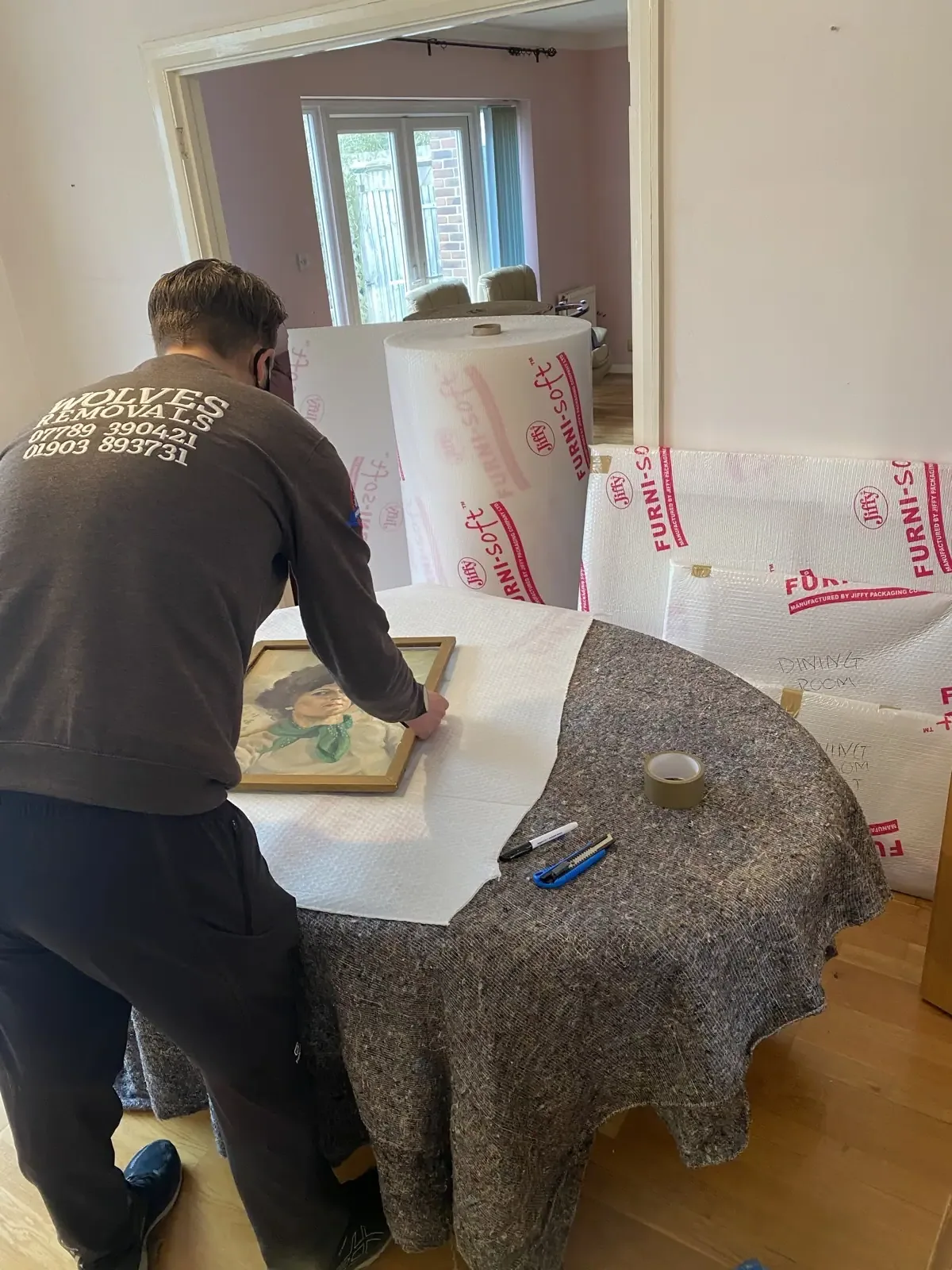
With the glass secured, lay a sheet of packing paper or, for valuable pieces, acid-free tissue over the face of the picture as a first protective layer. Then wrap the entire frame in bubble wrap, bubbles facing outward so the smooth side sits against the artwork and frame. Cover the whole piece generously, paying particular attention to the corners, which take the brunt of any impact. Secure the bubble wrap with tape, but again, never let tape touch the frame or artwork directly; tape only ever onto bubble wrap or paper.
For ornate, gilded or antique frames, take extra care, as decorative mouldings chip easily. Add corner protectors or folded cardboard around each corner before the final wrap.
These frames are exactly the sort of thing where our experience as a LAPADA Approved Service Provider comes into its own, and where many people decide a professional hand is worthwhile. Wolves Removals
A Note on Canvases and Unglazed Art
Oil and acrylic paintings on canvas, and any unglazed work, need slightly different handling. Never let bubble wrap or tape touch the painted surface, as it can stick to or mark the paint, especially in warm conditions. Cover the face first with acid-free glassine or tissue, then build up your protective layers around that. For valuable canvases, a rigid box or crate is far safer than a flexible one, because canvases can be punctured or dented by pressure that a glazed, framed piece would shrug off.
Step Three: Box the Picture
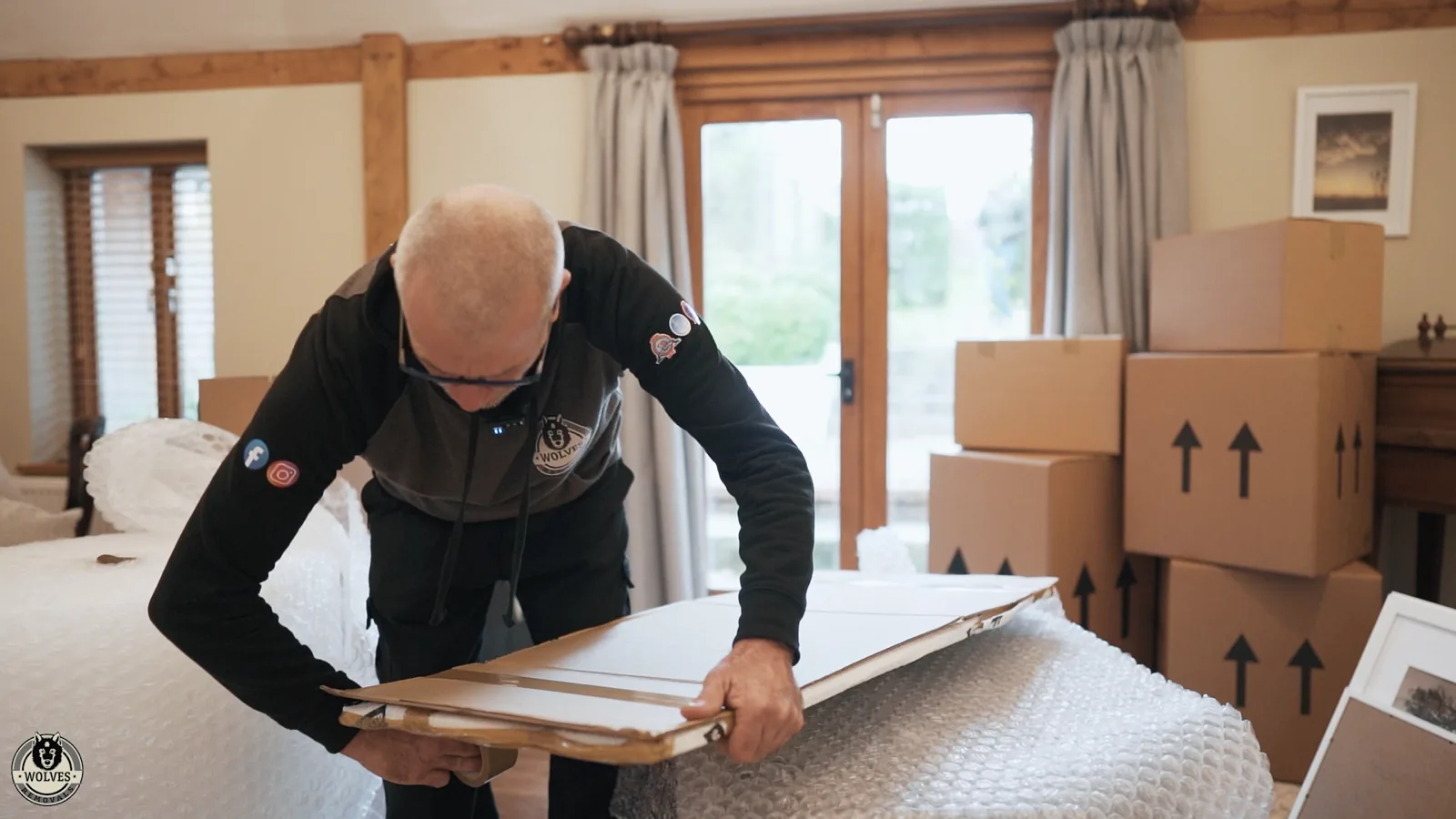
Slide the wrapped picture into a picture box sized as closely as possible to the frame. A telescopic picture box can be adjusted to fit snugly, which is exactly what you want, because any movement inside the box invites damage. Fill any remaining gaps with crumpled packing paper or additional bubble wrap so the picture cannot shift, slide or rattle around. For larger or heavier pieces, place a sheet of corrugated cardboard on each side within the box for added rigidity.
If you do not have a purpose-made picture box, you can make do by sandwiching the wrapped picture between two sheets of stiff cardboard cut slightly larger than the frame and taping them together, but be honest with yourself about the value of the piece. For anything precious, a proper box is a small price for real protection.
Step Four: Label and Position Correctly
Mark the box clearly on both sides with the words FRAGILE and GLASS, and add an arrow showing which way is up. Crucially, write a note that the picture must be stored and transported on its edge, never laid flat. This is the single most important rule for moving pictures and mirrors.
Pictures and mirrors should always travel standing upright on their long edge, just as you would file a book on a shelf, and never stacked flat one on top of another. A picture laid flat has its entire surface area exposed to any weight or pressure placed on it, and the glass can crack under surprisingly little force. Stood on edge, the frame bears the load along its strongest axis. On the van, we wedge pictures snugly between sturdy, flat-sided items such as mattresses, headboards or padded furniture so they stay upright and cannot tip.
When to Call in the Professionals
For ordinary prints and inexpensive frames, the method above will see them safely to your new home. But some pieces are simply too valuable, too large, too delicate or too irreplaceable to risk, and this is where professional help earns its keep.
There is no shame in deciding that a particular painting, an oversized mirror or an antique frame deserves expert handling; it is exactly what we are here for. Wolves Removals
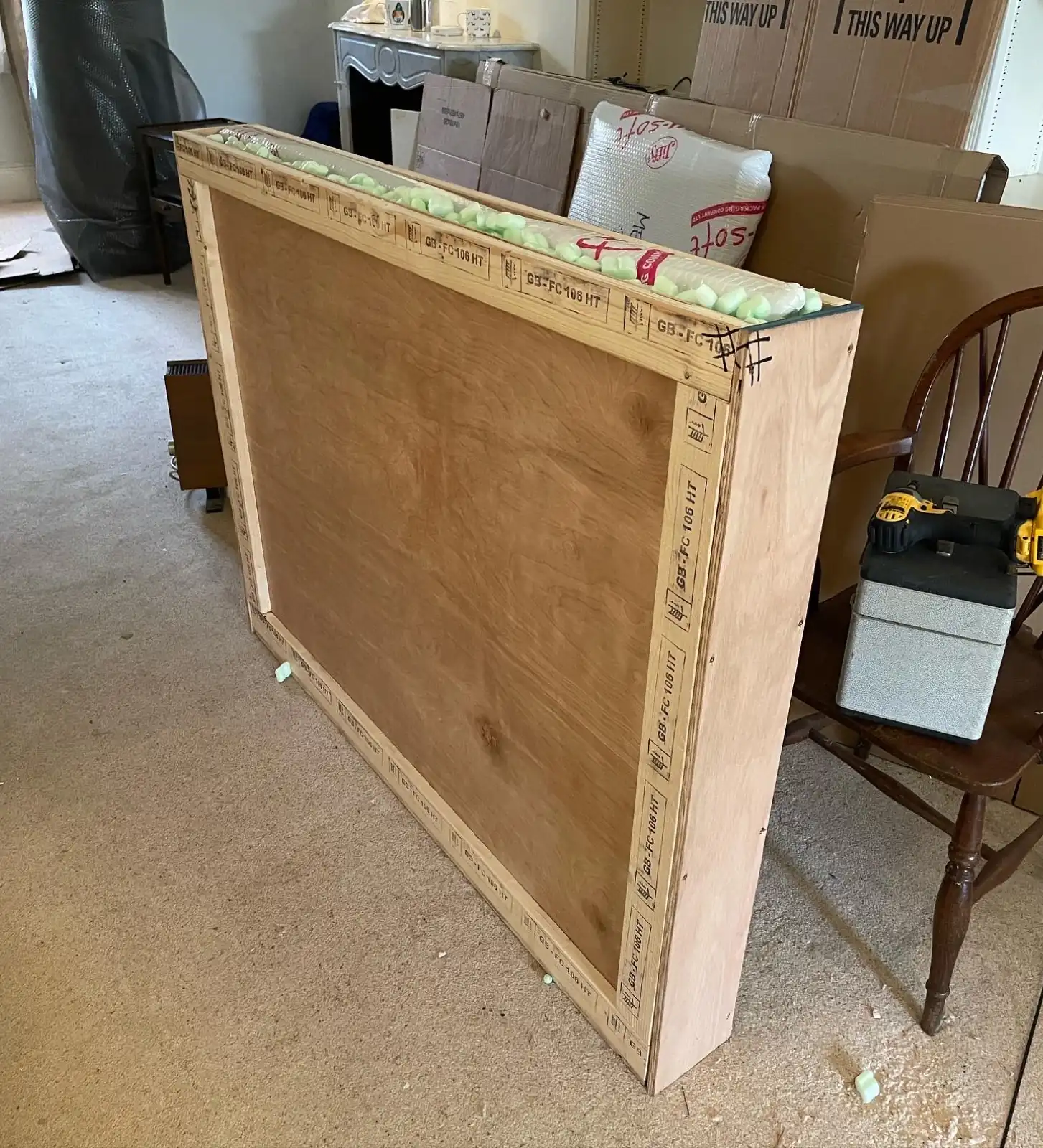
Our fragile packing service is designed precisely for items like these, using professional-grade materials and techniques to protect them properly. For genuinely high-value art and heirloom pieces, the gold standard is a bespoke wooden crate built to fit the item exactly, and our custom crate service provides that level of protection for paintings, sculptures, mirrors and other treasures that warrant it. A made-to-measure crate removes virtually all risk of movement and impact, which is why galleries, collectors and auction houses rely on the same approach.
If your move involves antiques or a collection of fine art, our specialised antiques moving service brings together the experience, materials and care that valuable pieces demand. As a LAPADA Approved Service Provider, we understand the particular requirements of antique frames, gilt work, period mirrors and fine paintings, and we handle them accordingly. And if you would simply rather not pack any of it yourself, our full packing service takes the entire job off your hands, from the everyday boxes to the most precious artwork, all fully covered with goods-in-transit and public liability cover in place.
Common Mistakes to Avoid
Over the years we have seen the same avoidable errors crack a great many pictures. Steer clear of these and you will dramatically reduce the risk:
- Laying pictures flat. The most common and most costly mistake. Always transport them on their edge.
- Letting tape touch the artwork or frame. Tape only ever onto glass (low-tack) or onto the wrapping, never onto the piece itself.
- Skipping the masking-tape cross on the glass. It costs seconds and can save a treasured picture from a shower of glass shards.
- Using a box that is too big. A loose picture shifts and gets damaged. Size the box to the frame and fill every gap.
- Wrapping canvases in bubble wrap face-on. Use glassine or tissue first, as bubble wrap can stick to and mark paint.
- Stacking pictures together unprotected. Always place padding between pieces, and never pile heavy items on top.
Special Considerations for Mirrors
Mirrors deserve a few extra words of their own, because they combine all the difficulties of a glazed picture with even greater weight and a larger expanse of fragile glass. The same principles apply, the masking-tape cross, generous bubble wrapping, corner protection and transport on the edge, but the scale changes things. Large mirrors are heavy and unwieldy, and they should always be lifted and carried by two people, gripping the frame rather than the glass. Never carry a mirror flat across your arms, as the weight can flex and crack the glass; carry it upright instead.
Frameless mirrors and those with bevelled edges are especially vulnerable along their edges, so pad these particularly well with foam edging or several folded layers of cardboard before wrapping. Heavy wall mirrors that are screwed or bracketed to the wall should be removed carefully by someone confident with the fixings, taking care not to twist or torque the glass as it comes away. If a mirror is built into a piece of furniture, such as a dressing table or wardrobe, it is usually safest to detach it for transit where the design allows, or to protect it in place with cardboard and blankets if it cannot be removed.
How We Pack Pictures Professionally
It can be reassuring to know what professional handling actually involves, so here is a brief look behind the scenes. When our team packs pictures and art on a job, we work methodically and never rush. Each piece is assessed first for its value, fragility and any existing damage, which we note before packing so its condition is recorded. Glazed items get the protective tape treatment; unglazed canvases are faced with glassine.
We use professional-grade materials throughout, sizing boxes or crates to each piece so nothing can move, and we build in generous corner protection because corners are where damage almost always occurs. Wolves Removals
On the van, art and mirrors are loaded last and positioned upright, wedged securely between flat, padded surfaces where they cannot shift during the journey. For the most valuable pieces, a custom-built crate is loaded in a way that keeps it stable and accessible. This careful, unhurried approach is exactly why people entrust their most precious pieces to a professional team, and it is the standard we hold ourselves to on every move, backed by full insurance cover.
Storing Pictures During a Move
Sometimes there is a gap between moving out and moving in, or your new home simply will not have wall space for everything straight away. If pictures and mirrors need to go into storage, store them upright on their edge in a dry, stable environment, never flat and never leaning at a steep angle where they could slip. Avoid damp, extremes of temperature and direct sunlight, all of which can damage frames, glass seals and artwork over time. Our secure containerised storage solutions provide a clean, dry environment, and we can collect, pack, store and later deliver your pictures as part of a single coordinated move so they are handled correctly at every stage.
Bringing It All Together
Packing a picture for house removals comes down to a clear sequence: secure the glass with a masking-tape cross, wrap the frame in protective layers without ever taping the piece itself, box it snugly in a picture box with every gap filled, label it clearly, and always transport it standing on its edge. Follow those steps and the vast majority of pictures will arrive at your new home exactly as they left it.
For anything especially valuable, delicate or irreplaceable, please do not hesitate to lean on our experience. Whether it is a fragile-pack of a few precious pieces, a bespoke crate for an oversized mirror, or full antiques handling for a treasured collection, the Wolves Removals team is here to help across Sussex, Surrey, Hampshire, Kent and nationwide. Call us on 01903 893731 or request a free, no-obligation quote through our online quote form, and we will tailor everything to your move. You will find plenty more practical advice in our wider moving tips too.
The Wolves Removals Team
Family-run removals · Ashington, West Sussex
We have moved families and businesses across West and East Sussex, Surrey, Hampshire and Kent since 2016, from our Ashington base. We are fully insured, Checkatrade-verified and a LAPADA Approved Service Provider for antiques and fine art. More about us, or read our reviews.
How to Pack a Picture for House Removals: A Step-by-Step Guide — FAQs
Apply low-tack masking tape across the face of the glass in a cross or star pattern from corner to corner. This will not prevent the glass breaking, but it holds any broken pieces together so they cannot slide about, damage the artwork or injure you when you unwrap it. Then wrap the frame in bubble wrap, box it snugly and always transport it on its edge.
Always upright, standing on their long edge like books on a shelf, never laid flat or stacked one on top of another. A picture laid flat exposes its whole surface to any weight placed on it and the glass can crack under surprisingly little pressure, whereas standing it on edge bears the load along the frame's strongest axis.
Never let bubble wrap or tape touch the painted surface, as it can stick to or mark the paint. Cover the face first with acid-free glassine or tissue paper, then build protective layers around that. For valuable canvases use a rigid box or a bespoke crate rather than a flexible one, because canvases can be punctured or dented by pressure.
For high-value, large, delicate or irreplaceable pieces, professional handling is the safer choice. A fragile packing service uses professional-grade materials, while a custom crate offers the highest protection for fine art, mirrors and antiques. As a LAPADA Approved Service Provider, Wolves Removals is experienced with antique frames, gilt work and fine paintings.
Yes. If there is a gap between moving out and moving in, or your new home lacks immediate wall space, our secure storage keeps pictures upright in a clean, dry environment away from damp, temperature extremes and direct sunlight. We can pack, store and later deliver your artwork as part of one coordinated move.