How to Pack Boxes for Moving House: The Complete Practical Guide
Packing boxes well comes down to two rules: heavy items in small boxes and light items in large ones, so nothing exceeds about 15 to 18 kilograms, and heavy items at the bottom with every gap filled so nothing shifts in transit.

Get those two things right and packing protects your belongings, speeds up loading, and spares you a crushed box or broken crockery. This guide walks through everything else, from choosing boxes to the order you should pack each room.
At Wolves Removals we have packed and moved homes across West Sussex, Surrey, Hampshire and far beyond since 2016, and over those years we have refined the art of packing a box down to a reliable set of principles. The encouraging news is that good packing is not complicated. It comes down to using the right materials, distributing weight sensibly, filling every gap, and labelling clearly. Master those four things and the rest follows naturally. Here is how we do it, and how you can too.
Gather the Right Materials First
Trying to pack with whatever odds and ends you have lying around is a false economy. Reused supermarket boxes are often the wrong size, lack strength, and may carry damp or pests. Investing in proper packing materials at the outset saves time, protects your possessions and almost always works out cheaper than replacing broken items. Here is what you will want to have to hand before you start:
- Double-walled cardboard boxes in two or three sizes. Small boxes for heavy items, medium boxes for general household goods, and large boxes for light, bulky things such as bedding and cushions.
- Specialist boxes where they help: wardrobe boxes with a hanging rail keep clothes crease-free, while book and wine boxes are built to take concentrated weight.
- Strong packing tape and a tape gun. Cheap tape that peels away is one of the commonest causes of box failure.
- Packing paper and bubble wrap for wrapping and cushioning. Plain newsprint is better than printed newspaper, which can leave ink marks on crockery and glass.
- Marker pens for labelling, and coloured stickers or tape if you want to colour code by room.
- Furniture blankets for larger items and a roll of stretch wrap for keeping drawers and doors closed.
If you would rather not hunt around for all of this separately, we supply everything you need as part of our packing materials range, available whether or not you book your removal with us. Buying a sensible quantity at the start means you are never caught short halfway through a room at ten o'clock at night.
How to Assemble a Box That Will Not Fail
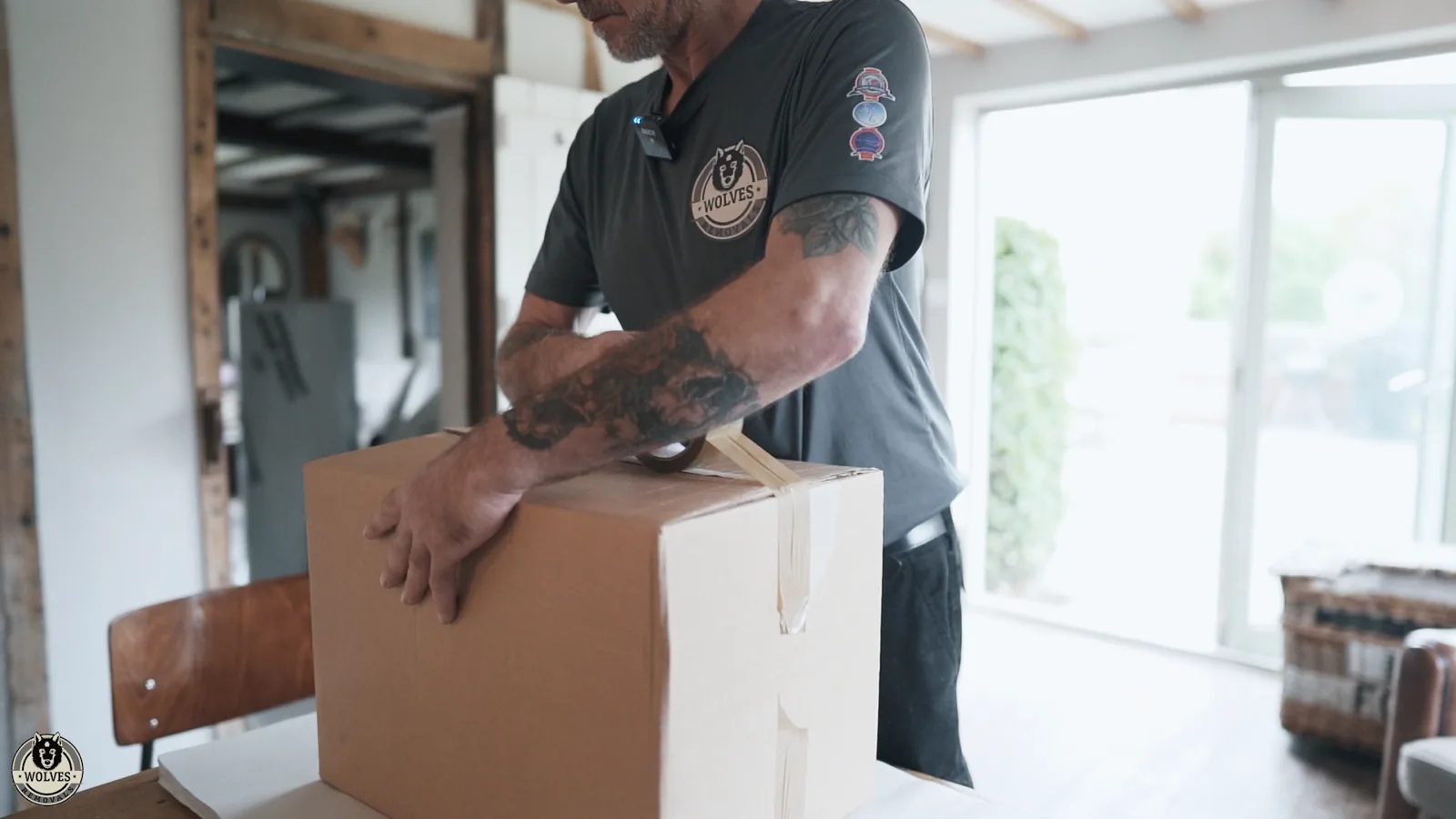
It sounds obvious, but the way you put a box together matters enormously. A poorly taped base is the single most common reason boxes burst open mid-lift. Fold the base flaps so they overlap, then run a strip of tape along the central seam and a second strip across each end, forming an H shape. For heavier boxes, add a couple of extra strips across the base for reassurance. Always tape the top the same way once the box is full.
Resist the temptation to overfill. A box should close flat without bulging, because bulging boxes cannot be stacked safely and are far more likely to be crushed. Equally, do not under-fill, as empty space lets the contents shift and the box collapse under the weight of others above it.
The Golden Rules of Weight and Balance
Two principles do most of the heavy lifting when it comes to packing well. First, heavy items go in small boxes and light items go in large boxes. This keeps every box within a weight a person can comfortably and safely carry, usually no more than around 15 to 18 kilograms. A large box full of books is a back injury waiting to happen and will very likely give way under its own weight.
Second, pack heavy items at the bottom and lighter items on top within each box, and load the box so that the weight is evenly distributed rather than lopsided. A balanced box is easier to carry, stacks more reliably on the van, and is far less likely to tip or spill.
Fill Every Gap
Empty space is the enemy. Any gap inside a box allows the contents to move during transit, and movement causes breakage. Fill voids with crumpled packing paper, bubble wrap, soft furnishings or even rolled-up towels. Give a packed box a gentle shake before sealing it. If you hear or feel things shifting, add more padding until it is snug.
Packing Room by Room
The most efficient way to pack a whole house is to work through it one room at a time rather than flitting between rooms. This keeps related items together, makes labelling logical, and gives you a clear sense of progress. Here is how we approach the trickier rooms.
The Kitchen
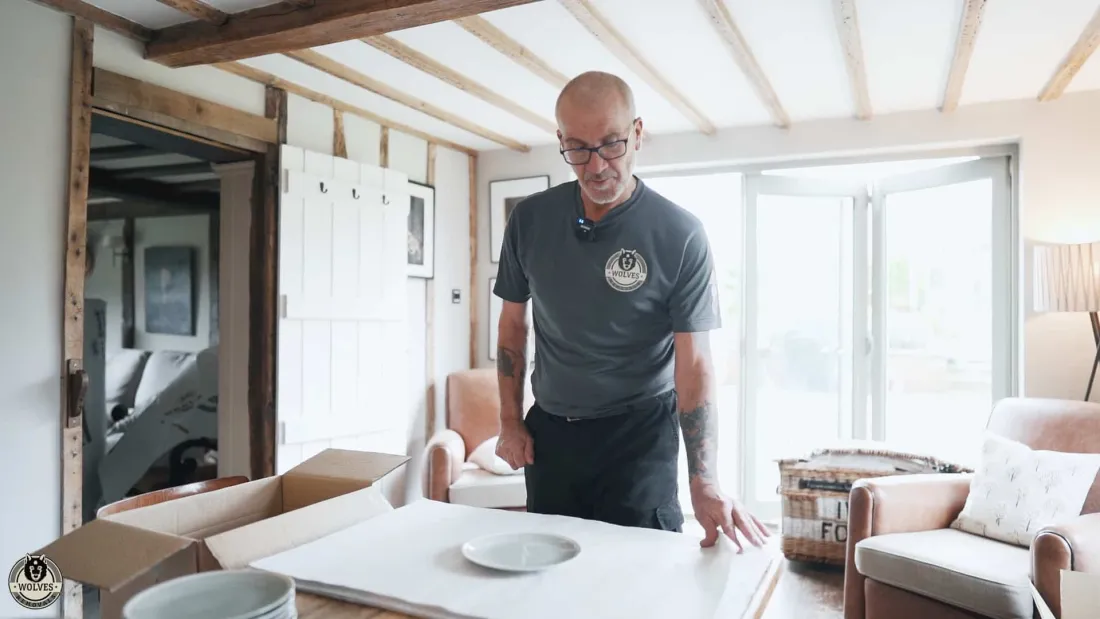
The kitchen is usually the most time-consuming room because it is full of fragile, awkward and heavy items, and it has enough detail of its own that we have given it a separate guide: how to pack glasses and plates for moving covers why plates go in on their edge, paper versus bubble wrap, and how many should go in one box.
Pack pans and heavy items in small boxes. Keep a clearly marked box of kitchen essentials, the kettle, a few mugs, some tea bags and basic cutlery, packed last and unloaded first, so you can make a cup of tea the moment you arrive.
The Bedrooms
Bedrooms are generally straightforward. Use wardrobe boxes to transfer hanging clothes directly from the rail, which saves hours of folding and unpacking. Fold remaining clothes into large boxes or, to save on boxes, leave them in the chest of drawers and stretch wrap the whole unit, provided the drawers are not too heavy to lift. Bedding and pillows fill large boxes cheaply and also make excellent padding around more fragile items.
The Living Room
Living rooms contain a mix of electronics, books, ornaments and media. Books go into small boxes only, packed flat or spine down. Electronics ideally go back in their original boxes; if those are long gone, wrap each item in bubble wrap and pack snugly with plenty of cushioning, photographing the cable connections first so reassembly is painless. Ornaments and breakables deserve individual wrapping and a well-padded box.
Pictures, Mirrors and Awkward Items
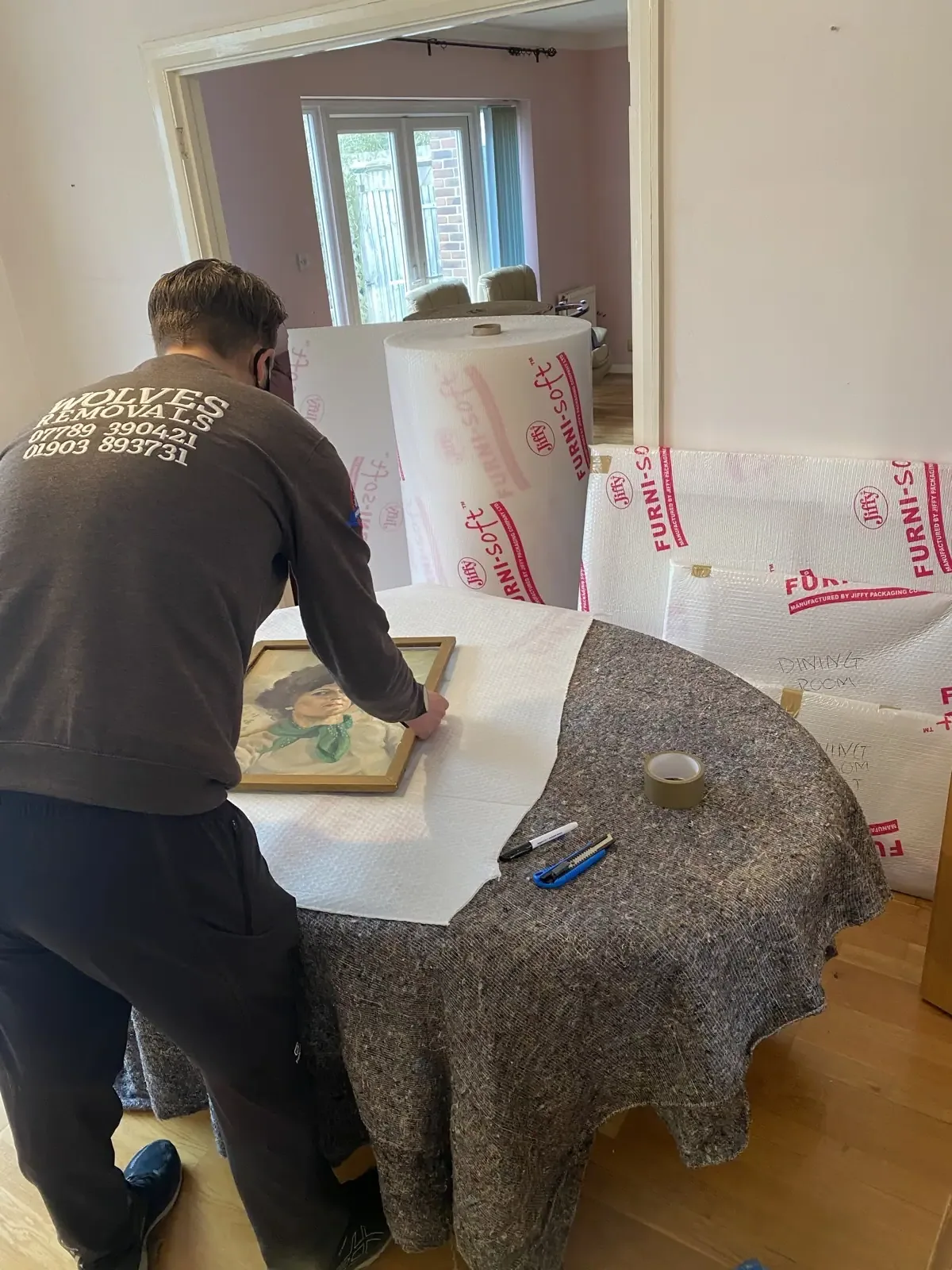
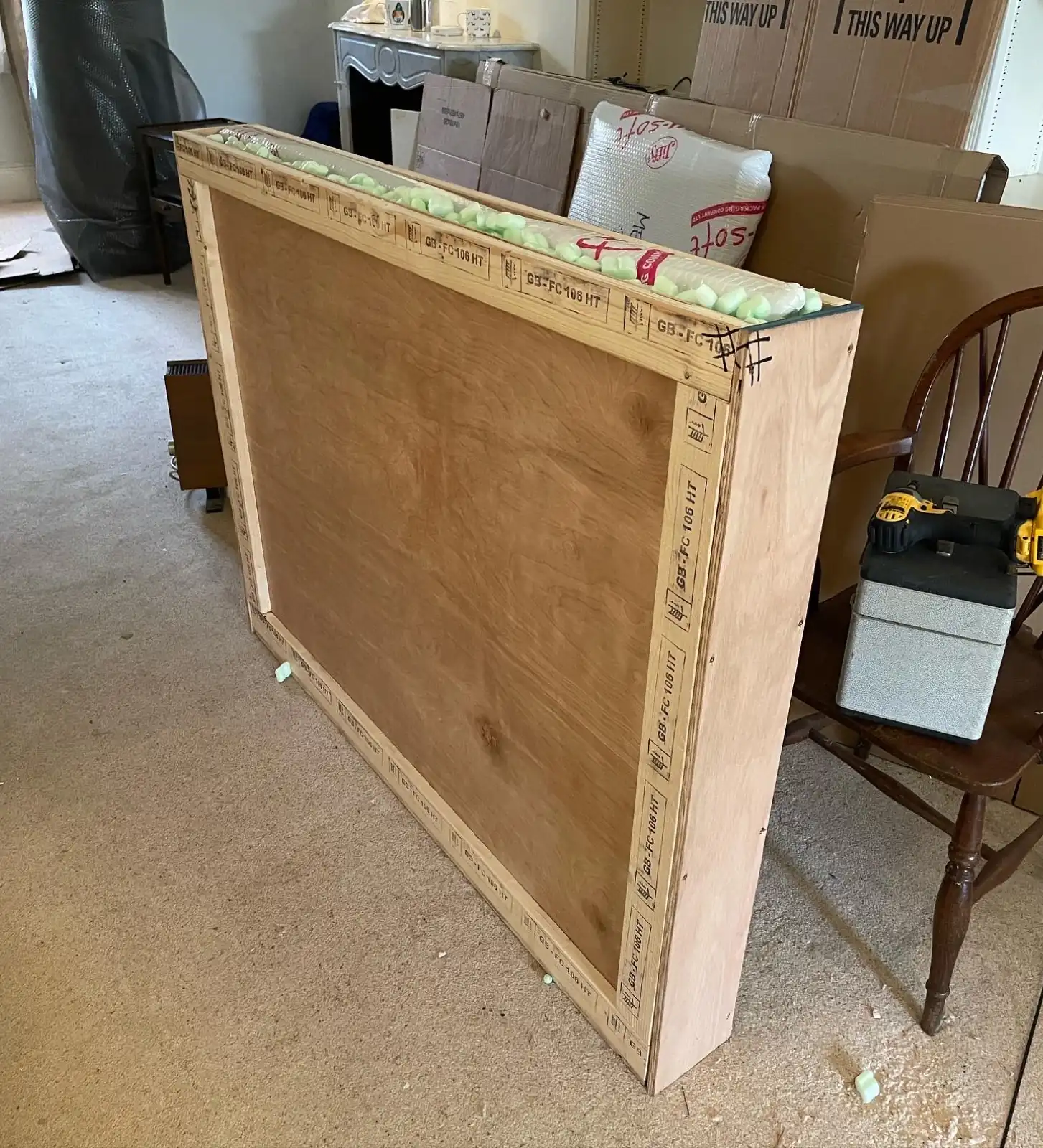
Framed pictures and mirrors need particular care, because they are flat, fragile and easily cracked. Tape a cross of low-tack tape across the glass to hold it together if it breaks, wrap the frame in bubble wrap, and pack pictures on their edge, never flat, ideally in a purpose-made picture box. We have a full step-by-step guide to packing a picture for house removals if you have artwork or mirrors that matter to you.
Handling Genuinely Fragile and Valuable Items
Some belongings are simply too precious, too delicate or too valuable to risk with ordinary packing, whether that is antique china, glassware, a chandelier or a piece of fine art. For these, the safest approach is professional wrapping with the right materials and techniques. Our fragile packing service is built for exactly this, and as a LAPADA Approved Service Provider we are well used to handling antiques and high-value items with the care they deserve. If the thought of packing the whole house fills you with dread, our full packing service takes the entire job off your hands, professionally and fully covered, with goods-in-transit and public liability cover in place on every move.

Labelling: The Step Everyone Underestimates
Clear labelling is what separates a smooth unpack from a chaotic one. Label the side of each box, not just the top, so you can read it when boxes are stacked. On each box write the room it belongs in and a brief note of the contents.
A colour-coding system, one colour per room, lets our team unload boxes straight into the correct room without having to ask, which saves real time on moving day. Wolves Removals
Mark fragile boxes clearly on all sides and note which way up they should sit. Keep a simple inventory, even just a numbered list, so you know exactly how many boxes you have and can quickly spot if anything goes astray.
The Order in Which to Pack
Start early and start with the things you use least. Several weeks before the move, pack away seasonal items, books, spare bedding, ornaments and anything in the loft or garage. As the move approaches, work through the rooms you use less often, leaving the kitchen, bathroom and a small box of daily essentials until the very last days.
Prepare an essentials box, sometimes called a first-night box, for each member of the family. Pack a change of clothes, toiletries, medication, phone chargers, basic kitchen items and anything the children need to settle. This box travels with you and is the first thing you open, sparing you from rummaging through a stack of identical boxes at midnight.
Should You Pack Yourself or Use a Professional?
There is no single right answer here. Packing yourself saves money and gives you complete control, and for many people it is perfectly manageable with enough time and the right materials. That said, packing a whole house properly takes far longer than most people expect, often several full days, and it is the part of moving that people most often run out of time for. If your move is large, your time is short, or you have a lot of fragile or valuable belongings, professional packing can be money very well spent.
Many of our customers choose a middle path, packing the straightforward boxes themselves and asking us to handle the kitchen, the antiques and anything fragile. We are happy to work whichever way suits you. You can see how packing fits alongside the rest of a move on our house removals page, and our pricing page sets out how our services are costed so there are no surprises.
A Few Common Mistakes to Avoid
- Leaving it too late. Packing always takes longer than you think. Begin weeks ahead, not days.
- Overloading large boxes. A big box full of heavy items will hurt someone's back and probably break.
- Skimping on tape and padding. The cost of proper materials is trivial next to the cost of broken belongings.
- Forgetting to label the sides. Top-only labels are invisible once boxes are stacked.
- Mixing rooms in one box. It makes unpacking slow and confusing. Keep each box to a single room.
- Packing prohibited items. Never box up flammable liquids, gas canisters, aerosols or perishable food. Dispose of or transport these separately.
How Many Boxes Will I Need?
One of the most common questions we are asked is how many boxes a house move requires, and the honest answer is that it varies enormously depending on how much you own and how long you have lived in the property. As a rough guide, a one-bedroom flat might need somewhere in the region of fifteen to twenty-five boxes, a two or three-bedroom house perhaps forty to seventy, and a larger family home can easily run past a hundred. It is always better to have a few too many than to run out, and any unused, unassembled boxes can usually be returned or kept flat for next time.
The best approach is to buy in stages. Get a starter batch of boxes and materials early so you can begin packing the rooms you use least, then top up as you get a feel for how quickly you are filling them. Keep a small reserve of materials aside for the last-minute kitchen and bathroom packing, which always seems to need more than expected. If you are unsure, we are happy to advise on quantities based on the size of your home when you get in touch.
Looking After the Environment
Moving generates a surprising amount of packaging, so it is worth thinking about waste. Good-quality boxes can be flattened and reused for several moves or passed on to others, and recyclable paper makes an excellent, environmentally friendlier alternative to plastic bubble wrap for much of your wrapping. Soft furnishings, towels and bedding do double duty as free, reusable padding, cutting down on both cost and waste. A little thought here keeps your move kinder to the environment without compromising on protection.
Ready to Pack?
Packing boxes well is mostly a matter of preparation and patience. Get the right materials in early, build your boxes properly, keep heavy things in small boxes and light things in large ones, fill every gap, and label everything clearly by room. Work methodically from the least-used rooms towards the kitchen, and keep an essentials box close to hand. Follow those principles and your belongings will arrive at your new home in exactly the condition they left.
If you would like a hand, whether that is a delivery of quality packing materials, a fragile-only pack, or a full professional packing and removals service, the Wolves Removals team is here to help across Sussex, Surrey, Hampshire, Kent and nationwide. Call us on 01903 893731 or request a free, no-obligation quote through our online quote form and we will tailor everything to your move. You might also find our wider moving tips useful as you plan the days ahead.
The Wolves Removals Team
Family-run removals · Ashington, West Sussex
We have moved families and businesses across West and East Sussex, Surrey, Hampshire and Kent since 2016, from our Ashington base. We are fully insured, Checkatrade-verified and a LAPADA Approved Service Provider for antiques and fine art. More about us, or read our reviews.
How to Pack Boxes for Moving House: The Complete Practical Guide — FAQs
Use small boxes for heavy items such as books and crockery, medium boxes for general household goods, and large boxes only for light, bulky things like bedding and cushions. Matching the box size to the weight keeps every box within a safe, carryable limit of around 15 to 18 kilograms and stops boxes failing under their own weight.
Wrap fragile items individually, fill every gap inside the box with paper, bubble wrap or soft furnishings so nothing can shift, and pack plates on their edge rather than flat. Mark fragile boxes clearly on all sides. For genuinely valuable or delicate items, a professional fragile packing service offers the greatest protection.
Begin several weeks before moving day with the things you use least, such as seasonal items, books and loft or garage contents. Work through the rooms you use less often first, leaving the kitchen, bathroom and a box of daily essentials until the final days before the move.
Both are valid. Packing yourself saves money and is manageable with enough time and the right materials, while professional packing saves you days of work and is well worth it for large moves or homes with many fragile or valuable items. Many people do a mix, packing the easy boxes themselves and leaving the kitchen and antiques to the professionals.
Pack a box of essentials for each person that travels with you rather than on the van: a change of clothes, toiletries, medication, phone chargers, basic kitchen items such as the kettle and a few mugs, and anything the children need to settle. It is the first box you open and saves you searching through a stack of identical boxes on your first night.