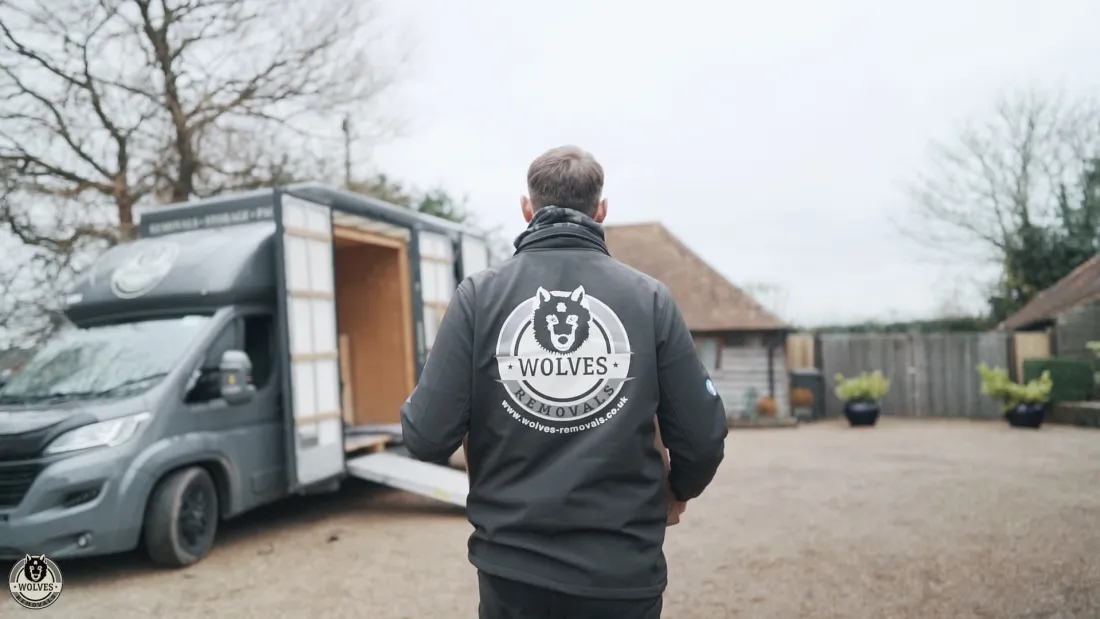
How We Wrapped Seven Van Loads of Antique Furniture
The order the layers go on when wrapping antique furniture for a move, as conservation guidance gives it, set beside a dealer’s seven-van-load stock move, and why the wrapping that protects a piece in a van is the wrong wrapping to leave on in store.

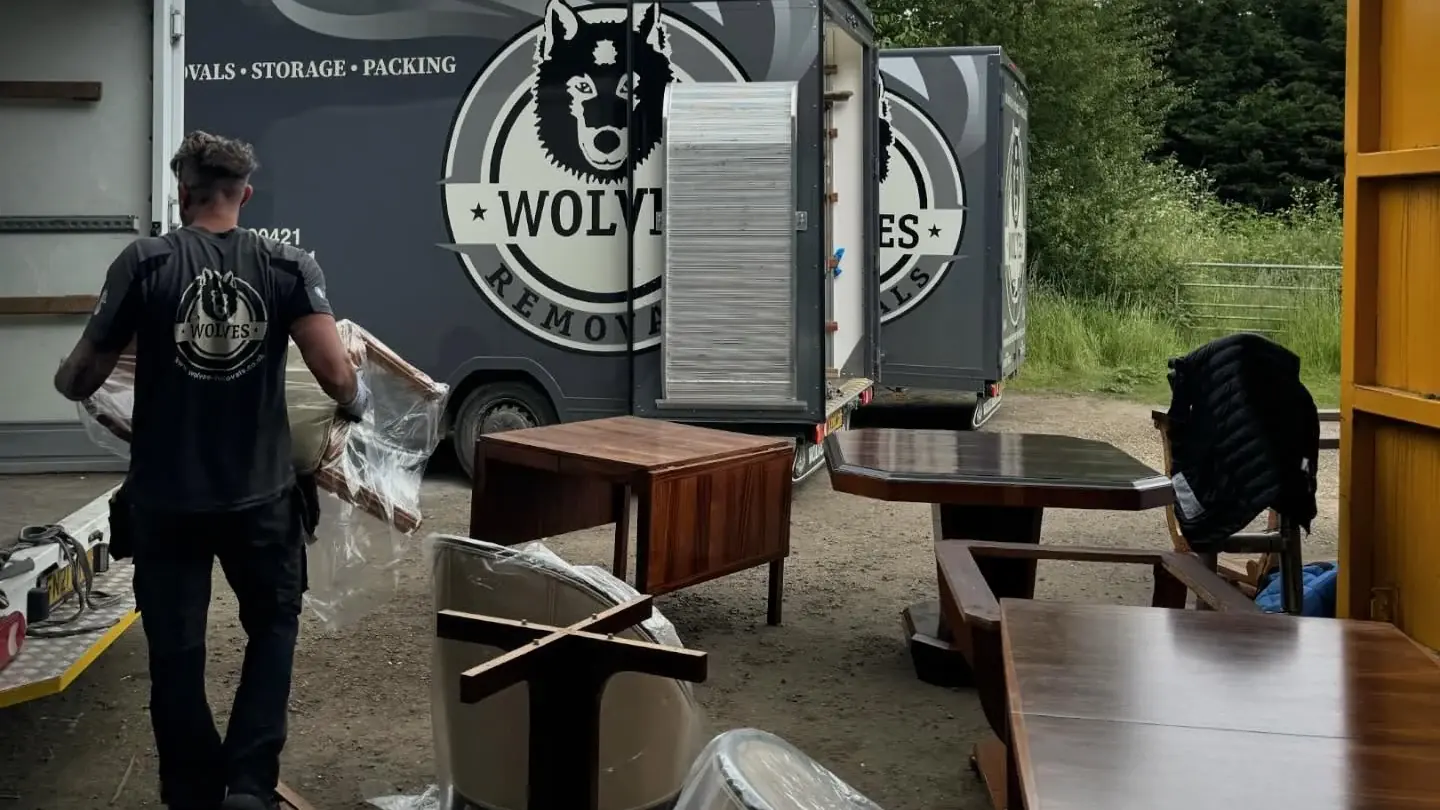
To wrap antique furniture for moving, work outwards from the piece: a clean surface, a soft layer against it, blankets or padded covers over that, clear sheeting on the outside for the journey, and tape only ever on the wrapping. That is the order conservation guidance gives. Below, it is set against an antique dealer’s entire stock, moved into a new warehouse in seven van loads.
The quick answer
Work outwards: Soft, then padded, clean surface, soft layer, blanket, then sheeting
Tape: On the wrap only, never on wood, leather or polish
Plastic sheeting: For the journey, over the padding, not on the finish
In storage: Let it breathe, swap sealed sheeting for a breathable cover
For what to do before, during and after the move itself, our guide to moving antique furniture covers lifting, humidity and storage. This page covers the wrapping itself, alongside the dealer move.
What Seven Van Loads Mean for the Wrapping
Seven loads is seven complete cycles of loading, driving, unloading and coming back, and each one repeats the whole handling sequence for everything inside it.
The job at a glance
7 van loads to move the whole stock
1 empty warehouse to fill, with a mezzanine
11 hands-on stages per piece in our working sequence
1 stage in that sequence with nobody touching it: the drive
Loads and warehouse are from the job. The stages are our own working sequence, set out below.
The stock was largely of one period: figured walnut and rosewood veneers, curved fronts, pedestal and U-shaped bases, cocktail cabinets, and a games table with an inlaid board. Veneer is easily damaged. The US National Park Service handbook warns that as the wood beneath it shrinks, veneer on drawer rails and bottom rails can form a raised lip that snags and tears off.
How to Wrap Antique Furniture for Moving
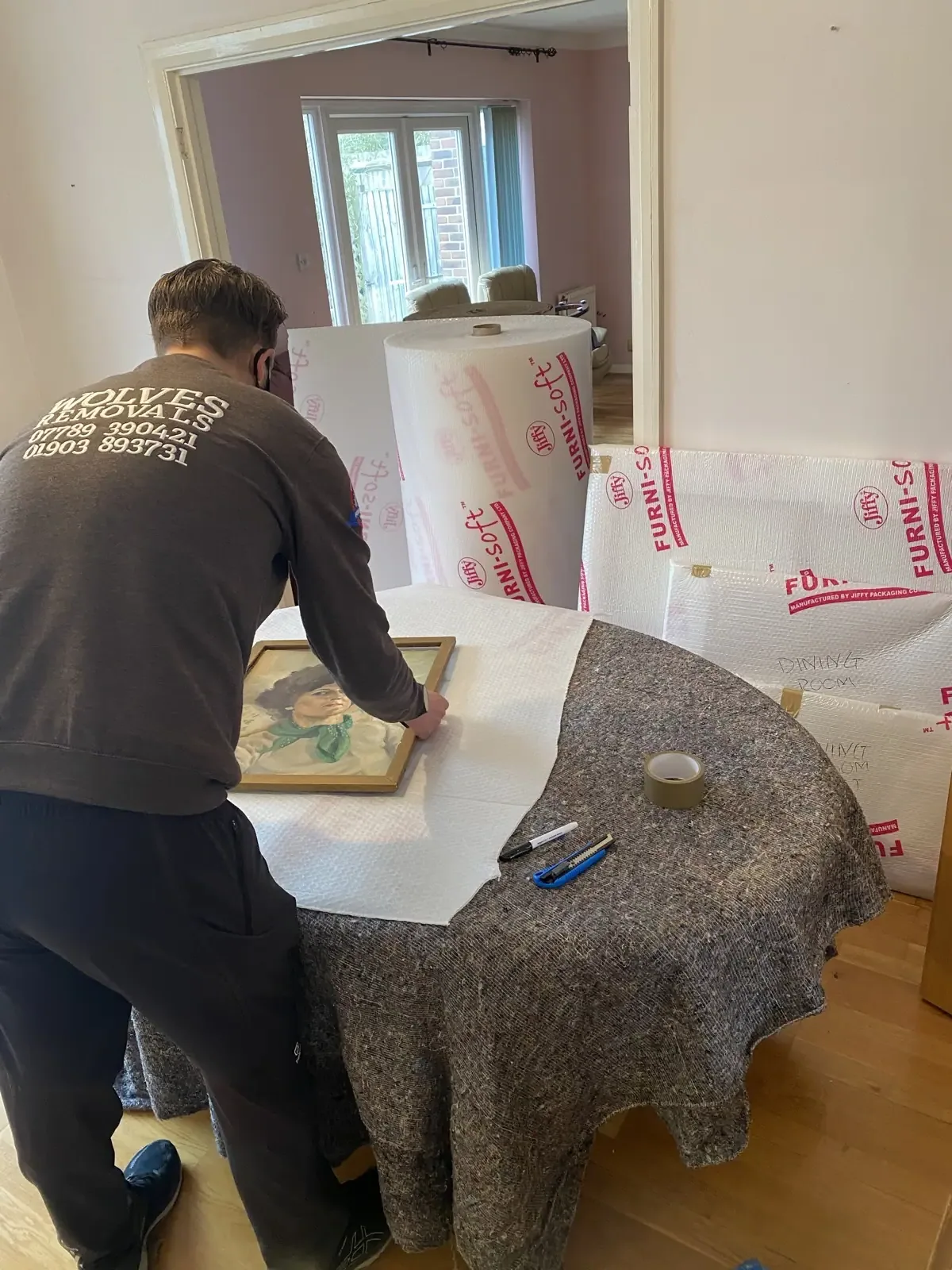
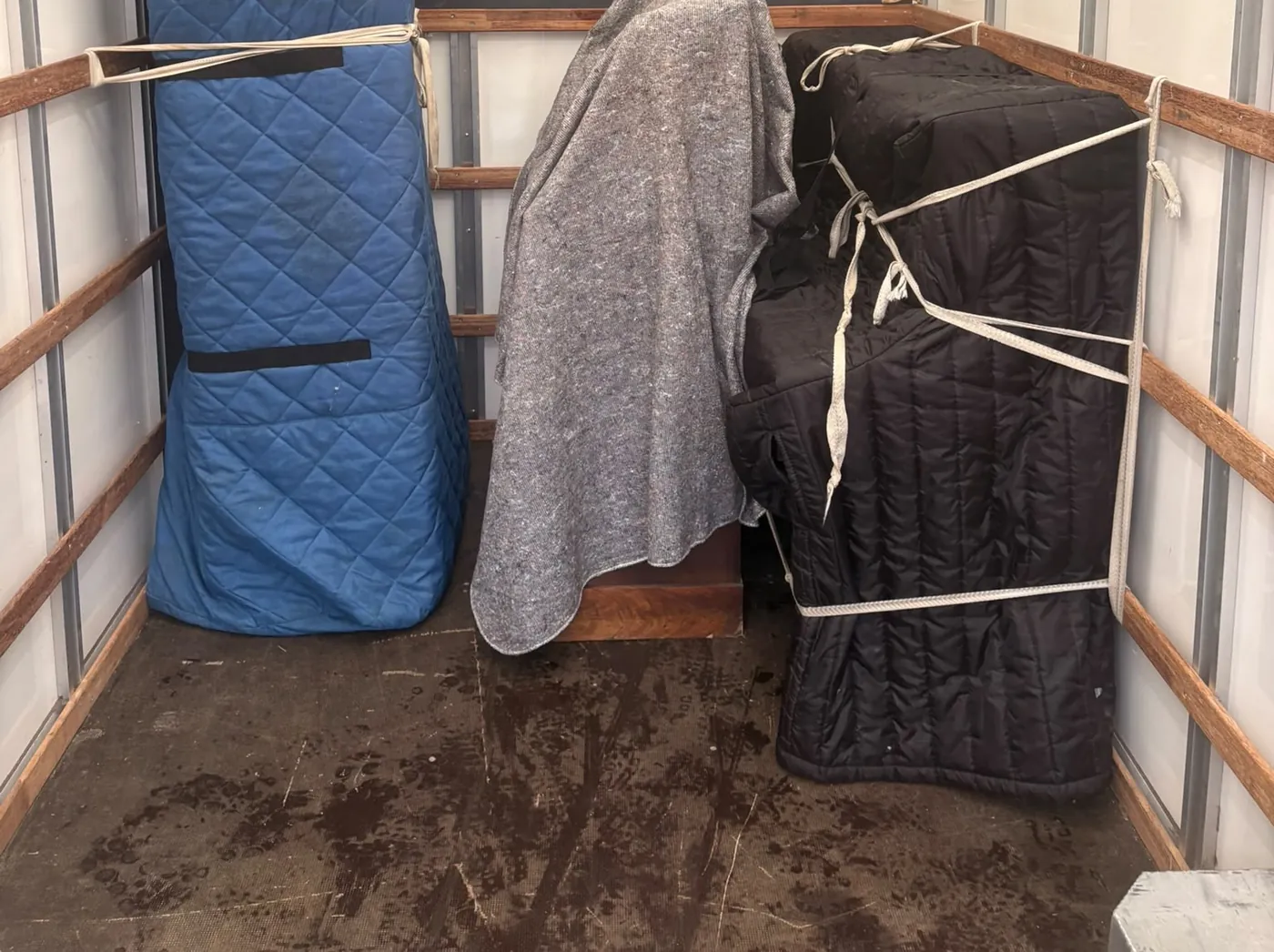
On this job, every piece travelled in full padded covers and blankets, and clear sheeting kept rain and dust off. You will need acid-free tissue or cotton muslin, blankets or padded covers, clear sheeting, cotton tape and labels. Here is the order:
How to wrap antique furniture, layer by layer
-
Clean wood. Make sure the surface is clean first, so grit isn’t pressed into it or rubbed across it on the journey.
-
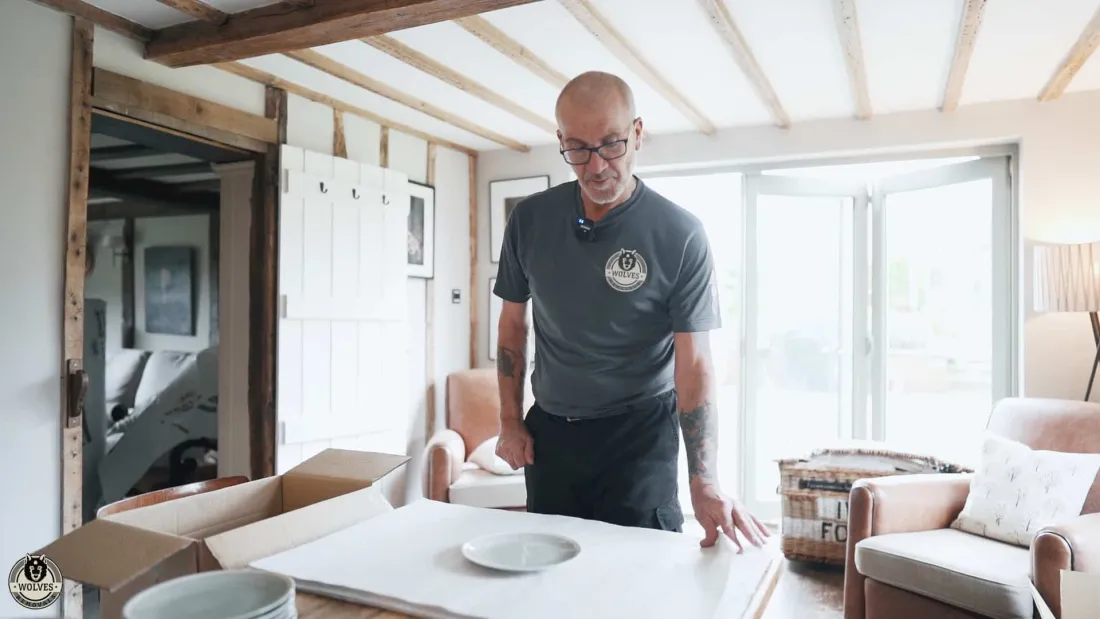
A soft layer against it. For most objects, museum guidance puts soft, acid-free tissue or cotton muslin against the surface, tucked in rather than taped. Keep wool and jute off it: they tend to be abrasive.
-
A blanket or padded cover. The US National Park Service handbook lists blanket pads or quilts for covering large furniture. Pad feet, corners, handles and mouldings so the whole package protects them, enclosing them without squashing them.
-
Clear sheeting over the top. For the journey only, to keep rain and dust off the padding. It goes over the padding, not against the finish.
-
Tape and labels on the outside. No tape on the surface of the piece, and keep strong tape away from the layer touching it. Write what’s inside, a piece or load number and any fragile part on the outer wrapping, never on the piece.
Sources: the US National Park Service, the Canadian Conservation Institute and Museums Galleries Scotland.
The layers above are conservation guidance, not a record of our job, which used padded covers and blankets. Museum guidance wraps most objects first in soft tissue or cotton, to protect them from rougher packing materials, and on a finish that marks easily that extra layer is worth having.
Doors, drawers and loose parts
Do: Take out drawers, shelves and removable doors if the piece is safe to move
Don’t: Leave anything loose that could slide, swing open or fall out
Do: Tie doors that stay on with cotton tape or soft cotton straps
Don’t: Use sticky tape or twine on the wood
Do: Label each drawer or part you take off, and bag small parts or tie them on with cotton tape
Don’t: Leave small parts loose, where they can be lost
From the US National Park Service, Icon (the Institute of Conservation), the American Institute for Conservation and Museums Galleries Scotland.
Glass, marble and mirrors come out and travel separately, on edge. Our antiques guide covers why, and when antiques need a crate covers pieces that need more than wrapping.
Is Plastic Wrap Safe on Antique Furniture?
Not straight onto the finish. Museums Galleries Scotland says polythene sheeting can be used for wrapping in transport. The Canadian Conservation Institute says stretch wrap is best used with a barrier material, and the same caution runs through all three materials below.
Bubble wrap
Short term.
-
Bubble side out, never against the surface: bubbles can leave marks on varnished wood, lacquer and other smooth surfaces
-
Keep tissue or cotton between it and the piece
-
Meant for short periods, not long-term storage
Stretch film
With a barrier.
-
The Canadian Conservation Institute lists it as best used with a barrier material
-
It probably has a limited life, especially when stretched
-
Use it to hold padding in place, not as the padding
Polythene sheeting
Over the padding.
-
Can be used as an outer layer in transport
-
Moisture can condense on it, so keep tissue or cotton between it and the object
-
Keep wrapped pieces out of direct sun, where polythene can sweat
-
Never wrap a piece that is already damp: it stays damp far longer
Sources: the US National Park Service, the Canadian Conservation Institute, Museums Galleries Scotland and the American Institute for Conservation.
When Is Wrapped Furniture Most at Risk?
The drive is the one stage where a strapped, padded piece is left alone. Every other stage is a moment when a doorway, a ramp edge or another piece of furniture can meet a veneered corner. Conservation body Icon names poor handling as the greatest everyday risk to historic objects.
One piece, one van load: 11 hands-on stages
-
Assess and measure: hands on
-
Wrap: hands on
-
Lift clear: hands on
-
Carry out: hands on
-
Load and position: hands on
-
Strap: hands on
-
The drive: hands off
-
Unstrap: hands on
-
Unload: hands on
-
Carry in: hands on
-
Set down: hands on
-
Unwrap: hands on
Our own working sequence for a job of this kind, not an industry standard.
Across seven loads, that sequence ran for every piece, so the wrapping has to stay sound through every lift.
Wrapping Furniture for Storage Is a Different Job
Transit wrap is designed to come off. For storage, swap it for a breathable cover, such as clean cotton sheets. The US National Park Service says packing containers are for short-term transport, not permanent storage.
For the journey
In the van.
-
Padding thick enough to take knocks and vibration
-
Clear sheeting over the padding to keep rain and grit off
-
Comes off once the piece is standing where it will live
For storage
In store.
-
Museums Galleries Scotland says objects may need less padding in store than in transit, and some materials are not suitable long term
-
A breathable cover: clean cotton sheets or, for upholstery, spun-bonded polyethylene that resists water but lets air through
-
No plastic cover over a damp floor: it traps the damp
-
Don’t leave a wrapped piece against a cold outside wall, where one side gets colder and damp can gather
Journey: general transit practice; the last line is from the dealer move. Storage: Museums Galleries Scotland, the US National Park Service and the Canadian Conservation Institute.
Our long-term storage keeps furniture in sealed containers inside a clean, dry warehouse, and wood isn’t sealed in plastic for long periods, because that can trap condensation.
What Dealers Ask For That Householders Don’t
What a dealer needs settled before the first lift
Which load is it on?
-
If a piece is sold or promised, agree which load it travels on
-
Plan the other loads around it
Can it come apart?
-
The dealer knew which pieces were built to come apart
-
On this stock, asking was faster and safer than working it out ourselves
Where does it go?
-
An empty warehouse has no rooms to tell you where things belong
-
The first load sets the aisles and walkways for the rest
Card two is from the dealer move; the other two are our own planning advice.
To a dealer, an existing mark is already part of the price, so it needs recording first. Our specialised antiques moving service records condition before anything is wrapped.
Unwrapping at the Other End
Once the van is in: four steps
-
In the right room:
Unwrap where it will stand. In the room where the piece will live, away from radiators and other heat sources.
-
Taking it off:
Go as carefully as you wrapped. If tape has to be cut, cut it so no pressure goes onto the piece. A tab folded back on the end of the tape lets it be pulled off without cutting tools.
-
Clearing up:
Check every bit of packing. Flatten all packing before it goes, so no small part leaves with the rubbish, and check pieces against your list.
-
If it will sit for a while:
Swap the sheeting for a breathable cover. On the dealer move, the clear sheeting came off once each piece was in place, and anything waiting longer got a breathable cover.
Sources: Icon, the US National Park Service and the Canadian Conservation Institute; the last step is from our own job.
We are a LAPADA Approved Service Provider (LAPADA is the Association of Art & Antiques Dealers), and wrapping antiques properly is part of our standard house removals price. For a private collection going into a period house, read our Brighton seafront move.
Moving antiques or dealer stock?
Tell us about the pieces at a free video or in-home survey, and we’ll plan the wrapping, the loads and the order they come off.
The Wolves Removals Team
Family-run removals · Ashington, West Sussex
We have moved families and businesses across West and East Sussex, Surrey, Hampshire and Kent since 2016, from our Ashington base. We are fully insured, Checkatrade-verified and a LAPADA Approved Service Provider for antiques and fine art. More about us, or read our reviews.
How We Wrapped Seven Van Loads of Antique Furniture — FAQs
Work outwards from the piece. Clean the surface, put a soft layer against it (acid-free tissue or cotton muslin for most objects), then blankets or padded covers, with feet, corners and handles padded. Clear sheeting goes over the top for the journey. Tape only ever touches the wrapping, never the finish, and drawers, glass and marble come out first.
Not straight onto the finish. Conservation guidance says stretch film is best used with a barrier material, and moisture can condense on polythene, so keep a soft layer between plastic and the wood. Over padding, for the journey, it keeps rain and dust off. Never wrap a piece that is already damp.
Bubbles facing out, away from the surface, with tissue or cotton underneath. Bubbles can leave marks on varnished wood, lacquer and other smooth surfaces, and bubble wrap is meant for short periods, not long-term storage.
Yes. Transit wrap is built to come off. For storage, swap sealed sheeting for a breathable cover such as clean cotton sheets, raise wooden furniture on blocks rather than standing it on concrete, and keep it away from cold outside walls.
Yes. This job was a dealer’s entire stock, moved into a new warehouse in seven van loads. Dealers often need particular pieces on particular loads, so we settle that, and which pieces come apart, before the first lift. Tell us about the stock at a free survey.