When Does an Item Actually Need a Bespoke Crate?
When a bespoke crate is worth building, and when careful wrapping is enough: protection, construction, intermediate options, pricing and international rules.

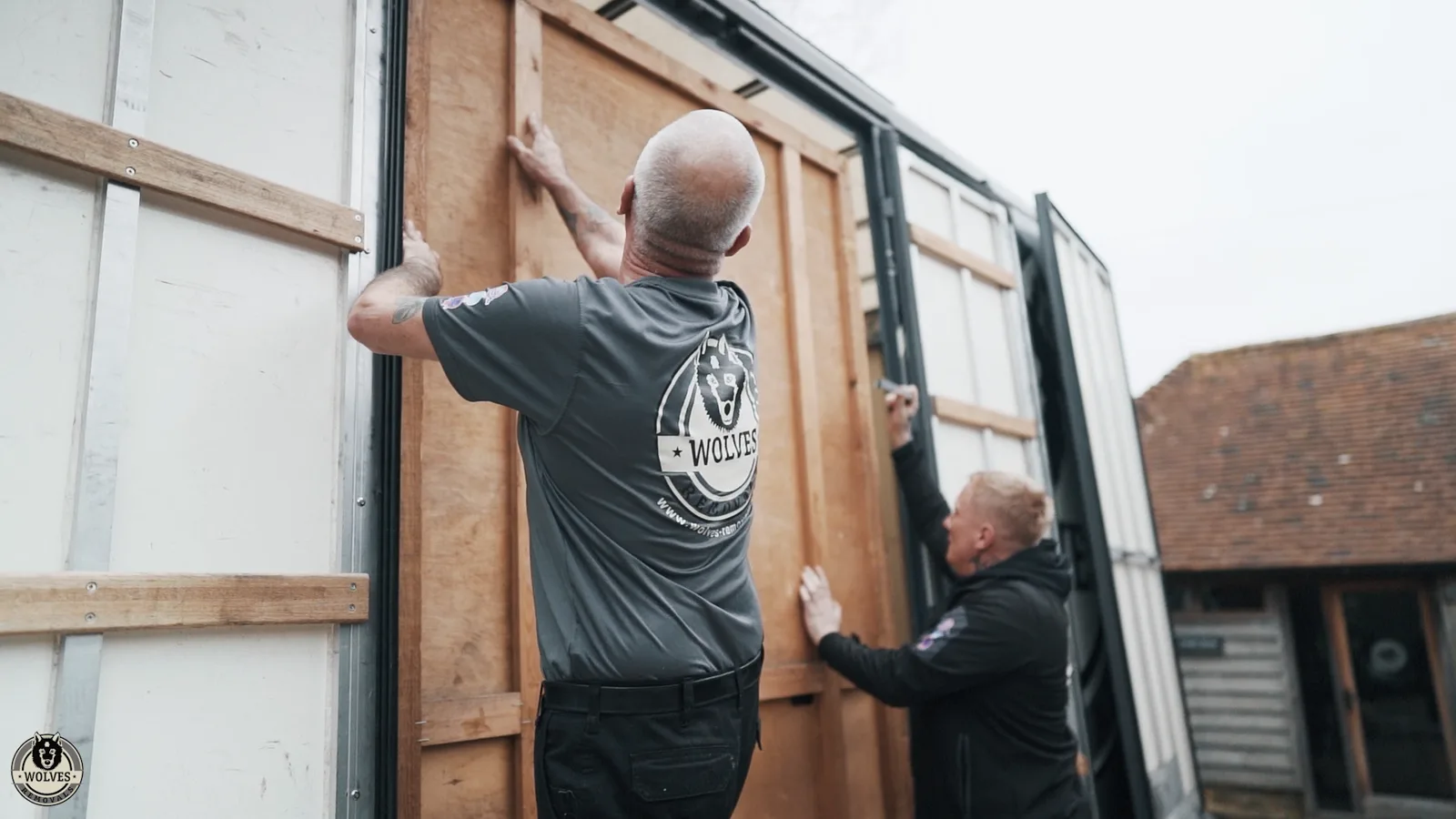
An antique or valuable piece needs a crate when wrapping can’t protect it from what the journey will do: punctures, dents, other things stacked on it, or a long trip with many handlings. The Canadian Conservation Institute calls the outer container the first line of defence, but against drops and knocks, the cushioning inside does most of the protecting.
The quick answer
What it adds: A rigid shell, against punctures, dents and stacked weight
What protects: The cushioning, the piece floats inside, it doesn’t rattle
Marked: This way up, with fragile and lifting marks
Going abroad: Treated and marked, solid timber needs the ISPM 15 mark; plywood is exempt
Glass, ceramics, heavy pieces being shipped and anything going by sea gain the most. Museum guidance says a piece carried door to door by specialist art handlers, with no transfers, may need less. Not sure? Ask for a free survey.
What a Crate Actually Does
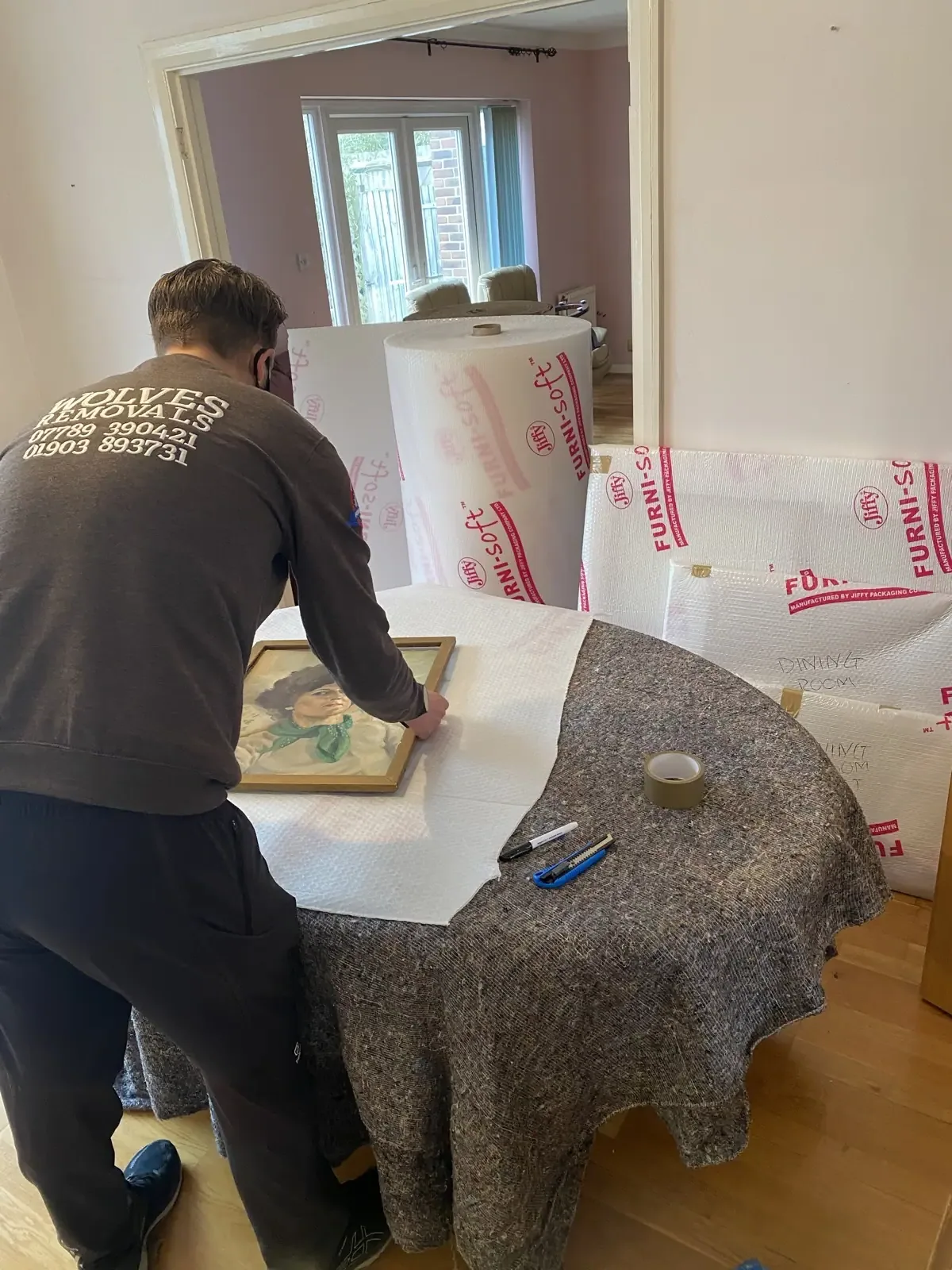
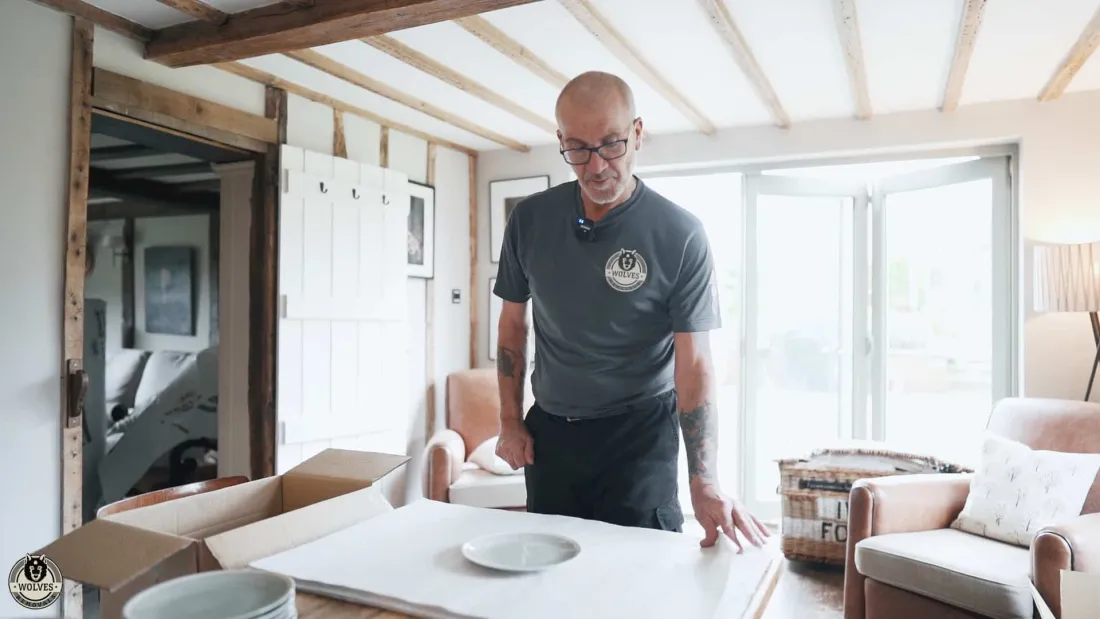
A crate is a rigid box. It stops the corner of another package or a forklift tine going through to the piece, and it can be built to take the weight stacked on top in a lorry. Our guide to wrapping antique furniture covers the soft option.
Wrapping or a crate?
Wrapping
Soft.
-
Padding and covers guard against rubbing and scuffs
-
Wrapping alone may not buffer humidity long enough in a rapid temperature change
-
Museum guidance says it may be enough when specialist art handlers carry a piece door to door, with no transfers
A crate
Rigid.
-
A rigid shell takes punctures and dents, such as the corner of another package
-
Can be built to carry the weight stacked on top in a lorry or container
-
Suits longer journeys with more handling, and sea freight
From the Canadian Conservation Institute and the US National Park Service.
Why the bottom of the stack matters
-
In a stack, the bottom container carries the weight of everything above it.
-
On the road, bumps magnify that load.
-
A crate can be built to carry it; with wrapping alone, the piece itself takes the load.
Drawing not to scale. Source: the Canadian Conservation Institute.
A 60 cm drop onto a hard floor
Wooden box, no cushioning: about 139 times its own weight
With 25 mm of cushioning: about 69 times its own weight
With 50 mm of cushioning: about 37 times its own weight
A rigid box still passes a hard knock to the piece; each layer of cushioning cuts it further. Figures are approximate.
Source: the Canadian Conservation Institute.
What a Crate Is Made Of
Inside, the piece floats in cushioning, held still by blocks and braces. Outside, plywood panels, a screwed lid, low handles and skids for a pallet truck.
Inside a crate
-
Plywood shell: 12 mm is a typical museum minimum, on a 19 mm plywood base.
-
Cushioning: roughly 5 cm or more all round, so the piece can sink in and slow down without rattling.
-
Blocking: blocks and braces stop the piece moving, without over-packing it.
-
Screwed lid: never nailed. Nails can pierce the contents, and hammering and prying shake them.
-
Handles and skids: handles at about knee height, and skids so a pallet truck can get underneath.
Drawing not to scale. Sources: the Canadian Conservation Institute and the US National Park Service.
When a Crate Is Justified
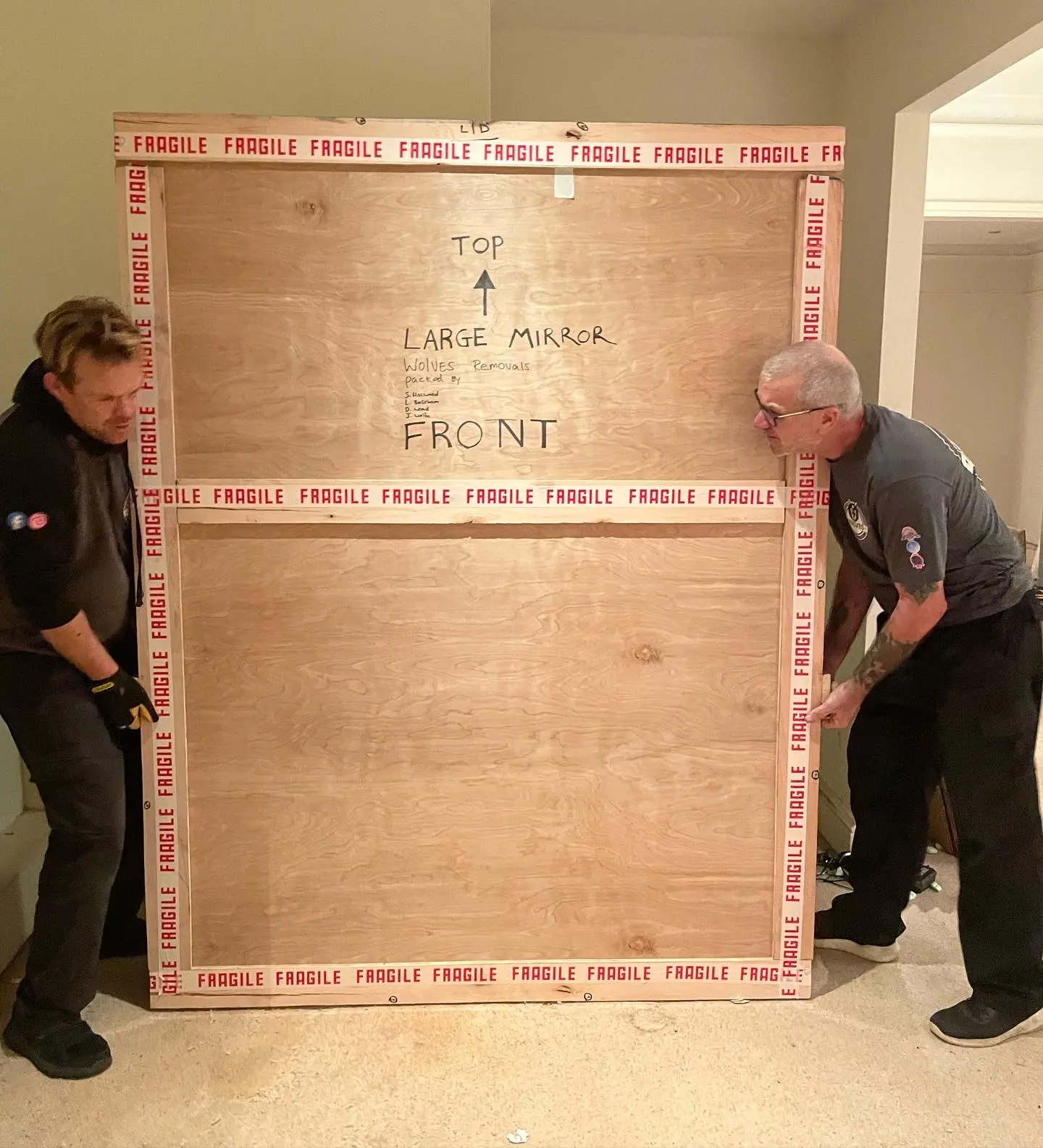
A crate is most useful for glass and ceramics, for heavy or valuable pieces being shipped, and for sea freight, with its high stacking and damp.
Which pieces benefit most
Glass and ceramics
Fragile.
-
Can fail suddenly from a small flaw
-
Need packing that avoids bending and point loads
Heavy or valuable pieces
Rigid support.
-
Paintings, sculpture and furniture, or anything valuable and fragile
-
When packed for shipping, they need wood or rigid plastic, not cardboard
Sea freight
The extreme case.
-
High stacking, hooks and slings
-
Humidity near 100% and condensation inside the container
Sources: the Canadian Conservation Institute and the US National Park Service.
Three questions to ask about a piece
-
Is it glass, ceramic or otherwise brittle?
-
Will it pass through other hands, or go by sea?
-
Will anything be loaded on top of it?
A yes points beyond plain wrapping: a double box, a mirror box or a crate. If every answer is no, wrapping may be enough: we’ll confirm at the survey.
For smaller frames, see our guide to packing a picture. Our guide to moving antique furniture covers marble tops, mirrors and glass, which travel separately.
Crating Mirrors, Paintings and Other Fine Pieces
Each kind of piece needs its own crate. Our custom crate service builds made-to-measure timber crates for fine art, antiques and sculpture.
How a framed painting sits in our crates
-
We crate a framed painting upright, with corner protectors and soft-faced battens that grip the frame without pressing on the canvas.
-
Conservators keep nothing in contact with the paint: a board over the front of the frame must not sag onto the surface.
-
Museum guidance is to carry a painting with its painted face towards the carriers, so that a backing board, where one is fitted, takes any knock.
Drawing not to scale. Our practice, from our custom crate service; the paint points are from the Canadian Conservation Institute’s notes on handling and wrapping paintings.
Paintings
Nothing on the paint.
-
No bubble wrap straight against paint: tissue or polyester film first
-
Museums give unframed paintings and fragile frames a travel frame, so any cover touches the frame, never the paint
-
Flaking or lifting paint should be treated by a conservator before it travels
-
Museum guidance: don’t move paintings in an unheated vehicle in cold weather; acrylics are most at risk
Glazed pictures
Glass off the art.
-
The glass or acrylic must never touch the picture: the frame needs a spacer
-
Acrylic won’t shatter but suits pastel and charcoal badly, because of static
-
Museums often tape the outside of the glass with low-tack tape, though tests suggest it doesn’t always reduce damage
Gilded frames
No tape.
-
No tape or adhesive on gilding; museums interleave gilded frames with acid-free tissue
-
Loose ornament and weak corners are stabilised by a conservator or framer first
-
Keep an original frame with its painting wherever possible
Mirrors
Carry upright.
-
Museum guidance is to carry a mirror upright, which spreads the weight and reduces the chance of cracking
-
Older mirrors may have a toxic tin-mercury backing: signs include silver droplets in the frame and a bluish reflection
-
Conservators handle suspected mercury mirrors in disposable gloves and keep them upright
Chandeliers
Drops off first.
-
Conservators take off the chains of drops first, keeping each set labelled, then the nozzles, drip-pans and arms
-
Old pins may be decayed, so the floor below is padded and more than one person works
-
Check which parts are fixed, how secure the hooks are, and whether anything is missing
Sculpture
Heavy part low.
-
Heavy stone needs a purpose-built case with padded supports at the weight-bearing points
-
The heaviest part goes low and central in the crate
-
Plaster looks robust but chips easily, and large pieces are often damaged by prying under their edges to lift them
Ceramics and glass
Never stacked.
-
Museums double-box them in foam shaped to each piece, with soft tissue between
-
Lids and bases travel separately, and pieces never knock together
-
Handled with clean bare hands or snug gloves: cotton gloves are slippery
Sources: the Canadian Conservation Institute, Museums Galleries Scotland, the US National Park Service, the American Institute for Conservation, the V&A, Icon and a conservation journal study of chandeliers.
Options Between Wrapping and a Crate
Between wrapping and a full crate sit double boxes, mirror boxes and triwall containers; a double crate goes one step further.
From soft wrapping to plywood
-
Wrapping: Padding and covers.
-
Double box: A cushioned box inside a larger box.
-
Mirror box or triwall: Card containers for light to medium pieces; triwall is triple-wall card on a softwood frame.
-
Plywood crate: A rigid shell with cushioning inside.
-
Double crate: An inner case cushioned inside an outer crate.
Sources: the Canadian Conservation Institute and the US National Park Service. Double crating has performed very well for highly fragile items.
A crate used only once or twice can be made of materials that are easier to work, such as heavy board. Knock-down crates break down to about a fifth of their size. Our custom crate service builds timber crates around each piece.
How We Build a Crate
We build most crates at our workshop. Pieces too large, heavy or fixed to bring there are crated on site.
How we build a crate
-
At the survey:
Measure the piece. The widest, tallest and deepest points, anything that sticks out, the centre of gravity and the weight.
-
In the workshop:
Build it around the piece. A softwood or birch-ply frame, with a cavity left for cushioning.
-
Packing:
Line, fit and photograph. High-density foam and fitted bracing, then the inside is photographed before the lid is fixed.
-
Before it travels:
Mark it. Lifting, direction and fragile marks. A crate must also be tied down, or it can slide in a lorry.
-
At the other end:
Let it settle before opening. Give it time to reach room temperature: the Canadian Conservation Institute says 12 to 24 hours, the US National Park Service 24 to 48. Opening a cold crate early risks condensation.
-
Afterwards:
Keep it, or we take it. In most cases you can keep the crate, or we can take it away. Joints are screwed and glued so it opens cleanly.
Our own process, from our custom crate service; the tie-down and settling points are from the Canadian Conservation Institute and the US National Park Service.
A crate is bigger and heavier than the piece, so the Canadian Conservation Institute advises working out its size early, to fit through both ends.
Every crate is custom made and priced individually, by its size and how intricate it needs to be. A chandelier also needs framing, and a large mirror needs a different crate from a glass statue. Careful wrapping and handling stay part of our standard house removals price. We’ll tell you at the free survey whether anything needs a crate, and why.
Crates, Climate and Storage
Against damp, the wrap inside a crate does most of the work, not the box. Museums use crates for transport, not storage.
Damp, air and condensation
A crate breathes: Plywood lets air in far more than polythene does
The wrap does the work: A moisture-barrier wrap helps a piece buffer itself
Let it warm first: 12 to 48 hours before opening, to avoid condensation
Sources: the Canadian Conservation Institute and the US National Park Service.
The Canadian Conservation Institute says pieces with a lot of bare, uncoated wood, sealed in a moisture-barrier wrap, may largely buffer themselves on a normal journey. Keep tissue or cotton between any plastic and the finish.
The US National Park Service says not to store objects in packing containers permanently. If a piece does stay in one for long, the Canadian Conservation Institute says the inside should be lined or painted and the crate kept dry and stable. Our long-term storage page covers how we store furniture.
Crates Going Abroad: ISPM 15
ISPM 15 is the international standard for wood packaging. A solid-wood crate going abroad must be treated, usually by heat, and carry the ISPM 15 mark; plywood is exempt.
ISPM 15 rules for wooden crates
-
Solid wood packaging, including crates and their timber skids, framing and blocking, must meet ISPM 15 to cross borders.
-
The wood is debarked and heat-treated or fumigated. The mark shows the country, the producer and the treatment, such as HT for heat treatment.
-
The printed mark is the proof: no separate certificate replaces it.
-
Plywood, and wood 6 mm thick or less, is exempt.
-
Since 1 January 2021 this also covers moves between Great Britain and the EU. Check what the destination country requires.
Example mark, simplified: the real mark carries the official IPPC symbol, not the letters. Sources: GOV.UK and the ISPM 15 standard.
We are a LAPADA Approved Service Provider (LAPADA is the Association of Art & Antiques Dealers). For a whole collection, see specialised antiques moving.
Not sure if it needs a crate?
Show us the piece at a free video or in-home survey, and we’ll tell you whether wrapping will do or a crate is worth building.
The Wolves Removals Team
Family-run removals · Ashington, West Sussex
We have moved families and businesses across West and East Sussex, Surrey, Hampshire and Kent since 2016, from our Ashington base. We are fully insured, Checkatrade-verified and a LAPADA Approved Service Provider for antiques and fine art. More about us, or read our reviews.
When Does an Item Actually Need a Bespoke Crate? — FAQs
Wrapping pads a piece against rubbing and scuffs. A crate adds a rigid shell against punctures, dents and stacked weight, with the piece floating in cushioning inside. The Canadian Conservation Institute’s drop figures show the cushioning does most of the work against shock.
No. Museum guidance says good wrapping may be enough when specialist art handlers carry a piece door to door with no transfers. Marble tops, mirrors and glass come off and travel separately. Crates suit glass, ceramics, heavy pieces being shipped, longer journeys with more handling, and sea freight.
We measure the piece at the survey, then build most crates at our workshop: a softwood or birch-ply frame with room for cushioning, lined with foam and fitted bracing, with screwed and glued joints. Allow around two weeks.
Every crate is custom made and priced individually, by its size and how intricate it needs to be. A chandelier also needs framing, and a large mirror needs a different crate from a glass statue. We’ll look at the piece at a free survey.
Yes. Solid wood packaging must meet ISPM 15: debarked, heat-treated or fumigated, and stamped with the ISPM 15 mark. Plywood is exempt. Since 2021 this covers moves between Great Britain and the EU. Check the destination country’s rules.
Not straight away. Let it reach room temperature first: the Canadian Conservation Institute says 12 to 24 hours, the US National Park Service 24 to 48. Opening a cold crate early risks condensation on the piece.
Yes: a double box, a mirror box or a triwall container (triple-wall card on a softwood frame). For highly fragile items, a double crate puts an inner case inside an outer crate.