How to Plan a House Move: Your Week-by-Week Timeline
A well-planned house move works backwards from moving day in clear stages: book your removals company and start a gentle declutter at eight weeks out, make the big decisions at six weeks, handle admin at four, build momentum at two, then pack the last boxes in the final week.

This guide walks through that realistic timeline, from the moment your move is confirmed to your first night in the new home.
Why a Plan Matters More Than You Think
Moving home consistently ranks among life's most stressful events, and the reason is rarely the lifting and carrying. It is the sheer number of small decisions and deadlines that pile up if they are not spread out sensibly. Utility transfers, redirected post, school changes, packing, parking permits, pet care, the list grows quickly. When you tackle everything in the final fortnight, it becomes overwhelming. When you spread it across the weeks leading up to the move, each task is manageable.
At Wolves Removals we have helped families across West Sussex, Surrey, Hampshire and Kent move since 2016, and the single biggest predictor of a smooth day is preparation. The households who start early, label thoughtfully and communicate clearly with their movers almost always have the easiest experience. This timeline is built from that experience.
Eight Weeks Before: Lay the Groundwork
As soon as your move date is realistic, even if not yet confirmed, begin the groundwork. The earlier decisions you make now shape everything that follows.
Book Your Removals Company
Good removals firms get booked up, especially around month-end, bank holidays and the summer peak. Start gathering quotes early. Look for genuine credentials rather than marketing claims: we are a Checkatrade-verified, LAPADA Approved Service Provider and fully insured, with goods-in-transit and public liability cover in place, which matters when your possessions are on the road. Arrange a survey, either in person or by video, so the company can assess volume accurately and give you a dependable price. You can read more about our full house removals service and request a no-obligation quote for your move at any time.
Decide What Goes With You
The cheapest thing to move is something you do not move at all. Eight weeks out is the ideal time to start a gentle declutter. Be honest about what you actually use and love. Anything destined for the charity shop, the tip or a car-boot sale should not be paid for by the metre on moving day. If you discover you have far more to clear than expected, a professional house clearance service can take the strain off.
Sketch Out Your Budget
Moving costs add up beyond the removals fee: packing materials, mail redirection, time off work, cleaning, and the deposit and first month on a new tenancy if you are renting. Our pricing guide sets out how removals are typically costed so there are no surprises.
Six Weeks Before: Make the Big Decisions
With the move booked, this is the window for the larger logistical choices.
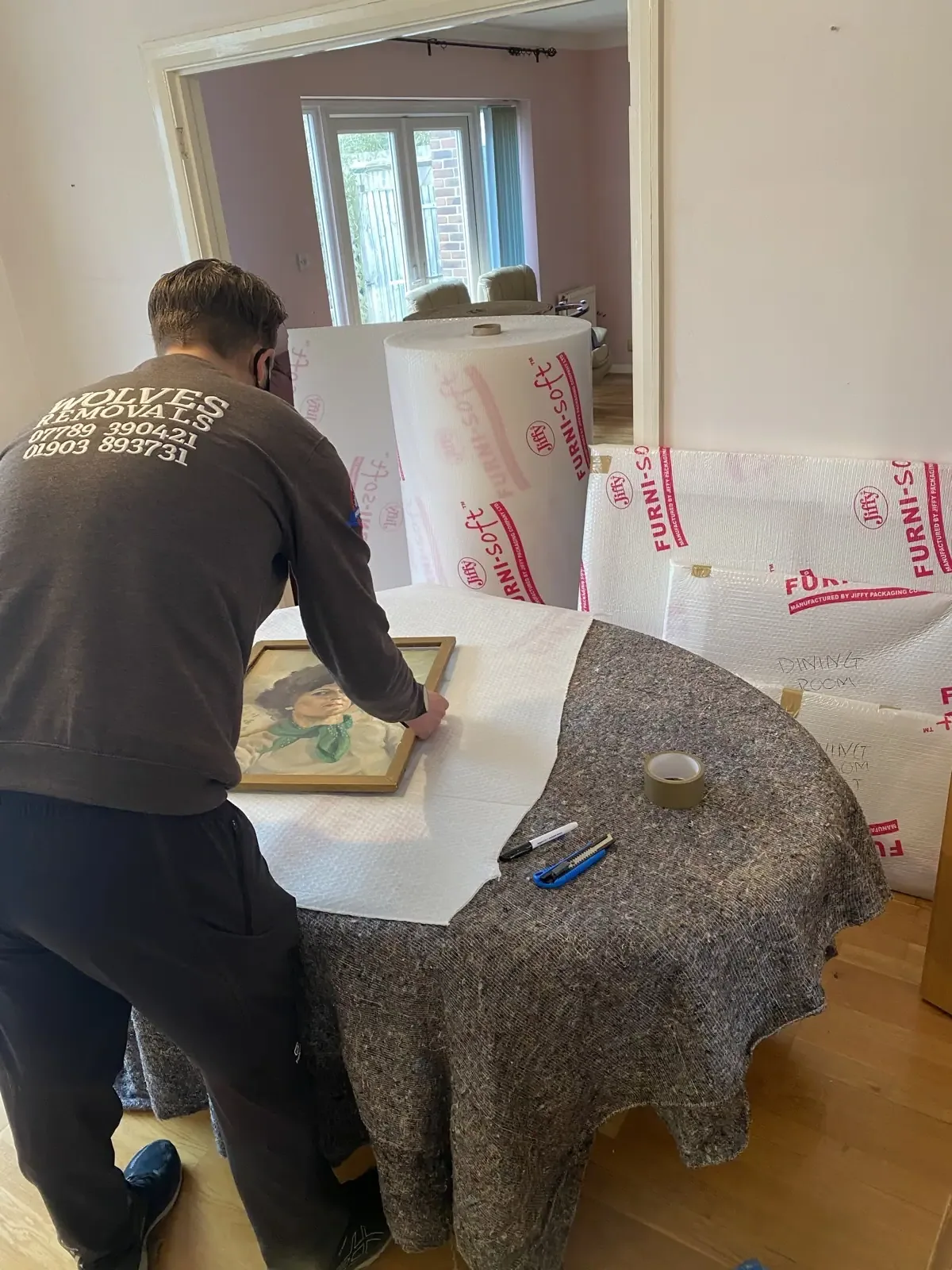
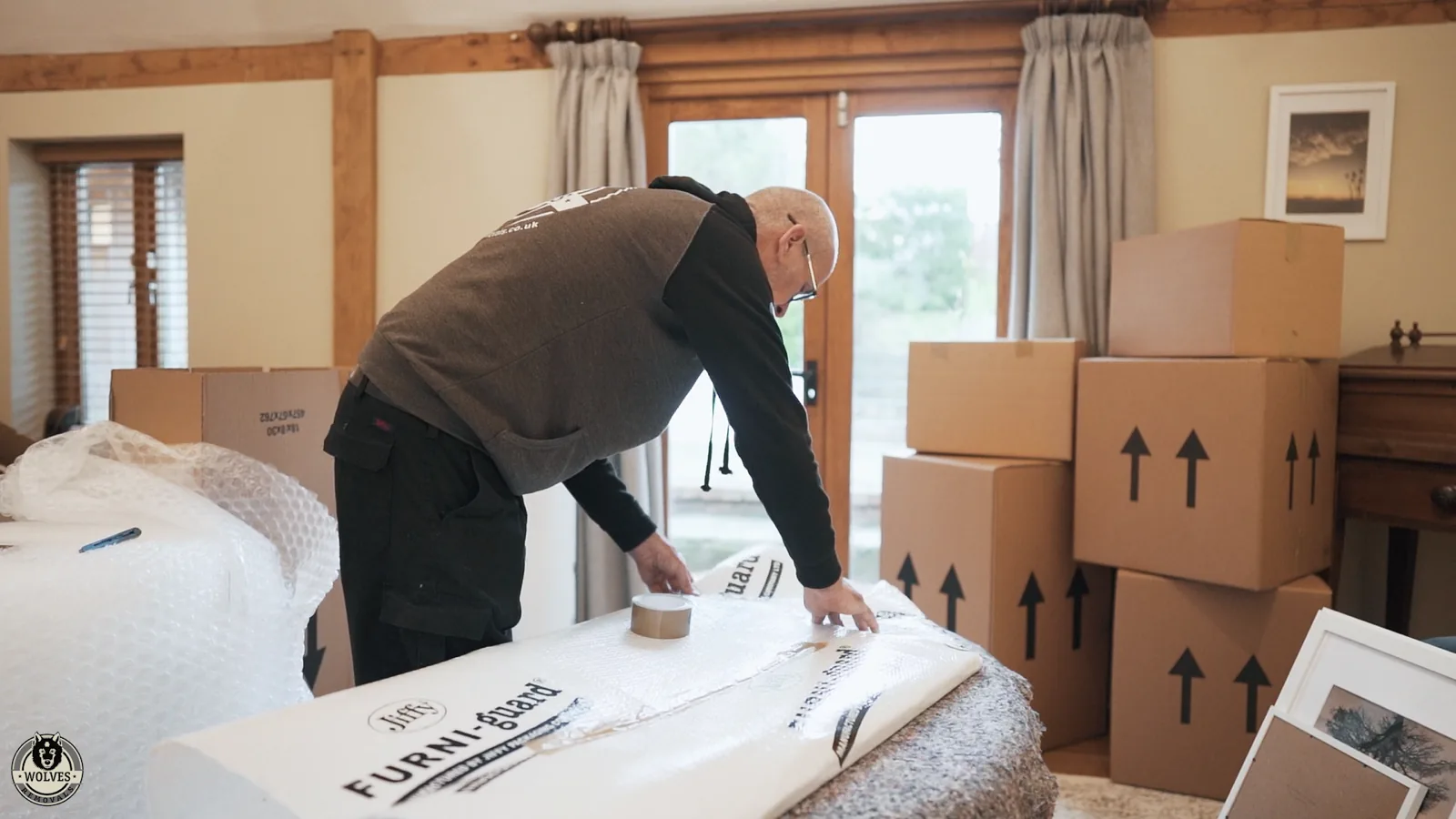
- Confirm your packing approach. Will you pack yourself, or use a professional service? Self-packing saves money but eats time; our full packing service wraps and boxes your entire home quickly and safely, which is invaluable for busy households or anyone short on time.
- Order packing materials. If you are packing yourself, you will need more boxes than you expect, plus tape, bubble wrap and marker pens. Stock up early through our packing materials shop so you are not caught short the week before.
- Consider storage. Completion dates rarely line up perfectly. If there is a gap between moving out and moving in, or your new home is smaller, look into containerised storage options. Our storage calculator helps you estimate how much space you will need.
- Arrange time off work. Book the moving day and ideally the day after, so you are not unpacking on no sleep before a Monday meeting.
Four Weeks Before: Start the Admin
One month out, the paperwork begins in earnest. Tackle a couple of these tasks each evening rather than all at once.
Notify the Right People
Create a master list of everyone who needs your new address. A useful order of priority:
- Employer and HR/payroll
- Bank, building society, credit card and pension providers
- Local council (for council tax) at both old and new addresses
- HMRC and the DVLA (driving licence and vehicle log book)
- GP, dentist, optician and any specialist clinics
- Schools and nurseries
- Insurers (home, car, life, pet)
- TV licence, broadband and streaming subscriptions
Set Up Mail Redirection
Royal Mail's redirection service can take a little while to activate, so arrange it now rather than the week of the move. It catches anything you forget to update directly.
Begin Slow Packing
Start with the things you rarely touch: out-of-season clothes, books, spare bedding, the loft, the garage. Label every box with its contents and the room it belongs in at the new house. A quick read of our five top tips for moving home will sharpen your packing technique before you really get going.
Two Weeks Before: Build Momentum
Now packing should be in full swing and the admin largely done. Keep one room functional, usually the kitchen and a bathroom, and pack everything else methodically.
- Run down perishables. Start eating your way through the freezer and store cupboard. There is no sense moving frozen food across the county.
- Confirm details with your movers. Check the arrival time, the access at both properties, parking, and whether any items need special handling such as antiques, pianos or fine art.
- Sort parking and access. If either road is tight or permit-controlled, arrange a bay suspension or a permit with the council so the removals van can get close.
- Plan for children and pets. Moving day is far smoother if young children and animals are looked after elsewhere. Line up a friend, relative or sitter now.
- Look for ways to trim costs. Our guide to money-saving tips when moving house has plenty of practical ideas for keeping the bill down without cutting corners.

The Final Week: Pack the Last Boxes
The home stretch. By now the house should be mostly in boxes, with only daily essentials still out.
Pack an Essentials Box
This is the single most useful thing you can do. Pack one clearly marked box (or two) that travels with you in the car, not the van, containing everything you will need on the first night and morning:
- Kettle, mugs, tea, coffee and a few snacks
- Toilet roll, hand soap, towels and toiletries
- Phone chargers and a basic tool kit
- Medications, important documents and keys
- A change of clothes for everyone and bedding for the first night
- Cleaning cloths and bin bags
Defrost and Disconnect
Empty, defrost and dry the fridge-freezer at least 24 hours before the move. Disconnect washing machines and dishwashers, and keep the fittings together in a labelled bag taped to the appliance.
Final Reading and Photos
Take meter readings (gas, electricity, water) at the old property and photograph them, along with the general condition of the home if you are renting. This protects your deposit and ensures your final bills are accurate.
Moving Day Itself
If you have planned well, today should feel surprisingly calm. A few things keep it that way:
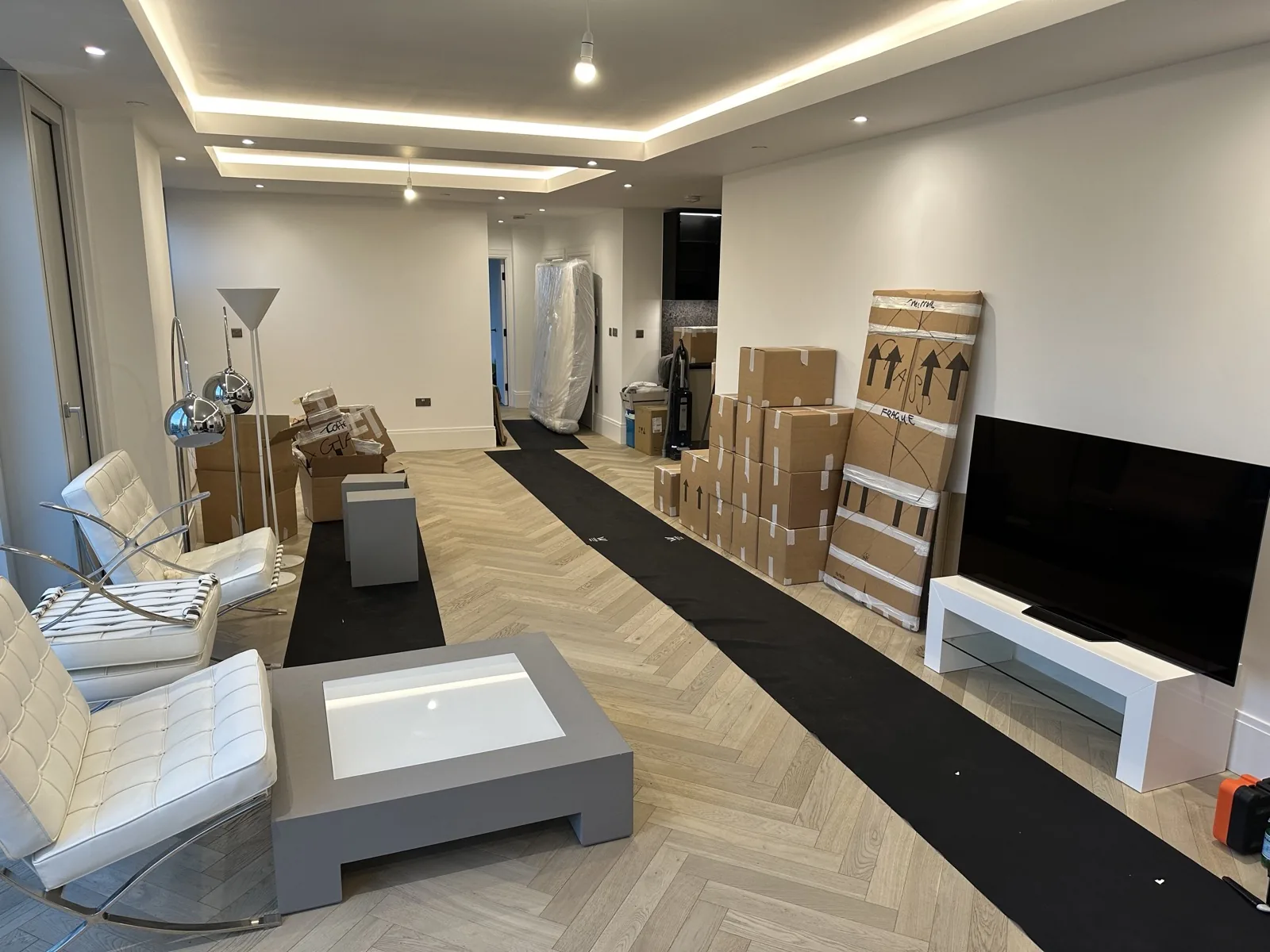
- Be ready before the crew arrives. Boxes sealed, labelled and grouped by room makes loading fast and efficient.
- Do a walk-round with your movers. Point out anything fragile, valuable or awkward, and any items not coming with you.
- Keep your essentials box and valuables with you. Passports, jewellery, laptops and documents travel in your own car.
- Do a final sweep. Check every cupboard, the loft, the shed and the garden before you lock up. It is astonishing what gets left behind.
- Hand over keys properly. Leave keys for the new owners or return them to the agent as agreed, and collect your new set.
If your move is smaller, perhaps a single room, a flat or a few large items, you may not need a full removals team at all. Our man and van service covers exactly that, with a driver and vehicle sized to the job.
The First Week in Your New Home
Resist the urge to unpack everything at once. Work room by room, starting with the bedrooms and kitchen so you can sleep and eat comfortably.
Get the Essentials Working
Take meter readings at the new property immediately and pass them to your suppliers. Test the heating, hot water and smoke alarms, and locate the stopcock, fuse box and gas meter so you are not hunting for them in an emergency.
Make It Secure
You rarely know who holds keys to a property you have just bought. Changing the external locks is a sensible early job — you never know how many keys are still in circulation.
Update the Last of Your Admin
Register with a local GP and dentist, update your address on the electoral roll, and finish notifying anyone you missed earlier. The mail redirection will catch the stragglers.
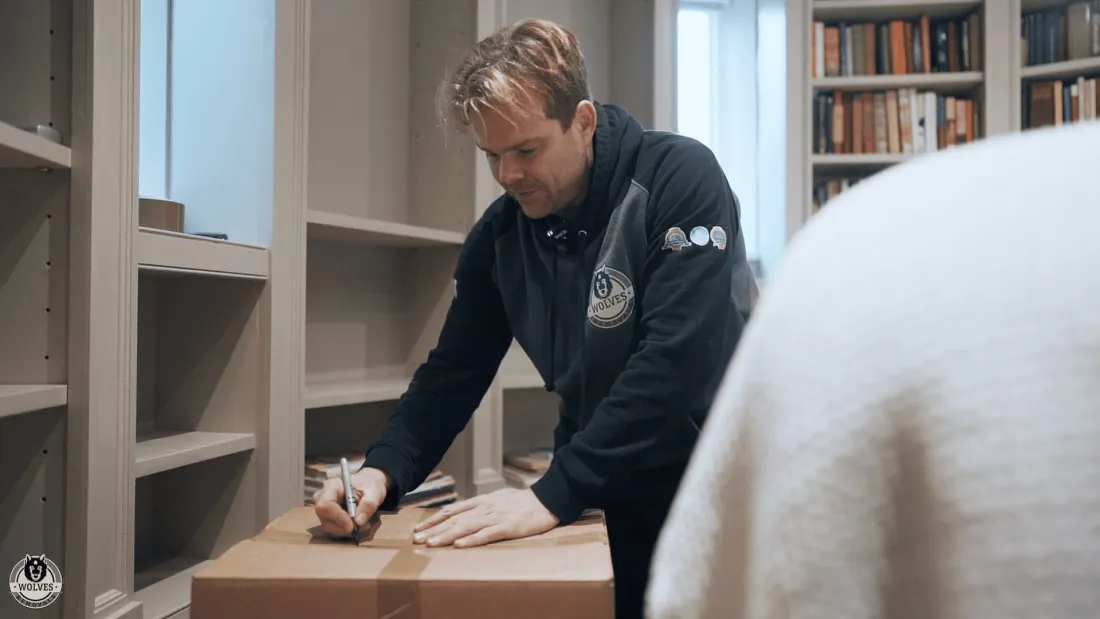
Packing Like a Professional
Packing is where most of the moving day's success is quietly decided, so it pays to do it well. A few principles separate a smooth unpack from a fortnight of frustration. First, pack heavy items such as books into small boxes and lighter items such as bedding and cushions into large ones; a box you cannot lift safely is a box that gets dropped.
Second, fill every box completely, using scrunched paper or soft items to eliminate gaps, because a box with room to shift inside is far more likely to crush on the way. Wolves Removals
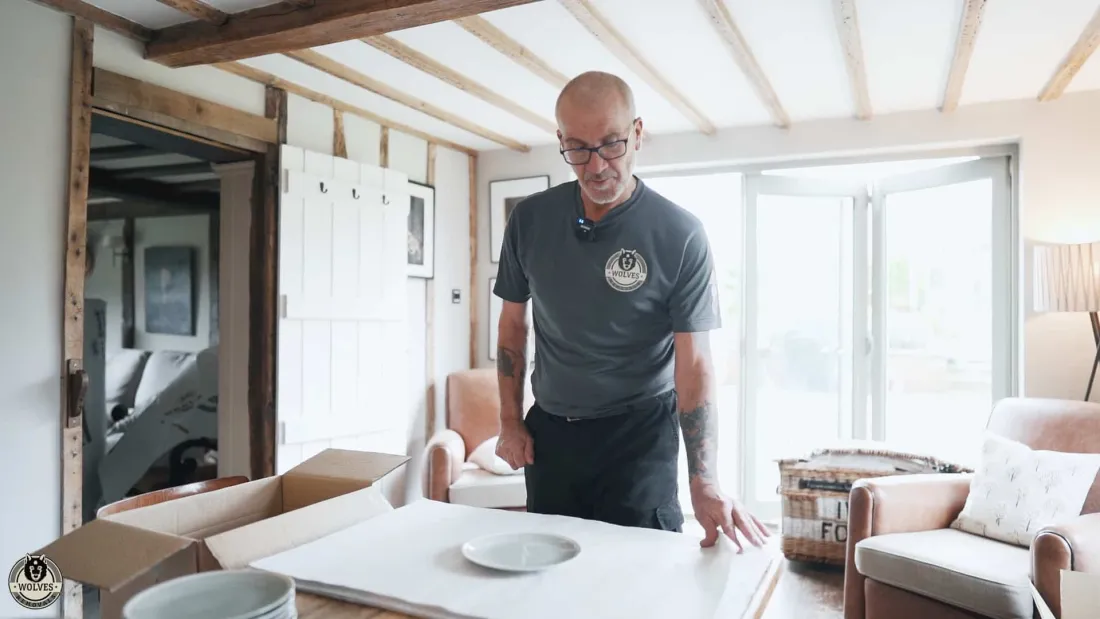
Third, never seal a box without labelling it. Write the destination room and a brief note of the contents on the top and at least one side, so it can be identified whichever way it is stacked. A simple numbering system, with a corresponding list on your phone, makes it easy to check nothing has gone astray. Fragile items deserve extra care: wrap glasses and crockery individually, stack plates on their edges rather than flat, and mark those boxes clearly so they are loaded and carried with attention.
Room-by-Room Strategy
Tackle one room at a time and finish it before moving on. This keeps your home liveable and gives you a satisfying sense of progress. Start with the rooms you use least, the spare bedroom, the study, the dining room, and leave the kitchen and main bathroom until last. Keep a small box of cleaning supplies and a few tools back so you can give each room a quick wipe-down once it is empty, which is especially important if you are renting and want your deposit back in full.
Sorting Out Children, Pets and Plants
The living members of your household need a plan of their own. For young children, the day is far calmer if they spend it with grandparents, friends or a trusted sitter, away from the chaos of an emptying house. If that is not possible, pack a bag of their favourite toys, snacks and comforters to keep them occupied, and explain what is happening in advance so the upheaval feels less alarming.
Pets find moving genuinely stressful, as their familiar territory disappears around them. Cats and dogs are best kept in a quiet room with the door shut, or ideally looked after off-site for the day, then introduced to the new home calmly once the vans have gone. Update their microchip details and your vet records with your new address soon after the move. Houseplants travel best upright in open boxes in your own car, watered a day or two beforehand rather than on the day itself.
The Week Before: Confirm Everything
In the final run-up, a confirmation phone call to your removals company is well worth the five minutes. Reconfirm the date, the arrival window, the addresses, and any access challenges such as narrow lanes, low bridges, parking restrictions or stairs. The more your movers know in advance, the smoother and quicker the day runs. If anything about your circumstances has changed since the survey, perhaps you have decided to take more or less with you, tell them now so the right vehicle and crew turn up.
This is also the moment to withdraw enough cash for any unexpected costs, charge your phone fully the night before, and make sure you know the route to the new property, particularly if it is somewhere you have only visited a handful of times. Small preparations like these remove the friction that otherwise creeps in on a busy day.

Common Mistakes to Avoid
Over the years we have seen the same avoidable problems crop up time and again. Steering clear of these will save you no end of bother:
- Underestimating how long packing takes. It almost always takes longer than people expect. Start early and you will never be caught out.
- Leaving the loft, shed and garage until last. These spaces hide an astonishing volume of belongings. Tackle them in good time, not the night before.
- Not decluttering first. Paying to move things you do not want is money wasted. Sort before you pack.
- Forgetting to measure. Check that large furniture will fit through the doors and up the stairs of the new home before moving day, not after.
- Skipping the essentials box. Without it, your first night involves opening twenty boxes to find a toothbrush.
- Booking too late. Leaving the removals booking until the last minute limits your choice and can push up the cost.
A Note on Larger and Longer-Distance Moves
The timeline above suits most domestic moves, but if you are relocating across the country or into Europe, build in extra lead time. Longer moves involve more coordination around dates, customs paperwork for EU relocations, and sometimes an overnight stage. We handle nationwide and EU moves, and we are always happy to talk through the specifics on your quote request or by phone on 01903 893731.
Wherever you are heading, you can see the full range of areas we cover on our locations page. Whether it is a short hop within West Sussex or a move to the other end of the country, the principle is the same: start early, work through the list a little at a time, and lean on experienced people for the heavy lifting. A house move is a big undertaking, but with a clear plan it is an entirely manageable one.
The Wolves Removals Team
Family-run removals · Ashington, West Sussex
We have moved families and businesses across West and East Sussex, Surrey, Hampshire and Kent since 2016, from our Ashington base. We are fully insured, Checkatrade-verified and a LAPADA Approved Service Provider for antiques and fine art. More about us, or read our reviews.
How to Plan a House Move: Your Week-by-Week Timeline — FAQs
Ideally around eight weeks before your move date. That gives you time to book a removals company, declutter, sort the admin and pack without a last-minute rush. If your timeline is shorter, it is still entirely doable, just more intensive, and a professional packing and removals team can absorb a lot of the pressure.
As soon as you have a realistic move date, even if it is not yet fully confirmed. Quality firms get booked up quickly around month-ends, bank holidays and the summer peak, so early booking secures both your date and a better price. Arrange a survey so the quote is accurate.
Everything you will need for the first night and morning without rummaging through other boxes: kettle, mugs, tea and coffee, toilet roll, toiletries, towels, phone chargers, medications, important documents, a change of clothes and bedding. Keep this box in your own car rather than the removals van.
Your employer, bank and financial providers, the local councils at both addresses, HMRC, the DVLA, your GP and dentist, schools, insurers and any subscriptions. Setting up Royal Mail redirection acts as a safety net for anything you forget to update directly.
It depends on the size of the move. A whole house usually warrants a full removals service, while a flat, a single room or a few large items is often better suited to a man and van. If you are unsure, a quick survey or a phone call will point you to the right option.