Eight Sustainable Packing Ideas Worth Trying
Eight changes make packing genuinely greener: reusable plastic crates instead of cardboard, packing with what you already own, soft furnishings instead of bubble wrap, plastic-free void fill, second-hand or recycled boxes, paper or biodegradable tape, a proper declutter before you start, and a move planned to cut transport emissions.

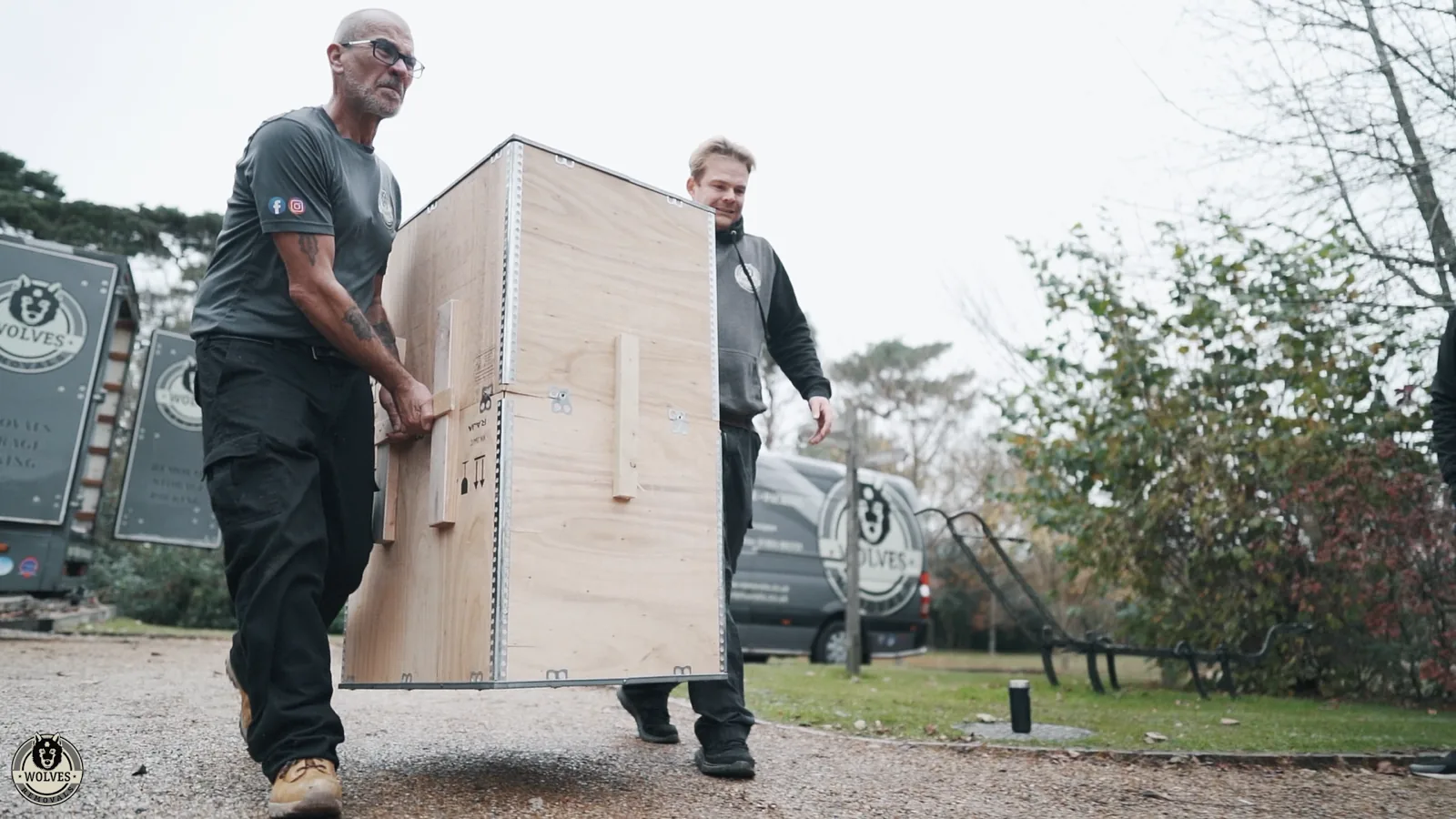
None of it costs more, and most of it is less hassle than the wasteful alternative.
Why sustainable packing is worth the effort
Moving home is one of the few occasions when most households briefly become heavy consumers of packaging. Boxes, bubble wrap, packing peanuts, parcel tape and reams of paper all appear in a fortnight, do their job, and then face an uncertain future in the recycling bin or, more often than we would like, the general waste. Multiply that by the number of moves happening across West Sussex and the wider South East in any given month and the scale of the waste becomes obvious.
Sustainable packing is not about martyring yourself with cardboard you fished out of a skip. It is about making sensible swaps that reduce waste, reuse what you already have, and choose materials that can genuinely be recycled or composted afterwards. Most of these ideas also save money, because the greenest box is almost always the one you did not have to buy. As a family-run firm that has been packing and moving homes since 2016, we have seen first-hand how a little planning turns a wasteful move into a tidy, low-impact one.
1. Use reusable plastic crates instead of cardboard boxes
Cardboard is recyclable, but it is also single-use in practice; a box that has carried books once is rarely strong enough to do the job again, and damp or heavy loads write it off entirely. Sturdy plastic moving crates, by contrast, can be used hundreds of times. They stack neatly, keep their shape under weight, fold flat when empty, and protect contents far better than a tired cardboard box ever could.
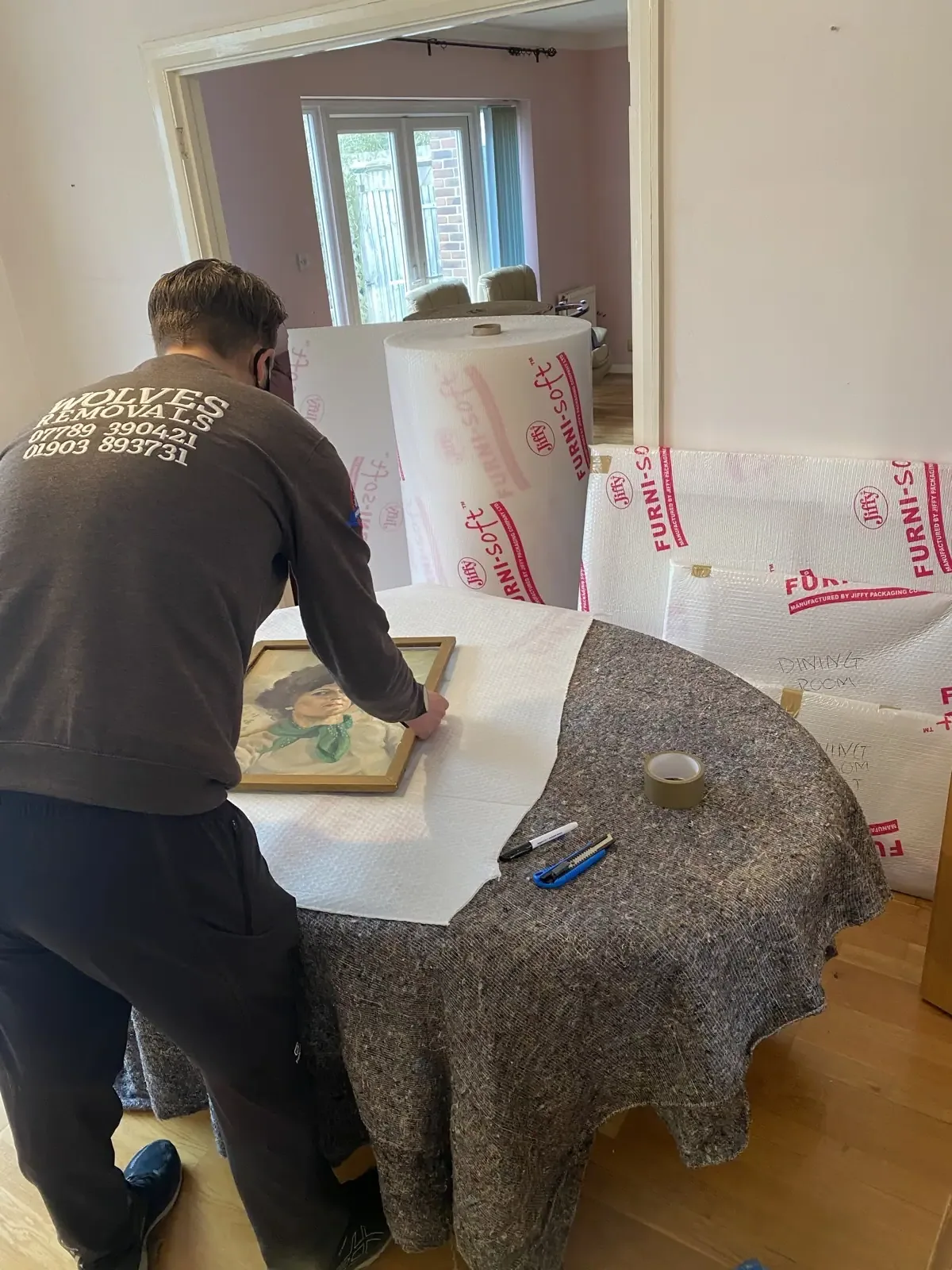
For a self-managed move you can hire crates by the week from rental schemes, which deliver clean crates and collect them once you have unpacked, so nothing ends up in your bin at all. If you would rather not source them yourself, ask your removals firm; many of the items we move travel in reusable crates and protective blankets rather than disposable packaging. It is one of the simplest swaps on this list and arguably the most impactful.
When cardboard still makes sense
Reusable crates are not always the answer. For long-term storage, a sealed cardboard box keeps dust off better and is easier to label and stack on a shelf for months at a time. The trick is matching the container to the job rather than defaulting to single-use boxes for everything.

2. Pack with what you already own
Before you buy a single box, look around your home. Suitcases, holdalls, laundry baskets, storage tubs, drawers and bin bags can all carry your belongings perfectly well, and you have to move them anyway. Suitcases on wheels are ideal for heavy books. Drawers can travel full if you wrap them, saving you from unpacking and repacking them twice. A laundry basket is a ready-made open crate for awkward, lightweight bits.
This approach does double duty: it cuts the number of boxes you need to find, and it reduces the total number of items rattling around loose. Our collection of helpful moving tips has more on packing room by room, but the principle is simple. Treat every container you own as a packing resource and the box count drops dramatically.
3. Swap bubble wrap for soft furnishings
Bubble wrap is the poster child of moving waste: a sheet of plastic, used once, that takes centuries to break down. Yet most of the protection it offers can come from things you are already packing. Towels, tea towels, jumpers, bedding, socks and cushions all make excellent padding for crockery, glassware, ornaments and electronics.
Wrap a wine glass in a sock, nestle plates between folded towels, and cushion a vase inside a duvet. You protect the fragile item and pack the soft item in the same move, so two jobs become one. For genuinely delicate or valuable pieces, professional protection is still worth it, which is where our fragile packing service comes in, but for everyday breakables, your linen cupboard is the greenest bubble wrap you will ever find.
4. Choose plastic-free void fill
Loose-fill packing peanuts made from expanded polystyrene are notoriously hard to recycle and have a habit of escaping into the environment, where they linger for decades. Happily, there are now several greener ways to fill the gaps in a box and stop contents shifting.
- Scrunched paper: recycled kraft or newspaper, scrunched into balls, fills voids well and recycles cleanly afterwards.
- Biodegradable starch peanuts: made from cornstarch, these dissolve in water and can go on the compost heap.
- Mushroom packaging: grown from mycelium, it is fully compostable and increasingly used by eco-minded suppliers.
- Shredded paper or cardboard: if you have a shredder, your confidential post becomes free, recyclable void fill.
If you buy ready-made packing materials, ask what the void fill is made from. Our own packing materials lean towards recyclable paper-based options wherever practical, and we are always happy to advise on the lowest-waste choice for what you are moving.
5. Source second-hand and recycled boxes
If you do need cardboard, you rarely need it new. Local shops, supermarkets and pharmacies often have sturdy boxes destined for the recycling bale and are glad to see them reused.
Community marketplaces and local social media groups are full of people giving away boxes the day after their own move, and you can pass yours on the same way afterwards, keeping a single box in service for several moves before it is finally recycled. Wolves Removals
When you do buy boxes, look for ones made from recycled content and marked as widely recyclable. Avoid waxed or plastic-coated cardboard, which usually cannot be recycled. A well-sourced second-hand box does exactly the same job as a pristine new one at a fraction of the environmental cost.
6. Switch to paper or biodegradable tape
Standard parcel tape is plastic, and because it is stuck to cardboard it complicates recycling; many recycling centres ask you to remove it first. Paper-based gummed tape, by contrast, is recyclable along with the box and made from renewable material. Plant-based and biodegradable tapes are also now widely available.
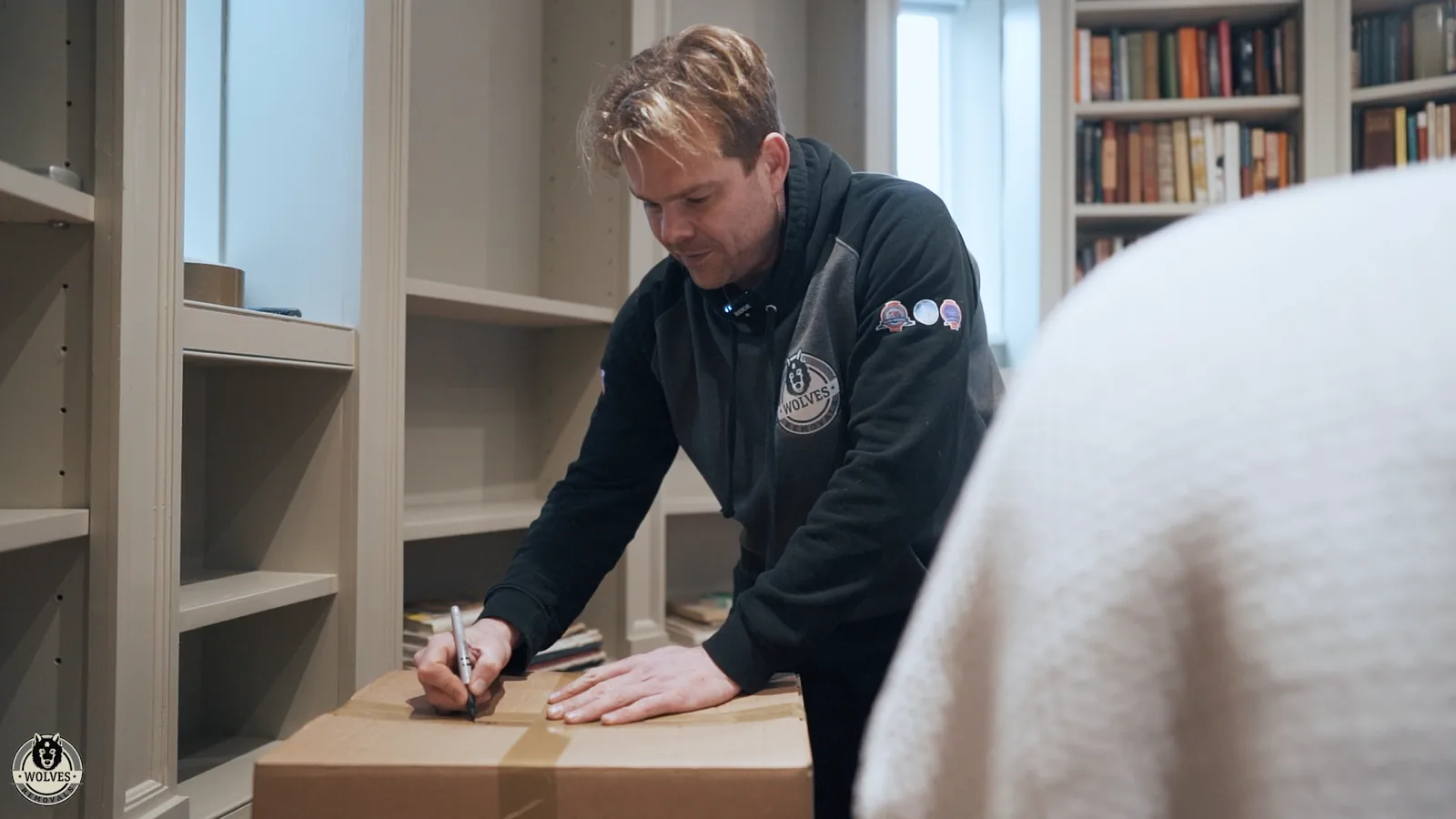
It is a small swap, but tape is one of those items you use on every single box, so the cumulative difference across a whole move is real. While you are at it, label boxes with a marker pen directly onto the cardboard or a paper label rather than reams of coloured plastic tape, so the box recycles cleanly at the other end.
7. Declutter and donate before you pack
The single most sustainable thing you can do before a move is to move less. Every item you donate, sell or recycle before moving day is one fewer thing to wrap, box, transport and unpack. A serious declutter shrinks your move, cuts the packing materials you need, and often reduces the size of vehicle required, which lowers fuel use and cost alike.
Be systematic. Work room by room and sort into keep, donate, sell and recycle. Charity shops across Sussex welcome good-quality clothes, books and homeware. Bulky furniture you no longer want can often be collected by reuse charities. If you are clearing a whole property, perhaps after a bereavement or as part of a downsize, our house clearance service looks at the contents as a whole and makes you an offer for them, rather than charging you to take things away. For more on paring back sensibly, our guide to downsizing your home is a useful companion read.
8. Plan your move to cut transport emissions
Packing is only half the picture; how your belongings travel matters too. A well-planned move uses fewer trips and a vehicle sized to the load, which keeps emissions and costs down together. Cramming everything into one efficiently loaded van beats three half-empty runs every time.
This is where a professional removal genuinely helps the planet as well as your stress levels. An experienced team loads a van far more efficiently than most of us manage with a borrowed car, fitting more in and making fewer journeys. For a smaller move, our man-and-van service right-sizes the vehicle to the job rather than sending a lorry to shift a flat's worth of furniture. If you are moving further afield, consolidating into a single, well-planned trip with our house removals team is far greener than multiple DIY runs in an overloaded estate car.
Combine deliveries and avoid wasted journeys
If your move involves dropping items at a charity, a recycling centre and a storage unit, plan the route so it all happens in one loop rather than several separate outings. The same thinking applies to picking up boxes and materials; gather everything in one trip rather than nipping out repeatedly. Small efficiencies add up across a move.
Putting it all together
None of these ideas is complicated, and you do not have to adopt all eight to make a difference. Even a couple of swaps, reusable crates instead of new boxes, towels instead of bubble wrap, a proper declutter before you start, will noticeably reduce the waste your move leaves behind. The greenest move is a planned move, because planning is what lets you reuse, right-size and avoid the last-minute panic-buying of single-use materials.
If you would like a hand making your move more sustainable, we are glad to help. We pack with reusable blankets and crates wherever practical, advise on recyclable materials, and size every job to the right vehicle so nothing travels half-empty. You can see how our options compare on the pricing page, and when you are ready, you can request a no-obligation quote tailored to your move.
Sustainable packing room by room
It can help to think about greener packing room by room, because each space throws up its own opportunities and its own temptations to over-package. A little forethought keeps waste down without slowing you up.
The kitchen
The kitchen is the room that tempts people into the most bubble wrap, yet it is also the room richest in alternatives. Stack plates vertically rather than flat, with a layer of tea towel, kitchen roll or even paper plates between each one, and they travel far more safely than most people expect. Nest your mixing bowls and pans inside one another with a cloth between them. Glasses and mugs slot neatly into the cardboard dividers from a wine box, which you can ask any supermarket for free. Cutlery can stay in its tray, wrapped as a single bundle. By the time you reach the back of the cupboards, you will have used barely any single-use material at all.
The bedroom and wardrobe
Bedrooms are the easiest room to pack with almost no extra materials, because they are full of soft, packable things. Leave clothes on their hangers and slip a bin bag or reusable laundry sack over the whole bunch to make a ready-made wardrobe carrier. Fill suitcases and holdalls with folded clothes and shoes. Roll belts and ties inside shoes to save space. Bedding and pillows become padding for fragile items in other boxes, doing two jobs at once. There is rarely any need to buy a thing.
The living room and electronics
Electronics are where a little extra care pays off, but you still need not reach for plastic. Wherever you can, pack a television or speaker back into its original box, which was designed for exactly that journey. If the original packaging is long gone, swaddle the item in a folded duvet or several thick towels and secure it with a reusable strap rather than tape. Photograph the back of anything with multiple cables before you unplug it, and bundle leads together in a labelled fabric pouch so reconnecting is quick and nothing goes astray. For anything genuinely valuable or irreplaceable, professional protection remains the sensible choice.
A quick sustainable packing checklist
- Hire reusable crates rather than buying single-use boxes where you can.
- Pack into suitcases, baskets and tubs you already own before buying anything.
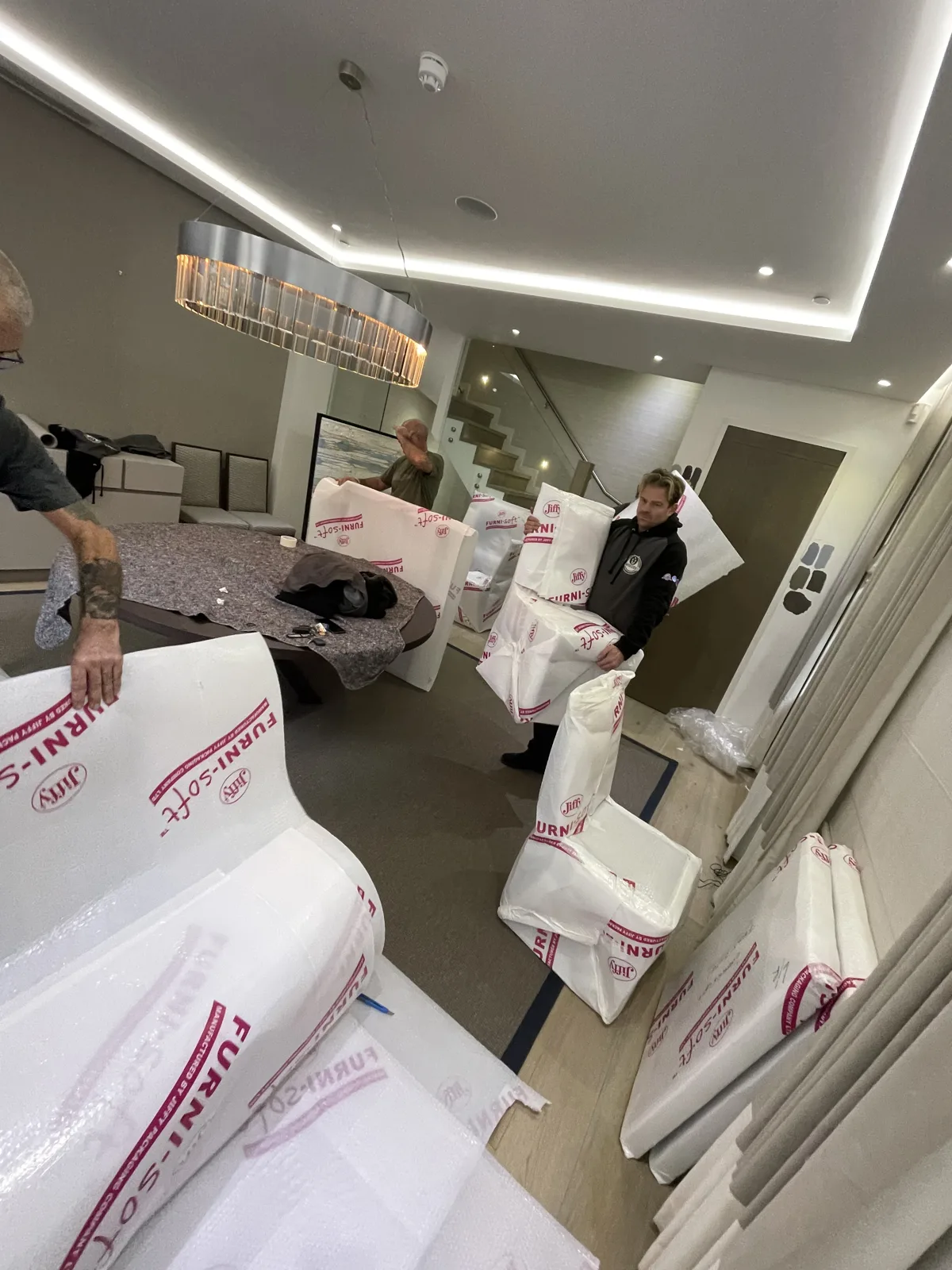
- Use towels, bedding and clothes as padding instead of bubble wrap.
- Fill voids with scrunched paper or compostable peanuts, not polystyrene.
- Source second-hand boxes locally and pass them on afterwards.
- Switch to paper or biodegradable tape so boxes recycle cleanly.
- Declutter, donate and sell before moving day to shrink the move.
- Plan trips and right-size the van to cut transport emissions.
Approach your move this way and you will find sustainable packing is not a sacrifice but a smarter way to pack: less waste, often less cost, and a clearer conscience as you settle into your new home.
The Wolves Removals Team
Family-run removals · Ashington, West Sussex
We have moved families and businesses across West and East Sussex, Surrey, Hampshire and Kent since 2016, from our Ashington base. We are fully insured, Checkatrade-verified and a LAPADA Approved Service Provider for antiques and fine art. More about us, or read our reviews.
Eight Sustainable Packing Ideas Worth Trying — FAQs
The single greenest step is to move less by decluttering, donating and selling before you pack, because every item you remove saves wrapping, a box and transport. After that, reusable plastic crates instead of single-use cardboard, soft furnishings instead of bubble wrap, and paper-based void fill make the biggest difference with the least effort.
For most everyday breakables, yes. Towels, tea towels, jumpers, cushions and bedding cushion crockery, glassware and ornaments very effectively, and you have to pack those soft items anyway. For genuinely delicate or valuable pieces such as antiques or fine glass, professional fragile packing is still the safest choice.
For protecting most household items, yes. Cornstarch peanuts cushion contents just as well, with the major advantage that they dissolve in water and can go on the compost heap rather than lingering in landfill for decades. Scrunched recycled paper is another excellent plastic-free alternative for filling voids.
Local shops, supermarkets and pharmacies often give away sturdy boxes bound for recycling, and community marketplaces or local social media groups are full of people passing on boxes after their own move. When you buy boxes, choose recycled-content cardboard and pass them on again afterwards so each box serves several moves.
It can. An experienced team loads a van far more efficiently than most DIY attempts, fitting more in and making fewer trips, and many firms move items in reusable blankets and crates rather than disposable packaging. Choosing a vehicle sized to your load, rather than several half-empty runs in a car, also cuts fuel use and emissions.