How to Live in Between Homes Without Losing Your Mind
Living in between homes without losing your mind comes down to one decision above all others: putting the bulk of your furniture into secure short-term storage so your temporary accommodation stays liveable and your belongings stay safe until the new home is ready.


That way everything moves once into storage and once out again, rather than being dragged from place to place. This guide walks through managing that gap calmly, from choosing where to stay to keeping daily life ticking over.
Why so many people end up between homes
Living between homes sounds like bad luck, but it is often simply how moving works in practice. Property chains rarely line up perfectly, completion dates shift, renovations overrun, and the safest way to buy is sometimes to sell first and rent while you find the right place without pressure. Far from being a failure of planning, an in-between period is frequently the result of sensible decisions, refusing to rush into the wrong purchase, or breaking a chain to keep a sale alive.
Once you accept that the gap is normal, it stops being frightening. The trick is to treat it as a distinct phase of the move with its own small set of jobs: deciding where you will sleep, where your belongings will live, and which possessions you need to keep close. Get those three things sorted and the rest falls into place.
First decision: where will you stay?
The most pressing question is where you will actually live during the gap. The right answer depends on how long the period is likely to last and what suits your circumstances.
Staying with family or friends
For a short gap of a few days or weeks, bunking in with family or friends is the classic solution. It is cheap, comforting and flexible, though it works best when everyone is honest about the likely timescale from the outset. The arrangement that feels generous for a fortnight can wear thin if it stretches to two months, so agree expectations early and keep them updated if the dates slip.
Short-term rental or serviced accommodation
For longer or more open-ended gaps, a short-term let, holiday rental or serviced apartment gives you independence and privacy. It costs more, but it lets you keep something close to a normal routine, which matters enormously if you are working, have children in school or simply value your own space. Look for flexible terms so you are not locked in if your new home becomes available sooner than expected.
Renting between sale and purchase
Some people deliberately sell, move into a rental and then buy, putting themselves in the powerful position of a chain-free cash-ready buyer. It is more upheaval, but it removes the pressure of a chain and can save money and heartache on the purchase. If this is your plan, it pays to think of it as two moves and budget accordingly.

Where your belongings will live
Wherever you stay temporarily, you almost certainly will not have room for everything you own, and this is where the in-between period most often comes unstuck. The solution is storage, and it is genuinely the backbone of living between homes.
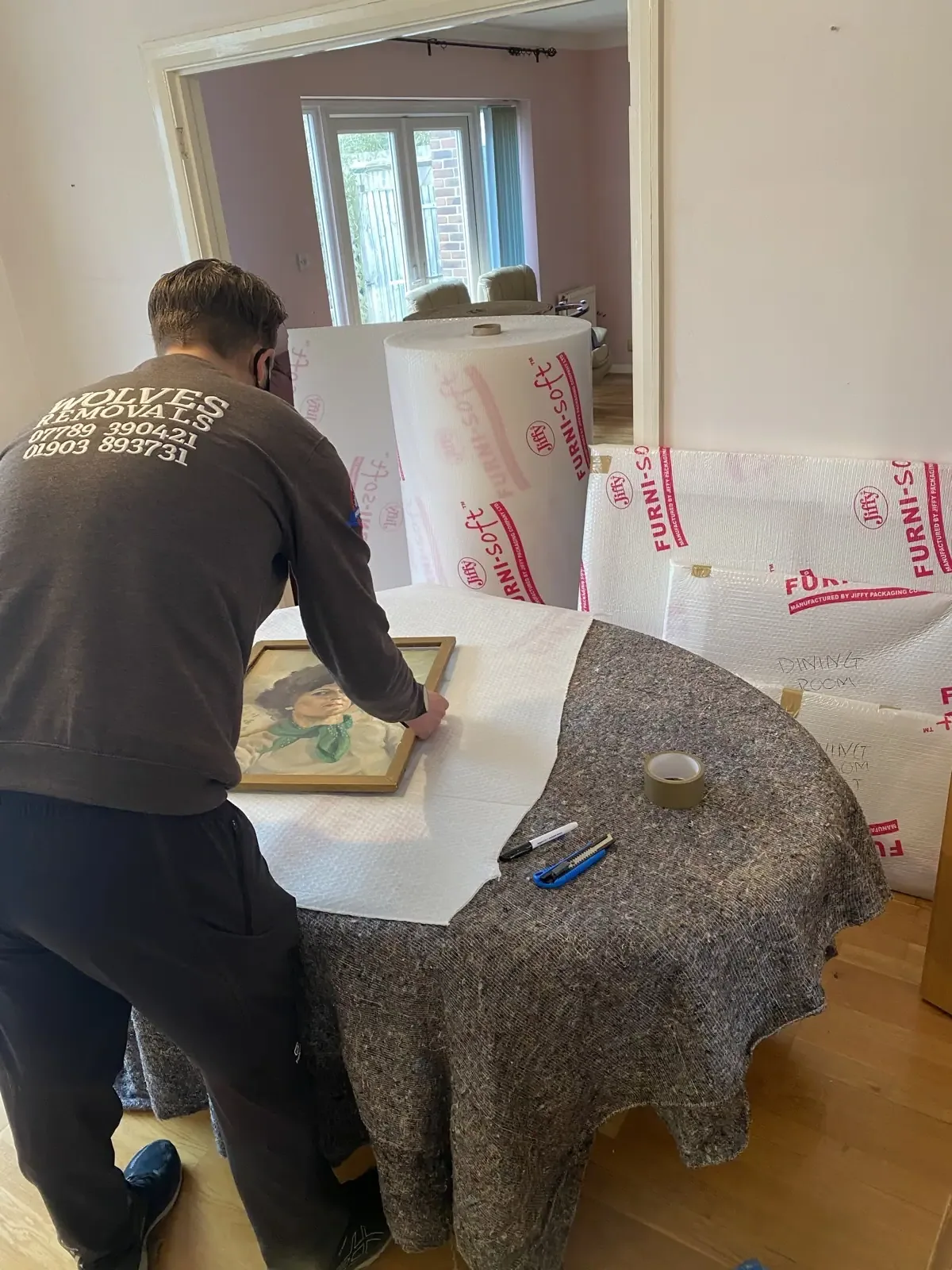
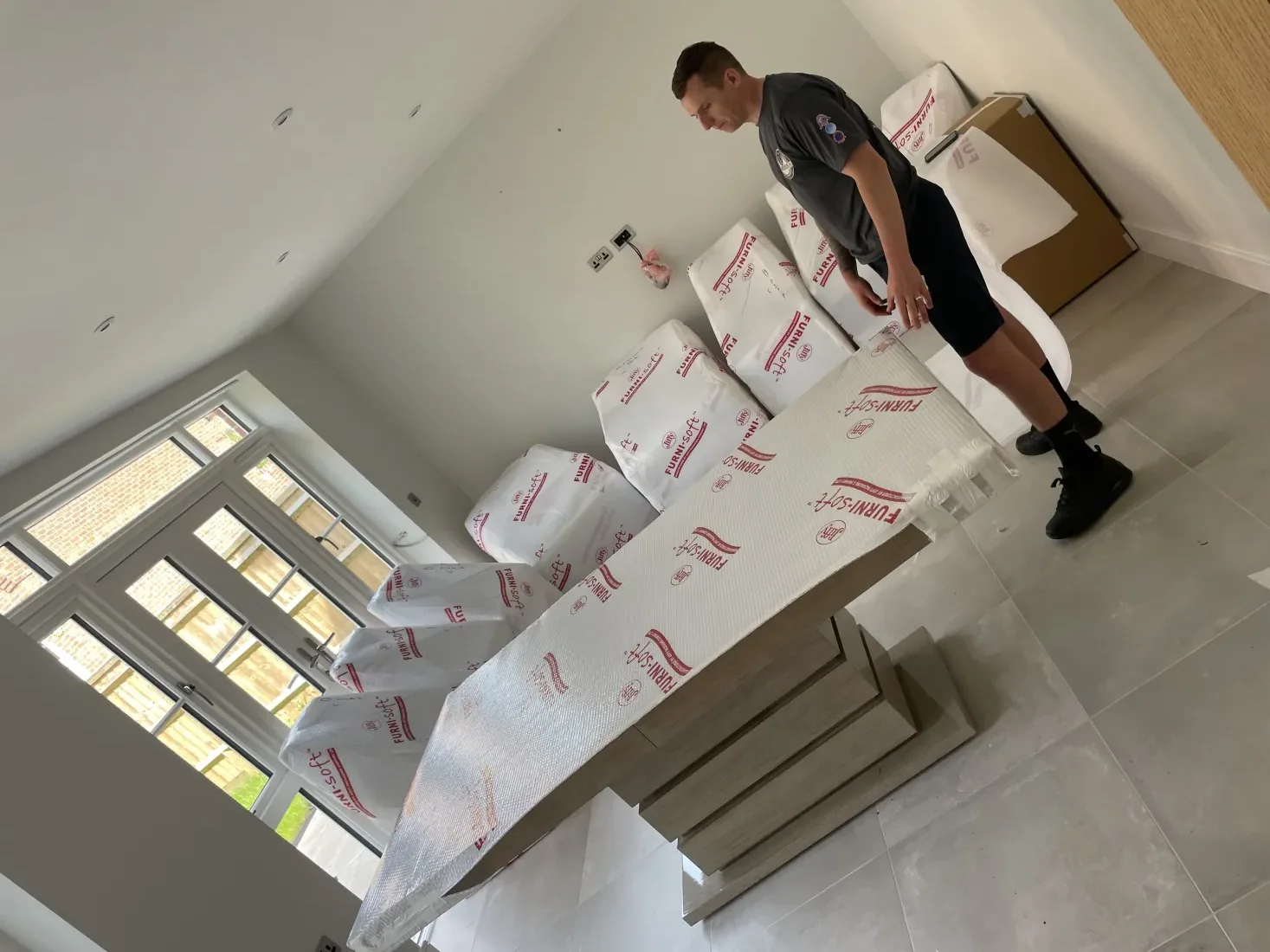
Putting the bulk of your furniture and possessions into a secure unit means your temporary accommodation stays liveable and your belongings stay safe, clean and dry until your new home is ready. It also means you only move everything once into long-term storage and once out again, rather than dragging it from place to place. Our short-term storage is designed for exactly this kind of flexible, in-between use, where you take the space you need for as long as you need it without a long commitment. If the gap turns out to be longer or more open-ended, long-term storage usually works out better value, and you can compare both on our storage solutions page.
The biggest practical worry people have is choosing the wrong size unit. You do not have to guess: our storage size calculator estimates how much room your belongings will need in just a few minutes, so you can book confidently and budget accurately. And because getting everything to and from storage is half the job, our man-and-van service handles smaller loads without the need for a full crew, while a full removals crew can pack, transport and store in one coordinated operation.
Packing a between-homes survival kit
If you are putting most of your life into storage, the things you keep with you matter a great deal. The goal is a compact, well-thought-out kit that covers daily life without you having to dip back into storage every few days.
The essentials box
Pack a clearly labelled box or two with everything you will reach for in the first week and beyond: a change of clothes for each person, toiletries, medications, phone chargers, important documents, basic kitchen items and anything the children cannot sleep without. Keep this with you rather than in storage, and you will save yourself endless frustration.
Think in terms of weeks, not days
People packing for an in-between period tend to plan for a few days and then find themselves caught short when the gap stretches on. Pack as though the period could last several weeks, including seasonal clothing if the season might turn, work and school essentials, and a few comforts that make temporary accommodation feel less clinical.
Keep paperwork and valuables close
Passports, deeds, financial papers, jewellery and irreplaceable sentimental items should travel with you, not go into storage. Keeping them in one secure, known place means you are never scrabbling for a vital document while moving between addresses.
Managing the gap with children or pets
An in-between period that is merely inconvenient for adults can feel genuinely unsettling for children and pets, so it deserves a little extra thought. Children take their cue from you, so explaining what is happening in simple, reassuring terms, and keeping their routine as steady as possible, makes the upheaval far easier for them to handle. Let each child keep a small bag of their most treasured things with them rather than packing everything away, and try to preserve familiar bedtime rituals even in temporary accommodation. If they are old enough, involving them in small decisions, choosing which toys come along, helping label boxes, gives them a sense of control during a period that can otherwise feel chaotic.
Pets, similarly, find the disruption stressful, and a temporary home full of strange smells and unfamiliar layouts can unsettle even the most placid animal. Keep their feeding times, walks and sleeping arrangements as consistent as you can, bring their own bed, bowls and toys so something smells of home, and give them time to adjust to each new space. If your temporary accommodation does not allow pets, sort this out early rather than discovering the problem at the last minute, as it is one of the more common stumbling blocks of an unplanned in-between period.

Keeping a tight rein on costs
Living between homes can quietly become expensive if you are not watching, because you may be paying for temporary accommodation, storage and the eventual second move all at once. The good news is that each of these is controllable. Storage costs only what you use, so right-sizing your unit with the calculator keeps it efficient. Temporary accommodation is the biggest variable, so weigh the comfort of a serviced let against the savings of staying with family for a genuinely short gap. And consolidating your move into as few journeys as possible, ideally one trip into storage and one out, keeps removal costs down rather than paying for repeated shuttling.
Being clear-eyed about the likely length of the gap is the single best way to budget accurately, because most overspend comes from arrangements that drag on longer than expected. Wolves Removals
Keeping daily life running
The in-between period is much easier to bear when the practical machinery of life keeps turning. A little admin up front prevents a string of small headaches later.
Post and deliveries
Set up a Royal Mail redirection so post follows you, and update key addresses, your bank, employer, doctor, the council and any subscriptions, to your temporary or forwarding address. It is tempting to skip this for a short gap, but missed post has a habit of being exactly the letter you needed.
Utilities and bills
Take meter readings when you leave your old home and notify suppliers so you are not billed for energy you are not using. If you are renting temporarily, check what is included. Keeping on top of this avoids nasty surprises and disputes once you finally complete on the new place.
Routines and wellbeing
Living out of boxes is tiring, and the uncertainty can wear on you, so protect the routines that keep you grounded. Maintain regular mealtimes, keep children's bedtimes consistent, and hold onto the small daily rituals that make somewhere feel like home. It sounds soft, but it is the difference between an in-between period that feels manageable and one that feels relentless. Try not to put your whole life on hold waiting for the move to complete; carrying on with hobbies, seeing friends and keeping some sense of normality stops the gap from feeling like limbo. If the wait drags on, remind yourself that it is temporary and that the inconvenience is buying you the right home rather than the first one that came along. It can help to set yourself one small, enjoyable thing to look forward to each week, so the gap is broken up by moments that have nothing to do with the move at all.
Coping when the gap is caused by a delay
Sometimes the in-between period is not planned at all but forced on you by a chain collapse or a last-minute delay. These moments are stressful, but they are exactly what storage and flexible thinking are designed for.
If completion slips and you suddenly have a lorry-load of belongings and nowhere to put them, having storage arranged, or being able to arrange it quickly, turns a crisis into an inconvenience. This is why we always recommend building a contingency into a move rather than assuming everything will run to the minute. Our advice on moving house at the last minute covers how to react when timings go awry, and there are many genuine situations where flexible storage saves the day, set out in our piece on the reasons to use short-term storage.
Making the in-between period work for you
It helps to reframe the gap as an opportunity rather than purely an inconvenience. With your belongings safely in storage, it is the perfect moment to be honest about what you actually want to keep, so you arrive at your new home with less clutter and a clearer sense of what fits. Our guide to downsizing your home is a useful companion if you are minded to lighten the load before the final move in. If the move is a parent’s rather than yours, helping a parent downsize before a care home move covers sorting the house with them first. If the in-between period follows a parent moving into a care home rather than your own move, selling the family home when a parent moves into care covers the sequence to follow. If the gap is between two care homes rather than around a house sale, moving from one care home to another covers how the dates are lined up and where the belongings wait.
It is also a good time to plan the second half of the move properly rather than rushing it. With the pressure of the chain behind you, you can think through the layout of your new home, decide what goes where, and book your final move-in for a date that genuinely works. Our broader house move planning guide helps you map out that final stretch so the day you finally arrive feels like a celebration rather than a scramble.
How Wolves Removals helps you bridge the gap
We are a family-run removals and storage company based near Pulborough in West Sussex, and we have been helping people through every kind of move, including the awkward in-between ones, since 2016. We cover West and East Sussex, Surrey, Hampshire and Kent, with nationwide and European moves too, so wherever you are heading we can keep your belongings safe in the meantime.
As a LAPADA Approved Service Provider and a Checkatrade-verified business, we hold ourselves to proper professional standards, and we are fully insured, with goods-in-transit and public liability cover in place, so your possessions are in safe hands for as long as the gap lasts. We offer flexible storage, friendly man-and-van and full removals services, and honest, transparent pricing with no hidden extras, the kind of dependable support that takes the worry out of living between homes.
If you are facing a gap in your move and want to talk through your options, take a look at our pricing page, request a tailored figure through our free quote service, or simply call our friendly team on 01903 893731. We will help you find the right amount of storage for the right amount of time and make the in-between period feel a great deal more manageable.
The Wolves Removals Team
Family-run removals · Ashington, West Sussex
We have moved families and businesses across West and East Sussex, Surrey, Hampshire and Kent since 2016, from our Ashington base. We are fully insured, Checkatrade-verified and a LAPADA Approved Service Provider for antiques and fine art. More about us, or read our reviews.
How to Live in Between Homes Without Losing Your Mind — FAQs
The simplest answer is short-term storage. Putting the bulk of your furniture and possessions into a secure, clean, dry unit keeps your temporary accommodation liveable and your belongings safe until your new home is ready. You take only the space you need for only as long as you need it, and our man-and-van or full removals service can move everything in and out for you.
There is no strict limit. Short-term storage typically covers anything from a week or two up to a few months, which suits most in-between periods perfectly. If the gap stretches on, you can simply extend, or switch to long-term storage if that works out better value. The whole point is flexibility, so you are never tied into more than you need.
Both are valid; it depends on your circumstances. Selling first and renting puts you in the strong position of a chain-free buyer and removes the stress of a chain, but it means an extra move and more cost. Keeping a chain together avoids that upheaval but carries the risk of delays. Storage makes either route easier by removing the pressure to time everything to the day.
Pack a survival kit you keep close: clothes for each person, toiletries, medications, chargers, important documents, basic kitchen items and anything the children need to sleep. Crucially, keep passports, deeds, financial papers, jewellery and irreplaceable sentimental items with you, not in storage, so you are never caught without a vital document while between addresses.
A last-minute delay is exactly what flexible storage is for. If completion slips and you have a lorry-load of belongings and nowhere to go, having storage arranged, or being able to arrange it quickly, turns a crisis into a manageable inconvenience. We always recommend building a contingency into your move, and our last-minute moving advice covers how to react when timings change.