Moving From One Care Home to Another: How the Day Works
A parent can move to another care home, including one in a different area, once the decision and the funding are settled; the date comes last.

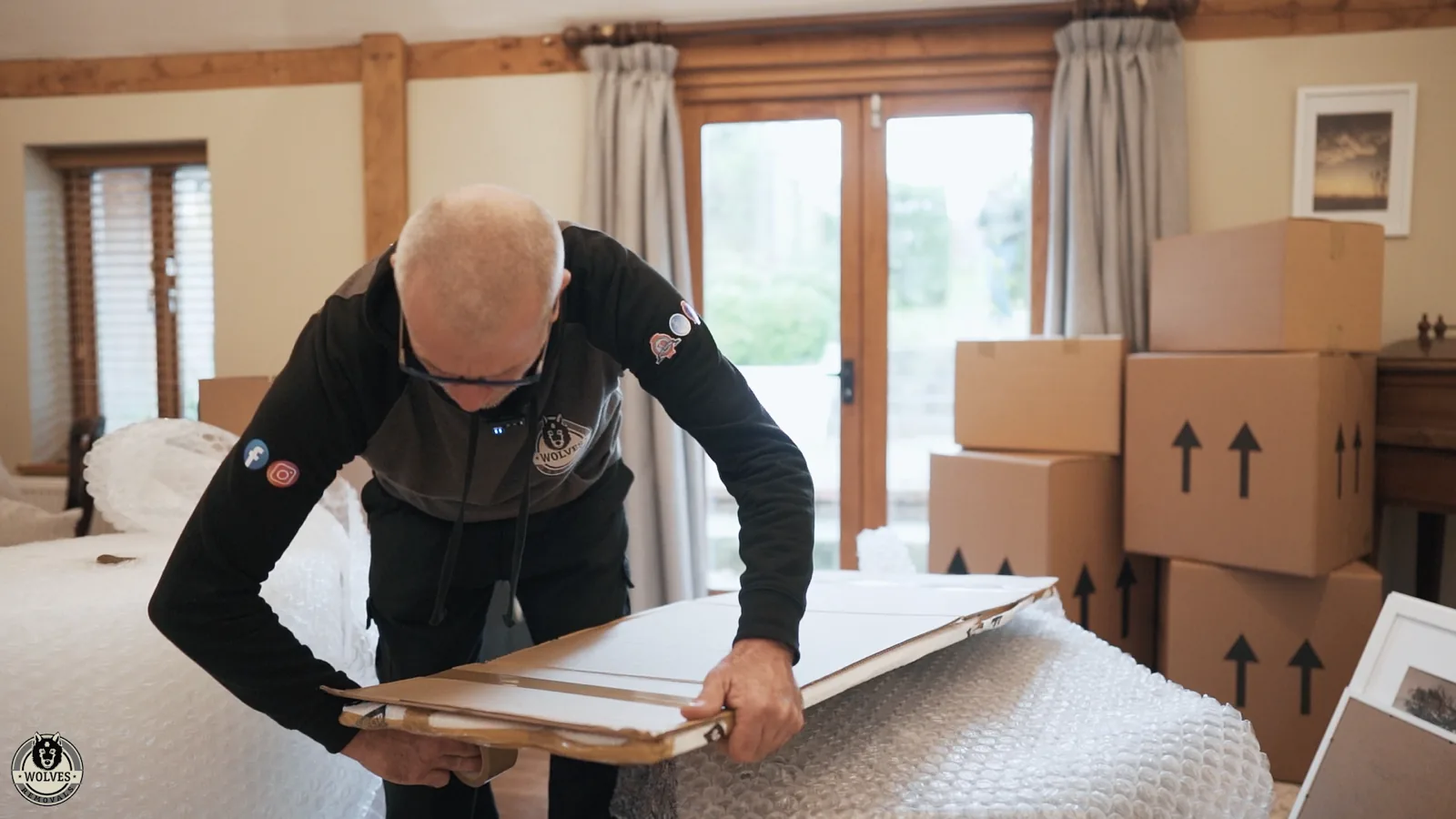
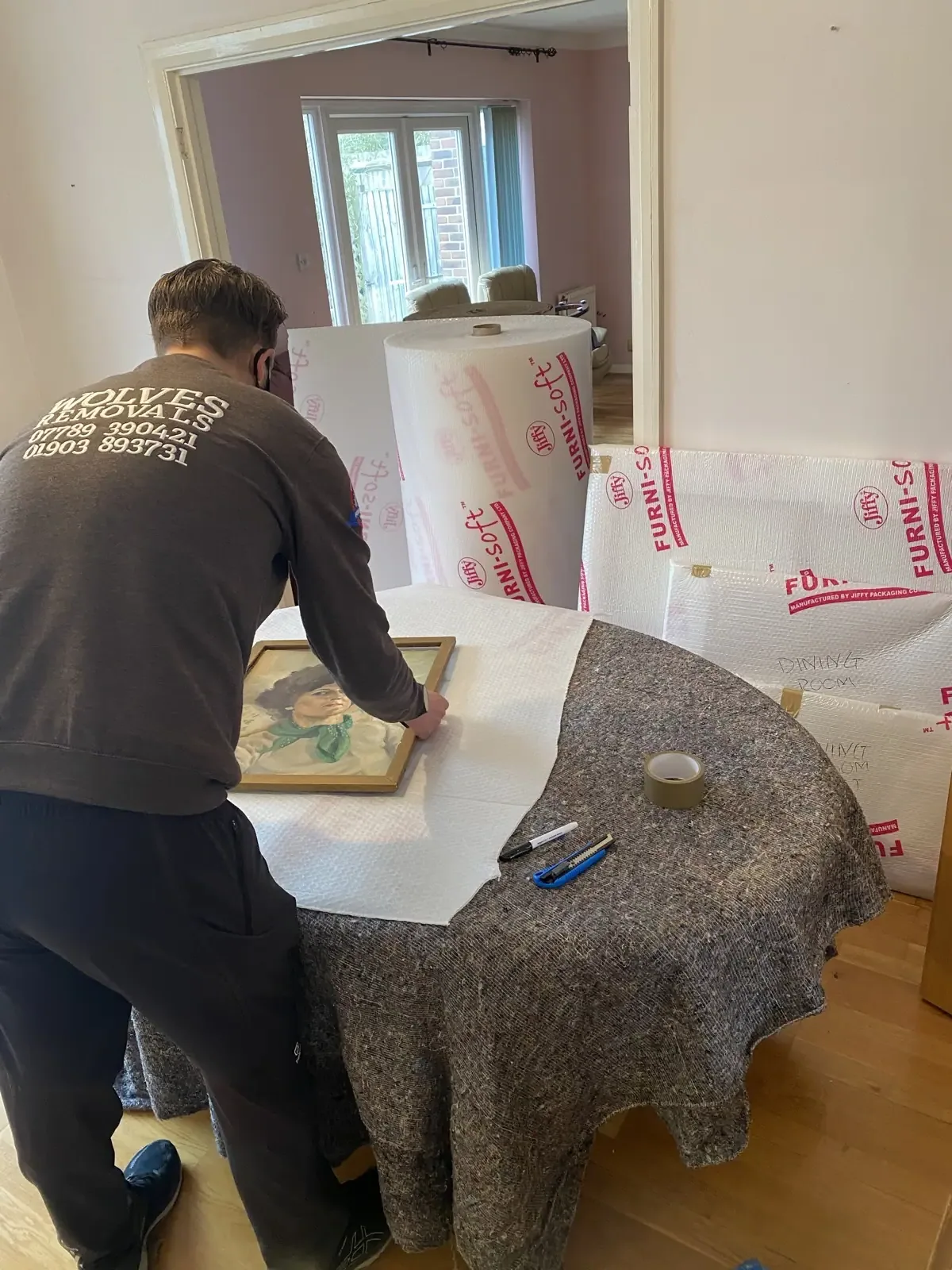
Settle who is deciding, how the new place is paid for and the notice at the current home, then fix one moving date with both homes. On the day, the room is packed, moved and set up from photographs by mid-afternoon; the hour-by-hour plan is below. The two homes arrange medicines and records between them; our crew never carries them.
Sources: Wolves Removals; Competition and Markets Authority; DHSC; Care Act 2014 s39.
Can you move a parent to a different care home?
Yes, if the person deciding agrees and the funding allows it. The reasons are rarely dramatic. A daughter has moved and wants her mother twenty minutes away rather than two hours. A parent’s needs have changed and the first home cannot offer nursing care. The first home was chosen in a week, under pressure, and a better room has come up somewhere calmer. Others move because a top-up can no longer be paid, or because they are unhappy with the care. Age UK says the choice of home does not have to be within the local area. First, check who is allowed to decide.
Who can decide on the move
Start at the top and work down.
Your parent
A health and welfare attorney
A best-interests decision
A welfare deputy Rare
“Next of kin” gives no power to decide. Family members’ views are taken into account where practicable, but they do not sign off the decision. The CQC says a move for someone who may lack capacity must be made in accordance with the Mental Capacity Act 2005.
Who pays when your parent moves
The deeming principle is the rule that a council which places someone in a care home in another area in England keeps responsibility for them. Age UK explains it in its care home factsheet. The rules, by how the place is funded:
Who pays at the new home
A top-up is the extra paid when a preferred home costs more than the council’s personal budget. If it cannot continue, Age UK says your parent may have to move to a less expensive home. NHS-funded nursing care is a flat NHS payment for people assessed as needing a registered nurse who do not qualify for Continuing Healthcare.
Before the date is set
Settle these first
- Ask for a review if needs have changed. If the council arranged the place, it must review a care and support plan on a reasonable request by or for your parent.
- Visit the new home. Independent Age says it is always best to visit any home you are considering. Some homes offer a trial period.
- Read the notice terms. The current home’s contract should say how much notice your parent must give. The CMA says it should be no longer than the notice the home must give, and fees should not run past it.
- Get the new room in writing. Its measurements, what furniture is already in it, and the admission day.
If the current home is the problem
Unhappy with the care? Age UK says the usual first step is to complain to the home manager. If the council funds the place, the usual next step is the council, then the Local Government and Social Care Ombudsman. If your parent pays their own fees, they can go from the home straight to the Ombudsman. The CQC does not take up individual complaints, but says “information given to us helps protect others”.
If a home closes because its provider fails, the council must meet residents’ needs for so long as it considers necessary, whoever was paying. This is a temporary duty, and the council can charge for it at cost. If it is the home that ends the contract, the CMA says most residents in England are legally entitled to at least 28 days’ written notice to leave.
Lining up the notice and the admission day
The current home needs notice and the new home has an admission day. If the notice runs past the admission day, fees can be due to both homes for those days, so it pays to line the two up. Under CMA guidance, the fees for those days should be refunded if your parent has moved out and the room is let to someone new during the notice. The day the notice ends and the new home admits your parent is the day we plan for.
Book the van last. In our experience, if it is booked first, the two homes spend a fortnight negotiating around it. If your parent is moving into a nursing home, its pre-admission assessment often fixes that day.
Not booked yet?
If the date is not fixed, that is the right moment to ring. We talk the timing through before anything is arranged, and there is no obligation: nothing is booked until you say so. Call 01903 893731.
When the new room is a different size
Everything in the current room already fits a care home room, which makes this simpler than the first move into care. The two rooms are rarely the same. The new one may be smaller, a different shape, already have its own bed and wardrobe, or use different fixings for pictures. Check each piece against the new room’s measurements the week before. We survey by phone or in person, and where the new room will not take the old layout, we ring the family before we improvise.
The home’s own bed, wardrobe and curtains stay behind. Anything of your parent’s that will not fit goes to family, back through the downsizing sort with your parent, or into long-term storage at our Ashington warehouse. Our guide to what to take to a care home has the full list.
Moving a parent with dementia to a new care home
The NHS says to talk to the person with dementia about their preferences, even if they lack the capacity to make the decision. We rebuild the room from photographs, taken close enough to read which frame stands in front of which, so the chair and radio end up where they were. Fill in “This is me”, the Alzheimer’s Society leaflet that tells staff about a person’s life and routines, so the new staff know them from the first day.
Some families take their parent out for the day, for example a long lunch, a drive, or a coffee in the new home’s lounge, so they arrive to a finished room rather than watching it packed. Others would rather stay; we pack around them and say where each box is going.
If your parent has a Deprivation of Liberty Safeguards (DoLS) authorisation, it applies to one care home. The DoLS code says the new home must request a new standard authorisation, and should apply before the move takes place. Our guide to moving someone with dementia into a care home has more on the day.
The day, hour by hour
A typical moving day
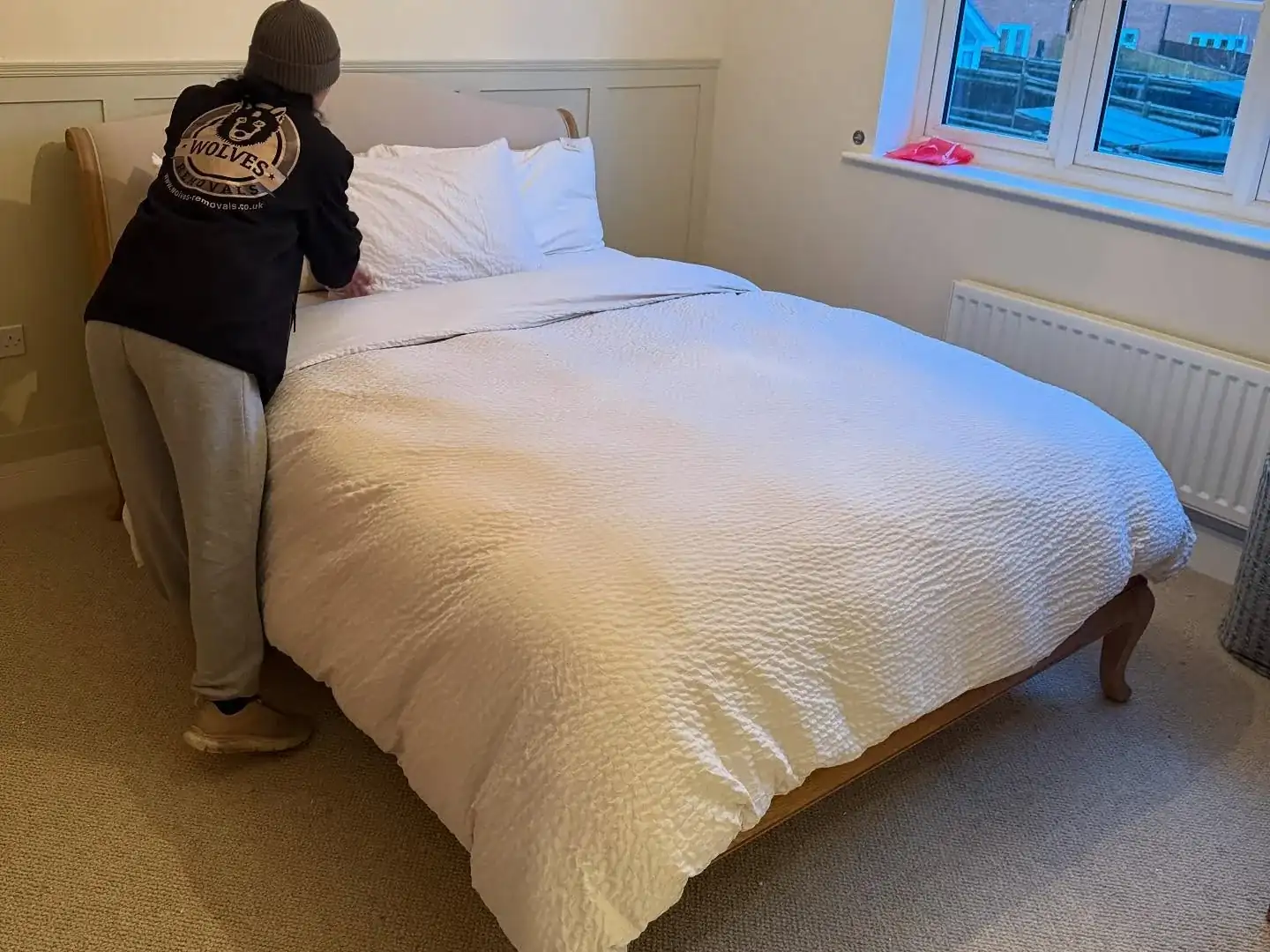
The two homes arrange medicines, care records and the care plan between them; we never carry them. NICE guidance says all information about a resident’s medicines, including who will prescribe in future, should go with them when they move. Glasses, hearing aids and whatever your parent reaches for every hour stay with them all day.
We also ask the new home whether it wants the room finished before your parent walks in, or would rather they see it happen; most want it finished first. We check what the old home wants handed back, such as the room key, fob or lanyard.
The room is the move. Get the room right by three o’clock and the day has gone well.What we tell families the week before
After the move
Who to tell about the new address
- Attendance Allowance. Report a move to another care home or a change in how fees are funded. It usually stops if the council starts paying for the care home.
- Pension Credit. GOV.UK says a claim might be stopped or reduced if a change is not reported straight away.
- The GP. The NHS says most people register near where they live. If your parent changes surgery, the old one is told automatically.
- Post. If you act under a power of attorney, you cannot set up Royal Mail redirection online for your parent; it uses the Special Circumstances form.
- Everyone else who writes to them: the bank, the pension provider, family and friends.
Talk to the new staff about your parent’s routine, and bring photos and soft furnishings to make the room theirs, as Age UK suggests.
When there is a gap between the two homes
Sometimes the dates will not meet: the new room is not ready, or your parent spends a few weeks with family or in respite care in between. We pack the room, the load goes under seal into our Ashington warehouse, and on admission day it comes out to be set up from the same photographs. A gap of a fortnight or a season makes no difference to the day at the other end.
We collect from care homes across Sussex, Surrey, Hampshire and Kent, and further afield by arrangement; a long drive means an earlier start. Our care home moves page shows how the full service runs. If there is still a family house, see selling the family home when a parent moves into care.
About this guide. The rules described apply in England. Legal sources: the Care Act 2014, the Care and Support and After-care (Choice of Accommodation) Regulations 2014 and the Mental Capacity Act 2005. Other sources: the CMA; the CQC; NICE; the NHS; GOV.UK; Age UK; Independent Age; Alzheimer’s Society. Checked in October 2026. This is general information, not legal or financial advice. For advice on your parent’s own case, contact the council’s adult social care team, Age UK or Independent Age.
Jack Wolfe
Director, Wolves Removals · Ashington, West Sussex
Jack runs Wolves Removals, which has moved families and businesses across West and East Sussex, Surrey, Hampshire and Kent since 2016 from its Ashington base. The firm is fully insured, Checkatrade-verified and a LAPADA Approved Service Provider for antiques and fine art. More about us, or read our reviews.
Moving From One Care Home to Another: How the Day Works — FAQs
First check who can decide: your mum if she has capacity, otherwise a health and welfare attorney or a best-interests decision. Settle the funding, visit the new home, then give notice at the current home for the new home’s admission day. Book the removal last, for that same date.
If the council arranged the place, it usually stays responsible, even in another area of England. That is section 39 of the Care Act, which Age UK calls the deeming principle. If your parent pays their own fees and moves, Age UK says the council where they now live is usually the one to help later.
The day itself can be: one room is packed, moved and set up by mid-afternoon. The work is before it, in settling who decides, the funding, the notice and a single date that suits both homes.
One day, for one room. Packing takes about two hours, and the new room is set up from the morning’s photographs by early afternoon, so the family arrives with your parent mid-afternoon. If the two homes cannot agree a date, the belongings wait in our Ashington warehouse until admission day.
Yes, as the contract sets out. CMA guidance says a resident’s notice period should be no longer than the home must give them, and fees should not be charged beyond it. If your parent has moved out and the room is let again during the notice, the fees for those days should be refunded.
It depends on them. Some families take their parent out for the day so they arrive to a finished room. Others stay, and we pack around them and say where each thing is going.
It goes to family or into storage, decided the week before from the new room’s measurements. The current home’s own furniture stays behind.
No. A Deprivation of Liberty Safeguards authorisation relates to one care home. The DoLS code of practice says the new home must request a new standard authorisation, and should apply before the move takes place.