Moving Someone With Dementia Into a Care Home
To move someone with dementia into a care home, talk to them early, check who has the right to decide, and rebuild their room at the home from photographs before they arrive.

Rebuilt from photographs, the new room looks familiar from the first moment. Leave the care side to the home.
Sources: Wolves Removals; Care and Support (Preventing Needs) Regulations 2014; Dementia UK.
How do you move someone with dementia into a care home?
How the move works, in six steps
The service itself is on our care home moves page.
What is transfer trauma?
Transfer trauma is a nursing and research term for the anxiety, confusion, depression and loneliness that can follow a move in later life. Relocation stress syndrome is its formal name, a nursing diagnosis in North America since 1992.
Research on transfer trauma does not show that dementia makes it worse; one study found people with cognitive impairment no more vulnerable than others. A 2022 Australian study reported clear benefits in personalising a new resident’s room before they arrived. That is the part a removals firm can influence.
What we see, move after move, is how much the familiar carries: the side of the bed they sleep on, the chair that has always faced the window, the photographs in the order they have stood for twenty years. If those are the same on the first evening, the room is a version of home. So we measure the day by the room, not the clock. A van unloaded in record time and a room half-finished late in the afternoon is a failed move. A room finished by early afternoon, with the radio on and tea in the chair, is a good one.
Who decides the move?
Your parent decides, if they have the capacity to; otherwise an attorney, or a best-interests decision. Not the care home manager, and not “next of kin”. Capacity is the ability to make a particular decision at the time it needs to be made. If your parent can make the decision, Alzheimer’s Society says nobody can decide for them. Disputes can go to the Court of Protection.
Who decides the move
Your parent
A health and welfare attorney
A best-interests decision
An advocate If no one suitable can speak for them
A deprivation of liberty is the legal term for restrictions that need authorising when someone cannot consent. If one is needed, the care home applies, not the family. It must ask the council for a standard authorisation, and can give itself an urgent authorisation of up to seven days meanwhile. A Supreme Court ruling on 2 June 2026 changed the test, but the government says the Deprivation of Liberty Safeguards (DoLS) process still applies in care homes where there is reason to believe someone is deprived of their liberty.
Should you tell someone with dementia they are moving?
Yes, usually, and early. Dementia UK says the person should be involved in decisions about their care wherever possible. That includes the room: which photographs go, and which chair. Dementia UK suggests comforting items from home, such as their own bedding, photos and ornaments.
Before the day
Talk early
Visit first
Choose together
Photographing the room before anything is packed
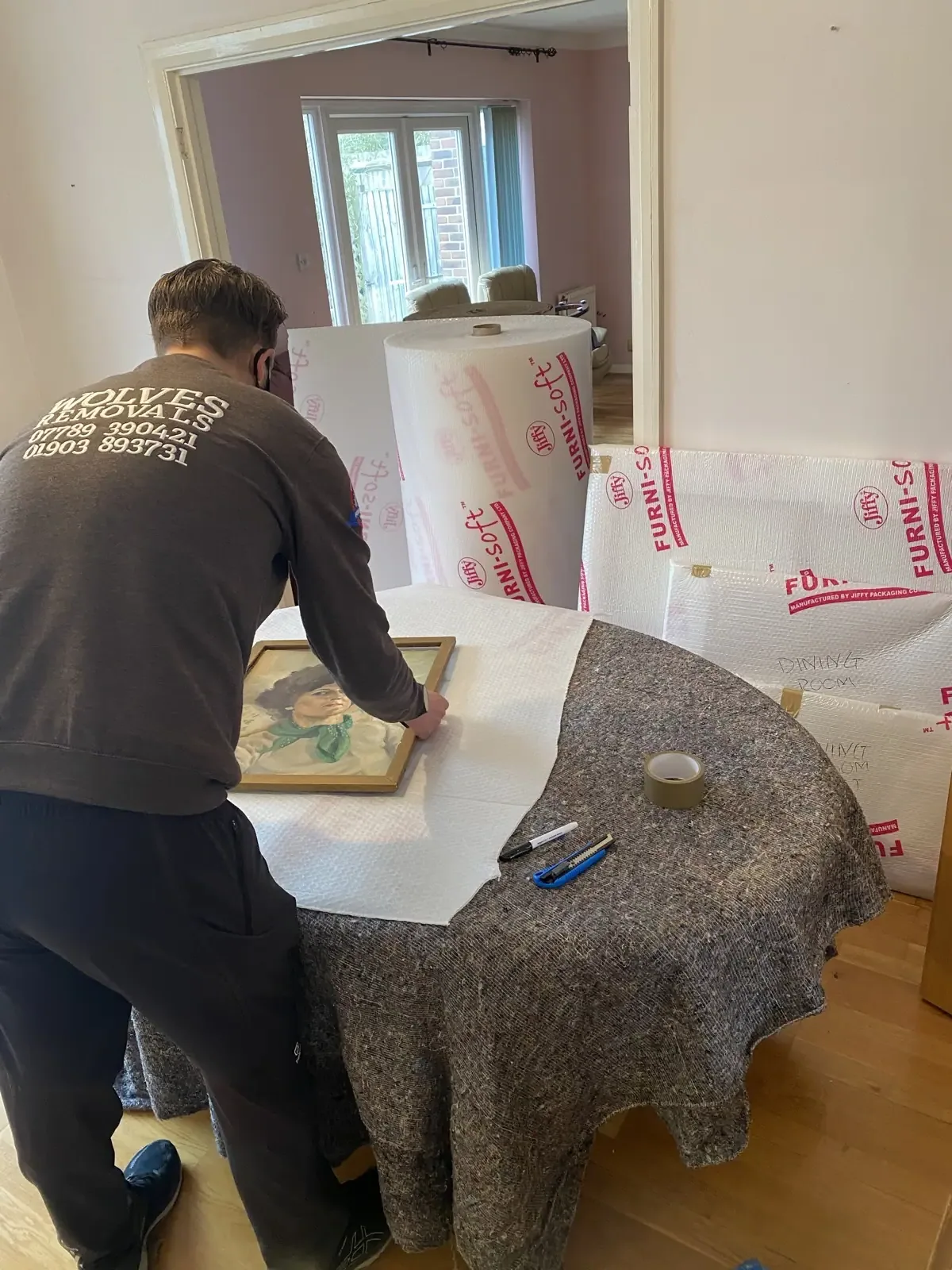
Nothing is packed until one of the crew has photographed the bedroom, and any other room whose contents are going. Each wall from the doorway. The bed from the foot, so the pillows, the throw and the bedside are recorded as they are. The bedside from the pillow, because that is the view they wake to. The top of the chest of drawers, frame by frame. Inside the drawers and the wardrobe, so the socks go back in the sock drawer.
The most useful thing a family does is know the room: which side of the bed, where the glasses live overnight, whether the curtains open first thing. Choose the six or eight framed photographs that matter most, in their order, and carry that box yourselves.
The photographs are taken with your parent’s agreement, or the family’s where they cannot give it, and deleted once the room is done. Until then they are the whole of the instruction, so the person who packs and the person who rebuilds need not be the same. It costs a quarter of an hour, and families often tell us afterwards it was what made the room right.
Should your parent be there on moving day?
For the packing, usually not. Watching a bedroom go into boxes is hard for anyone, and frightening when the reason is hard to hold on to. Most often a son or daughter takes them out for a few hours, to a garden centre or a sister’s; ask the care home whether they could have lunch there. For the arrival, yes, and to a finished room, with a family face at the door.
Where going out is not possible, or the family judge they should see it happen, we work with one packer in the room, one room at a time, and their chair goes last. If they want to hold something, they hold it.
What order is the room unpacked in?
At the home, the boxes are opened in the order your parent will look for things. First the bed, made up in their own bedding if the home agrees. Then the bedside, arranged from the photograph taken from the pillow: the lamp on the same side, the book, a place for their glasses. Then the chair, turned towards whatever it faced before. Then the pictures, left to right as they were, the clock and the radio on the right station. The wardrobe and drawers are filled last, and every box and scrap of wrapping leaves with us.
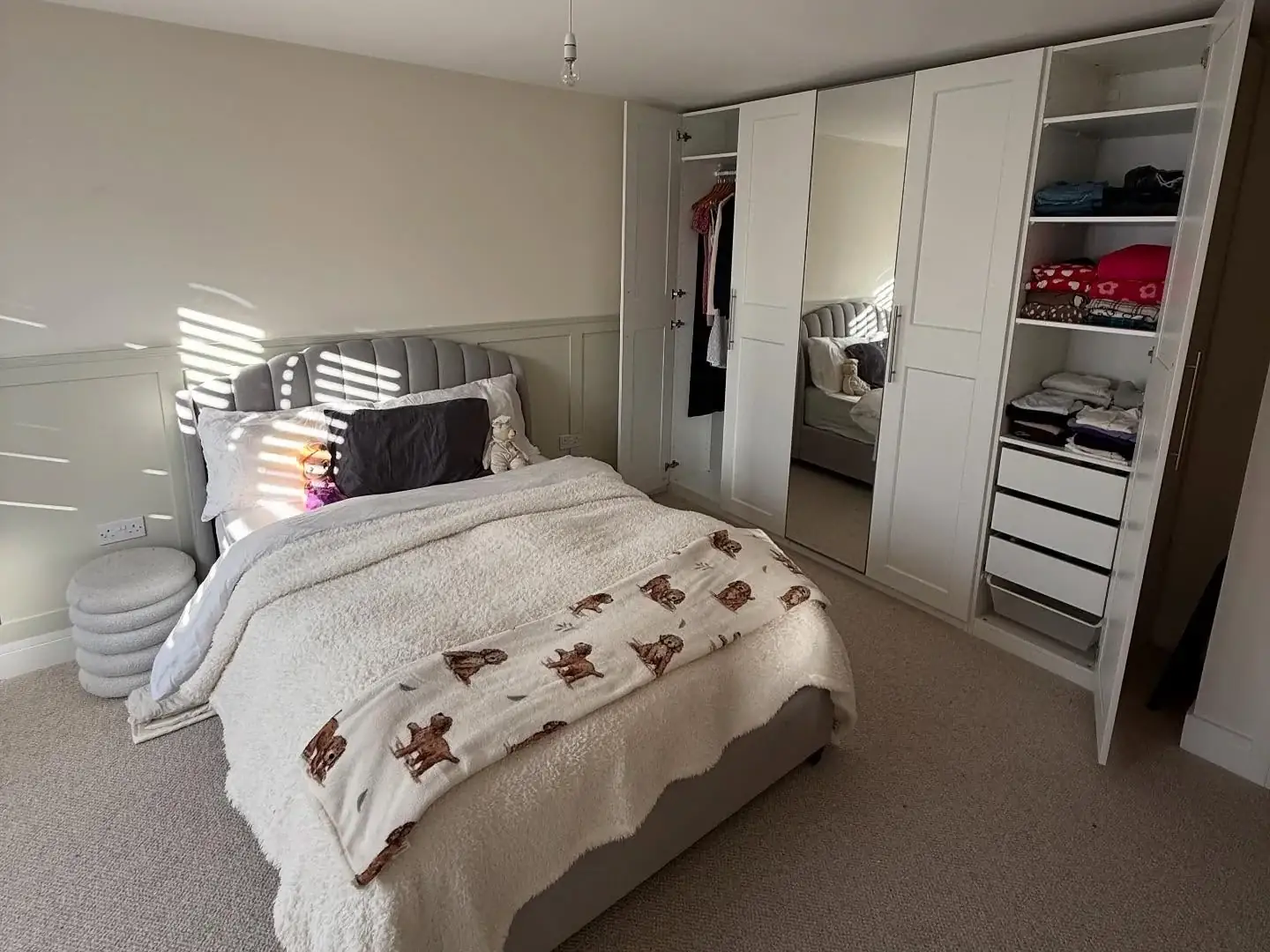
Two cautions. Bedding and soft furnishings from home must suit the home’s fire rules: the Home Office guide for care homes says residents’ own furniture and textiles should meet a fire performance standard, so ask before the duvet is packed. And the NHS advises people with dementia to avoid rugs or mats, which can cause falls, so ask the home before a loose rug goes back where it was.
Nothing new goes into the room on the first day. The duvet cover can be faded; it smells of the house.Jack Wolfe, Director
What happens on moving day?
A typical moving day
The crew is small and quiet: usually two people, no music, no shouting up the stairs. If your parent is there, one of us speaks to them, by name, and explains what is happening in a sentence, not a paragraph. If they become upset, we stop and step out, and the family lead. In our experience, homes often ask for the room to be ready by 2pm or 3pm, and we plan around it.
What does the care home need?
Medicines, care records and the care plan travel with the family or the home’s staff; nothing of that kind goes on our van. NICE says the care home manager, or whoever is responsible for the transfer, should coordinate an accurate list of all the resident’s medicines.
What the home needs on the day
Agree with the home who brings what.
Medicines and records
Belongings
What if the move is from hospital?
From hospital, your parent may go to a short-term place first. Under the government’s discharge guidance, longer-term needs are best assessed once a point of recovery and stability is reached, and people have no right to stay in hospital to wait for their preferred home. Any council intermediate care or reablement is free for up to six weeks; ask the discharge team what applies.
The method does not change; it matters more, because your parent arrives from a hospital bed to a room they have never seen. We photograph the house as if they were there, work from the family’s list, and set the room up before they come. When the date moves, and it does, the room’s contents wait in our store and go in the day before. Ring us on 01903 893731 as soon as the ward gives a likely date. For the list itself, see what to take to a care home.
What happens after the move?
Visiting is protected by law: the Care Quality Commission (CQC) says everyone should work on the assumption that in-person visiting is possible. Ask the home about the best times. A brother or sister who lives further away can take this list.
Dementia UK says moving someone into a care home does not mean you have failed. An Admiral Nurse is a specialist dementia nurse; Dementia UK’s helpline on 0800 888 6678 is answered by them.
What about the rest of the house?
Leave the house clearance until the room is settled. Clearing the house the same week removes your parent’s and the family’s chance to change their mind. Anything undecided is sealed into a container in our long-term storage at Ashington. Helping a parent downsize before a care home move covers the sort itself. If there is a house to sell, see selling the family home when a parent moves into care. If the move is between two homes, see moving from one care home to another.
Planning a move like this?
Ring us before the date is fixed: the home, the family and the crew planning the same morning is most of the difference. Call 01903 893731.
About this guide. The rules described apply in England. Legal sources: the Mental Capacity Act 2005 and its Schedule A1, and the Health and Social Care Act 2008 (Regulated Activities) Regulations 2014. Research method: every fact was checked twice against its linked source in October 2026, and the method is our own crews’ practice. This is general information, not medical or legal advice.
Jack Wolfe
Director, Wolves Removals · Ashington, West Sussex
Jack runs Wolves Removals, which has moved families and businesses across West and East Sussex, Surrey, Hampshire and Kent since 2016 from its Ashington base. The firm is fully insured, Checkatrade-verified and a LAPADA Approved Service Provider for antiques and fine art. More about us, or read our reviews.
Moving Someone With Dementia Into a Care Home — FAQs
Transfer trauma, or relocation stress syndrome, is a nursing and research term for the anxiety, confusion, depression and loneliness that can follow a move in later life. One Australian study found clear benefits in personalising the room before arrival; that is the part a removals firm can affect.
Usually, yes, and early. Dementia UK says to start talking about the move well in advance and to keep talking about it, involving the person as far as they are able. If they have the capacity to decide, the decision is theirs.
Yes, but most families take them out during the packing so they arrive to a finished room. If they stay, we work with one packer, one room at a time, and their chair is moved last.
A morning and the early afternoon. The room is photographed and packed by mid-morning, then rebuilt before the arrival. The rest of the house is not touched that day.
Rebuild it from photographs of the old one, and unpack in the order they will look for things: bed and bedding first, then bedside, chair, pictures and radio, with the wardrobe last. Nothing new on day one; check bedding and furniture against the home’s fire rules.
Yes, usually. Visiting is protected by law in England, and CQC says homes should assume in-person visiting is possible. Ask the home about the best times to come.
If they have the capacity to decide, nobody can decide for them. If they do not, an attorney or a best-interests decision settles it, and disputes can go to the Court of Protection.
It varies from person to person. NICE says needs should be reviewed after every transition, so ask the home when the first review will be. A familiar room helps, which is why we rebuild it first. For advice on settling, ring Dementia UK’s Admiral Nurse helpline on 0800 888 6678.