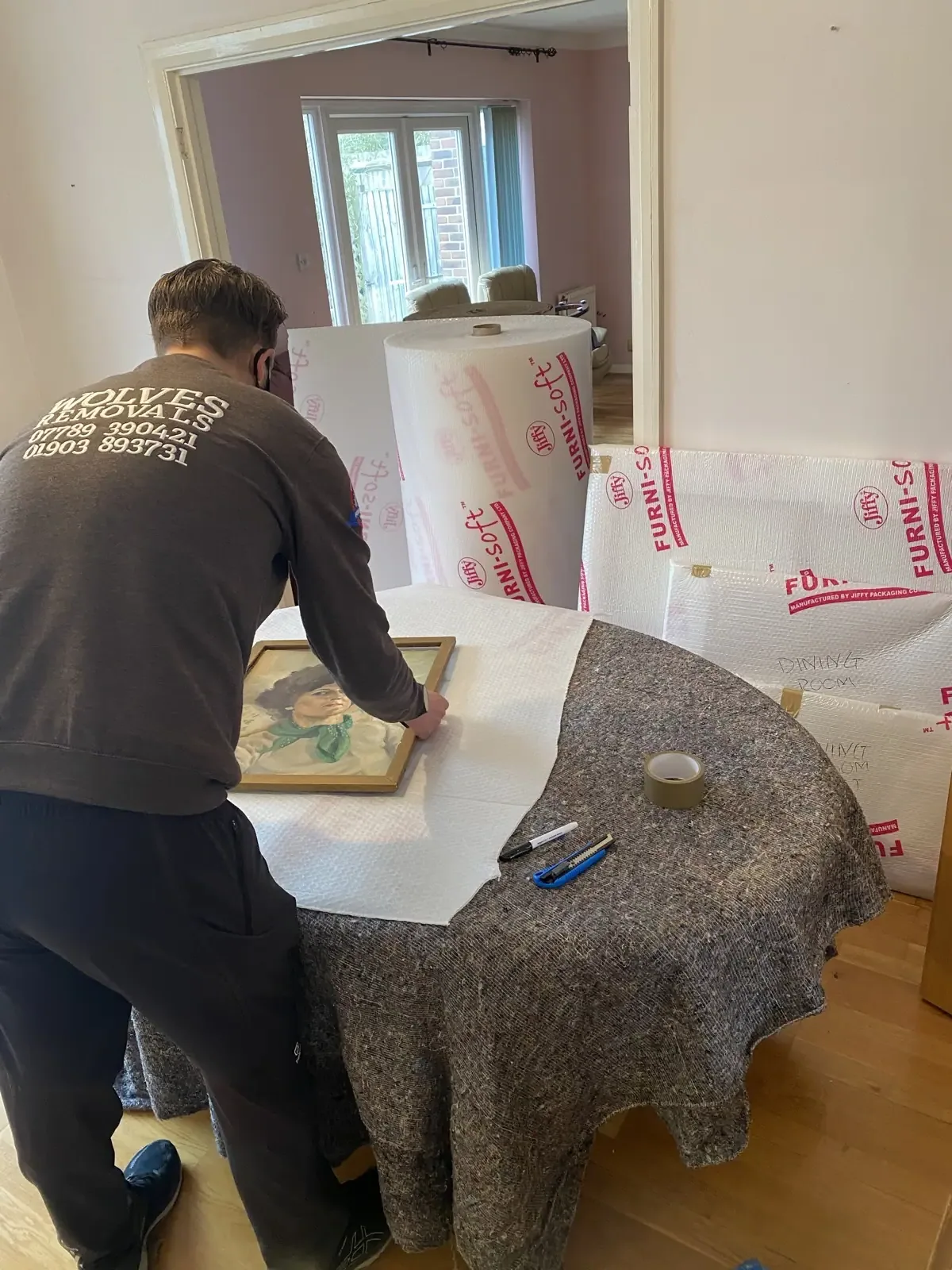
What to Take to a Care Home, and What Happens to the Rest
Take what they use and look at every day: their own clothes, labelled; glasses, hearing aids and toiletries; photographs, a clock and a radio; and perhaps a favourite chair.

The care home decides what else fits, and it may check furniture, bedding and anything with a plug for safety. Bring an accurate list of medicines and the right paperwork. Everything else in the house needs a plan too, and it is easier made before packing day.
Sources: TV Licensing; Care and Support (Charging and Assessment of Resources) Regulations 2014; DHSC 2026/27 circular; CMA.
What to take to a care home: the packing list
Age UK says most care homes allow you to take in belongings that help you feel at home, and some allow furniture, a television and even your own bed. Start with this list, then check it against what the home tells you:
Clothes
All name-labelledDaily things
Kept to handFamiliar things
Set out on the first nightIf the home agrees
Ask firstWith the family
Not on the vanWhat to ask the care home first
Ask the home in writing for the room’s size, what is in it, and what it will accept. On our care home moves we ask for this at the survey.
Questions to ask the care home before packing
- How big is the room, and what is in it already? Many homes offer rooms fully furnished, the Competition and Markets Authority (CMA) noted in 2018. Residents bring clothes, pictures, soft furnishings and perhaps a few small pieces of furniture.
- Can they bring their own bed? Some homes allow it. But the Health and Safety Executive says an electric profiling bed is a reasonably practicable step where moving someone in bed brings a significant risk of injury.
- Do you supply bedding and towels? Some homes do.
- Will you check furniture and electrical items, and how?
- What does your insurance cover? The CMA says the home should tell you before you agree to it assessing their needs: whether they need their own cover, and its limit, exclusions and excess.
- Is there somewhere lockable for money and small valuables?
If you pay your own fees, you should get the standard contract by the time you agree to that needs assessment. The final total cost should come with the offer of a place, according to the CMA’s advice to care homes.
What to check in the contract
Read these parts of the contract before signing
- Insurance for belongings: the limit, what is excluded and any excess.
- Any trial period: how long it is, how it can end, and what notice and refunds apply.
- Notice: most residents in England are legally entitled to at least 28 days’ written notice to leave, or longer if the contract says so.
- Fees and belongings after a death: when the room must be cleared. The CMA says it is unlikely to object to fees for up to three days after a death, or until the room is cleared up to a backstop of around ten days. Families can ask in writing for more time.
These are terms the CMA says it is unlikely to object to, not legal rights. They apply to long-term residents, and some homes charge nothing after a death.
Clothes, toiletries and the things by the bed
Pack for the season and for comfort, with easy fastenings. Ask the home how often laundry is done and pack to suit. Label everything: Age UK says it is a good idea to label your clothes so they do not get muddled up in the laundry. Use sew-in or iron-on name labels, and label glasses cases and hearing-aid boxes too.
Bring the toiletries they already use, not a new set. Then the bedside things: the puzzle book, the knitting, the phone and charger.
Medicines and paperwork for admission day
When they arrive, staff should draw up an accurate list of current medicines (medicines reconciliation). NICE guidance says the resident and/or their family should be involved. Keep the medicines and the list out of the removal boxes.
The medicines list to bring on admission day
- Every current medicine, with its name, strength, form, dose, and when and how it is taken
- Any allergies or reactions to medicines
- Anything started, stopped or changed recently
- The GP surgery’s details and their NHS number (a 10-digit number)
If there is a Lasting Power of Attorney, bring it. There are two kinds, and registering either takes 8 to 10 weeks if there are no mistakes:
Health and welfare LPA
Covers decisions such as moving into a care home and medical care. It can only be used once the person cannot make their own decisions.
Property and financial affairs LPA
Covers bank accounts, bills and selling a home. With the person’s permission, it can be used as soon as it is registered.
Bring the council’s care and support plan if there is one, and any advance decision to refuse a specific treatment. If they live with dementia, fill in “This is me”: this free Alzheimer’s Society leaflet tells staff about the person’s background, people and routines.
Check whose name goes on the contract. If you sign as their property and financial affairs attorney for someone who lacks capacity, the CMA says you do not become personally liable for the fees unless you have expressly agreed to guarantee them. If you are not their attorney or deputy, Alzheimer’s Society says you should only sign if you are agreeing to guarantee the fees from your own money.
TV, radio and other electrical items
Portable appliance testing (PAT) is not itself a legal requirement: the Health and Safety Executive says the law requires equipment to be maintained to prevent danger. The government’s fire safety guide for residential care says portable equipment should be visually inspected and PAT tested at suitable intervals.
| Item | What to expect |
|---|---|
| Radio, lamp, phone charger | The fire guide says it should be visually inspected; some homes PAT test items on arrival |
| Television | The home may check it. A TV licence, or the home’s ARC concession, is needed to watch live TV or BBC iPlayer |
| Electric blanket | The government’s fire guide says these should be PAT tested |
| Portable heater | The fire guide says residents should generally be discouraged from bringing one |
The TV licence. If the home qualifies, the manager can arrange an Accommodation for Residential Care (ARC) licence for residents’ rooms at £7.50 per room. A resident qualifies if they are 60 or over and work no more than 15 hours a week. They also qualify with a disability such as substantially impaired sight or hearing. The concession needs both the home and the resident to qualify. Otherwise, the resident needs their own licence to watch live TV or use BBC iPlayer in the room.
Can you take your own furniture into a care home?
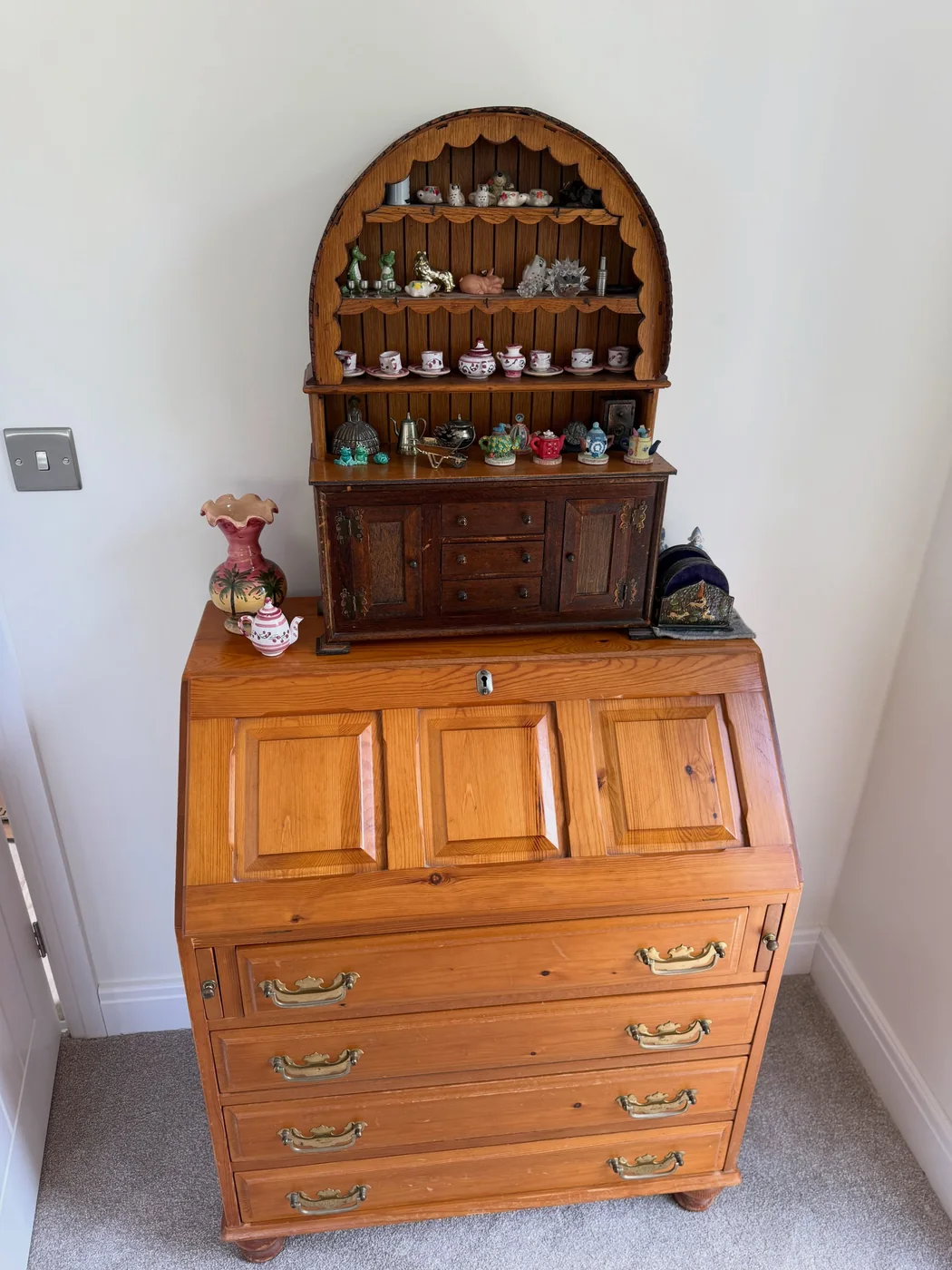
The pieces that fit are small and personal: an armchair, a bedside cabinet, a narrow bookcase, a small table for the radio and the photographs. Leave the dining table, the sideboard and the three-piece suite for the plan for the rest of the house, below.
The government’s fire guide says residents should only be allowed their own furniture or textiles in their bedroom if each item meets a recognised fire performance standard. The fire safety law for furniture, the Furniture and Furnishings (Fire) (Safety) Regulations 1988, applies to businesses that supply furniture, and does not cover pieces made before 1950. So an older chair may carry no label to show it meets a standard, and the home decides. The guide says residents’ own bedding and nightwear should, as far as practicable, meet equivalent standards, so ask before bringing a duvet or pillows.
Measure each piece against the room’s measurements. If one piece matters most, it is the chair: note which way it faced at home.
| May be allowed, if the home agrees | What not to take |
|---|---|
| An armchair that meets a fire standard | Valuable or irreplaceable items the home’s insurance does not cover |
| A bedside cabinet or narrow bookcase | Large amounts of cash |
| A throw, cushions, their own duvet cover | Portable heaters |
| Photographs, pictures, the clock | Candles and anything with a naked flame |
| A radio, a lamp, a small television | Loose rugs: a trip hazard, and loose-laid floor coverings are a higher fire risk than carpet fixed to the floor |
The things that make the room theirs
Photographs in their usual order, the pictures from the hall, the clock, the radio still tuned to their station and their own mug are the things to set out first. Alzheimer’s Society says a resident should feel that the room is their own. Our guide to moving someone with dementia into a care home explains how that day runs.
How we set up a care home room
- We photograph the room first, at home, before anything is packed.
- Packed last, off first. The things going to the room come off the van first.
- We unpack in order. First-night things first, then the room is set up from the photographs.
- Never packed: glasses, hearing aids and keys stay with the person all day.
This is how our unpacking service works on a care home move.
The first evening
If the home has agreed to it, make the bed with their own duvet cover and pillows. Put the photographs up and turn the radio on before the clothes are unpacked. The first evening is not the time to finish the job. Have a cup of tea in the chair, and leave the rest until morning.
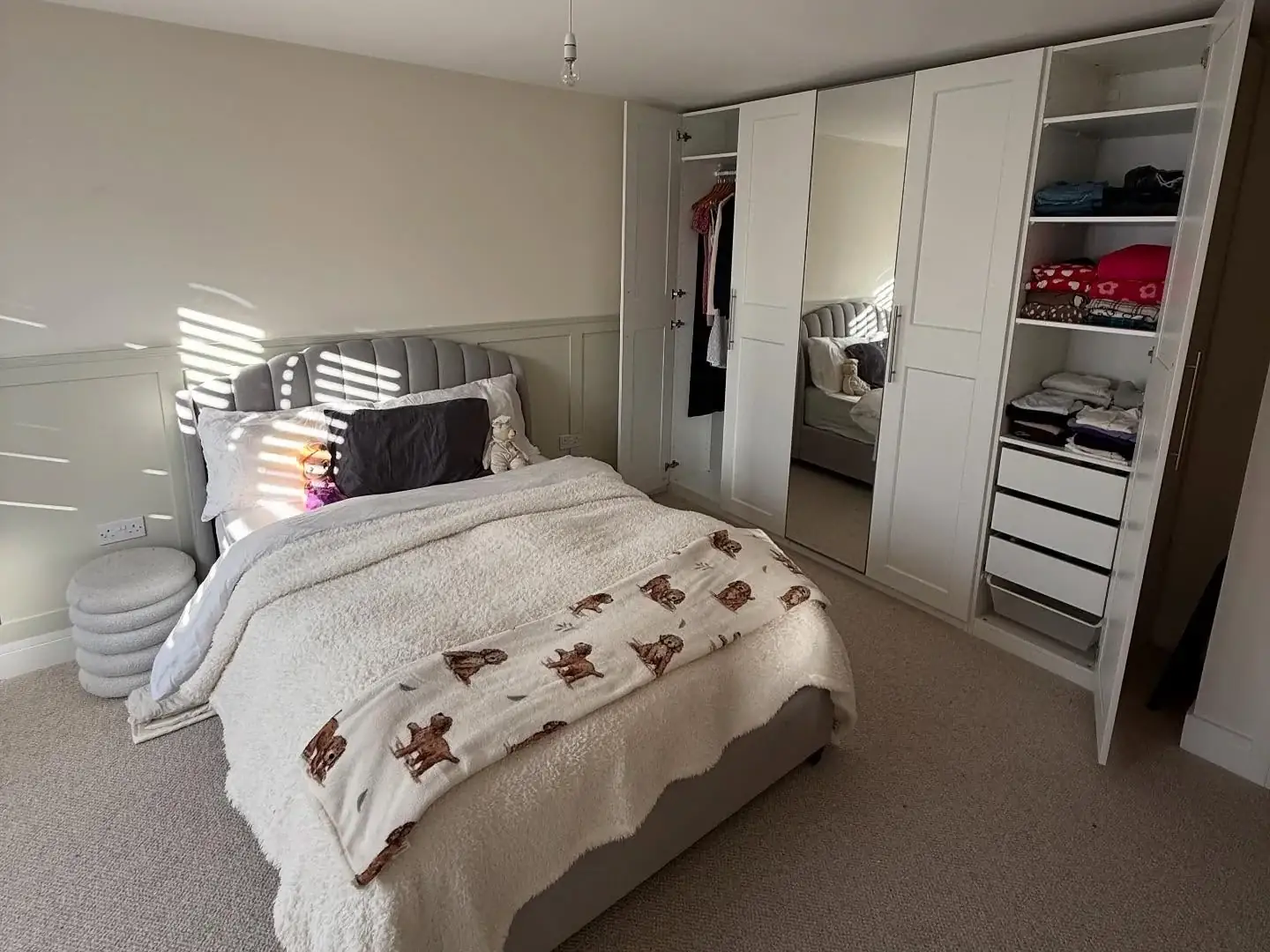
What happens to the rest of the house
Everything in the house goes one of four ways. We go through it together, room by room, before packing day.
1. With them
The short list, packed last so it comes off the van first.
2. To family
Pieces promised to a son, daughter or grandchild. Each person’s share is packed and delivered separately.
3. Into storage
Anything undecided goes into a sealed wooden container, listed as it is loaded, and is kept at our own warehouse in Ashington until the family asks for it.
4. Not kept
Clearing what no one wants is a separate job, on a different day. Our house clearance service takes whole properties and buys what has a value.
What happens to the house itself
You may not have to sell straight away. In England, these rules decide whether and when the house counts towards care fees:
- The first 12 weeks. After a permanent move into a care home, the council must not count their home’s value in the means test for the first 12 weeks (Age UK explains).
- When the home is not counted at all. It is not counted while someone who lived there before the move still has it as their main home. That means a partner, a relative aged 60 or over or incapacitated, or their child under 18.
- Deferred payment. The council may pay towards fees and be repaid from the home when it is sold, or from the estate. It can charge an admin fee and interest.
- Council tax. No bill is due on a home left empty because the owner or tenant has moved into a care home, for as long as it stays empty. Apply to the council.
- Home insurance. Tell the insurer. The Association of British Insurers says cover is often restricted after 30 or 60 days empty.
In England, councils use savings limits for people moving into a care home permanently. For 2026/27 they are as follows, with each band as Age UK explains it:
| Capital (savings and assets) | What it means |
|---|---|
| Over £23,250 | The council cannot pay towards the fees |
| £14,250 to £23,250 | The council helps; the person pays from income plus a “tariff income” of £1 a week for every £250 of capital above £14,250 |
| Under £14,250 | The council helps; the person pays from income only |
Personal possessions are not normally counted as capital. Giving assets away to avoid fees can be treated as deprivation of assets, so take advice before transferring the house or large sums. Our guide to selling the family home when a parent moves into care goes into more detail.
How we can help
Packing, the move on admission day, the room set up as it was, and storage for what the family keeps: for us that is one job. How it runs step by step is on our moving into a care home page. If the house is the bigger question, start with helping a parent downsize before a care home move.
About this guide. The rules described apply in England. Each home sets its own policies, so check with the home. Sources: the CMA; the government’s fire guide for residential care; the Health and Safety Executive; NICE; GOV.UK; the Care and Support (Charging and Assessment of Resources) Regulations 2014; TV Licensing; the Association of British Insurers; Age UK; Alzheimer’s Society; the NHS. Checked in October 2026. This is general information, not legal or financial advice.
The Wolves Removals Team
Family-run removals · Ashington, West Sussex
We have moved families and businesses across West and East Sussex, Surrey, Hampshire and Kent since 2016, from our Ashington base. We are fully insured, Checkatrade-verified and a LAPADA Approved Service Provider for antiques and fine art. More about us, or read our reviews.
What to Take to a Care Home, and What Happens to the Rest — FAQs
Ask the home how it wants current medicines brought in, and bring a written list. NICE guidance says an accurate list should be made when they move in, with the resident and/or family involved: each medicine’s name, strength, dose and timing, allergies and recent changes.
If live TV or BBC iPlayer is watched in the room, it needs to be covered, possibly by the home’s £7.50 ARC concession rather than a full licence. Both the home and the resident must qualify: the resident must be 60 or over and work no more than 15 hours a week, or have a qualifying disability. Otherwise they need their own licence. Ask the manager.
Ask the home how often laundry is done, then pack enough for that cycle and for the season, with a name label in every item. Clothes worn rarely can stay with the family and come in later.
Some homes allow residents to bring their pets, according to Age UK. If not, the Cinnamon Trust can help arrange long-term care for the pet.
Everything in the house goes one of four ways: to the room, to family, into storage, or not kept. Personal possessions are not normally counted as capital in the council’s financial assessment.
The same list, checked against the new room, which may be smaller or already furnished. Ask the new home in writing what it accepts. Our guide to moving from one care home to another covers the day itself.