Selling the Family Home When a Parent Moves Into Care
A parent moving into care does not mean the house must be sold at once, or at all.


In England the council ignores the home for the first 12 weeks after a permanent move, and a deferred payment can put a sale off. If the house is sold, the person signing must have the authority to do it, and the sale runs on its own timetable. Set the care home room up first, store what is undecided, and keep the house furnished for viewings until contracts are exchanged.
At a glance
Sources: Care and Support (Charging and Assessment of Resources) Regulations 2014; HMRC; GOV.UK.
Do you have to sell the house to pay for care?
Not straight away, and not always: in England the home is ignored for the first 12 weeks, and a deferred payment can put a sale off. Age UK says whether the home is included in the financial assessment depends on your circumstances. Independent Age says selling is sometimes the best option, but there may be other options. In England, these rules decide when the house counts:
| Situation | What the rules say |
|---|---|
| First 12 weeks after a permanent move | The council must not count the home’s value in its means test, the check of what your parent can pay (the 2014 charging regulations) |
| A partner, a relative aged 60 or over or incapacitated, or your parent’s child under 18 lives there. They must have lived there before the move, as their main or only home | The home is not counted |
| Capital of £23,250 or less, not counting their share of the home | The council must offer a deferred payment if the other conditions are met |
| The home is jointly owned | Only your parent’s share is valued, at what a willing buyer would pay for it, which can be nothing |
| The house is sold | The parent’s share of the proceeds, after secured debts and sale costs, counts as capital |
| Sold within the first 12 weeks | The 12 weeks stop on the date of sale |
A deferred payment agreement is where the council helps with care home fees on condition that the money is paid back later, Age UK explains. It is meant to stop someone being forced to sell their home in their lifetime. The council can charge an admin fee and interest. The amount owed is repaid when the home is sold, or from the estate, falling due 90 days after death unless the council extends it. The council’s financial assessment, and advice for your own case, decide the rest.
Who can sell the house, including if your parent has dementia?
A dementia diagnosis alone does not decide who signs, because capacity is checked decision by decision.
Your parent
If they can make the decision themselves, they sign. Capacity is checked for each decision, at the time it needs to be made.
An attorney under a Lasting Power of Attorney
A property and financial affairs attorney may have the legal authority to sell, once the LPA is registered and unless it restricts this. If your parent can understand the sale, the attorney needs their consent.
An attorney under an Enduring Power of Attorney
An EPA made before 1 October 2007 can still be used. It must be registered when your parent starts to lose capacity.
A deputy
With no Power of Attorney and no capacity, a family member can apply to the Court of Protection to become a deputy. The application fee is £432, with more if there is a hearing. A deputy needs a separate court order to sell a jointly owned home.
Lacking mental capacity means your parent cannot make a decision for themselves at the time it needs to be made, GOV.UK explains. A deputy is someone the Court of Protection appoints to decide for them, usually a close relative or friend. Our guide to moving someone with dementia into a care home covers the move itself.
A Lasting Power of Attorney cannot be used until it is registered, and registration can take up to 16 weeks. When an attorney signs, HM Land Registry needs evidence of the power, usually the original or a copy certified by a conveyancer, so your conveyancer handles that step. An attorney or deputy must act in your parent’s best interests. A sale that benefits them, for example the attorney buying the house, needs legal advice and may need the Court of Protection.
Take legal advice before going further if
- The house would sell below market value
- The attorney or deputy, or another relative, wants to buy it
- Anyone suggests giving the house, or a share of it, to someone else. The council can treat giving assets away to avoid fees as deprivation of assets
- The house is jointly owned, and one owner is the other’s attorney or deputy
The care home date and the completion date are separate
The care home fixes the admission date, sometimes at short notice. Nobody fixes the completion date until contracts are exchanged, and GOV.UK says selling a home takes about 5 months on average. Tie the two together and the result is a parent moved in a hurry, or a house emptied before anyone knew what should stay in it.
Completion is the day the sale finishes and the keys are handed over. The family decides, the care home sets the admission day, the estate agent markets the house and the solicitor or conveyancer handles the sale. Our care home moves service handles the moving, storage and clearance around them.
The room comes first
On admission day, only what goes with your parent matters. The room is set up and the rest of the house is left exactly as it stood that morning. On our moves, packing the room and thinning the house on the same day mixes the boxes. The one thing that would have settled the first night turns up a fortnight later, in a container. Our guide to what to take to a care home has the list.
Sorting the contents
For a sale, the contents split by when they leave the house.
1. On admission day
Only what goes to the care home room.
2. Soon after admission
Family pieces and the undecided go into storage, which thins the house.
3. Whenever each person is ready
Sealed wooden containers wait at our Ashington warehouse with no end date.
4. After exchange
The furniture that showed the rooms, then the clearance.
We give each container a written inventory and a numbered seal before it is closed, and a single piece can come out without disturbing the rest. Where an attorney or deputy deals with the contents, the Office of the Public Guardian allows gifts to family of furniture of modest or sentimental value. Giving away valuable items needs Court of Protection approval. Where the house itself is the bigger question, helping a parent downsize before a care home move covers sorting it with them.
Getting the house ready to sell
Check for a valid Energy Performance Certificate first. GOV.UK says you must order an EPC before the property is marketed if there is no valid one. An EPC lasts 10 years, and you can be fined without one.
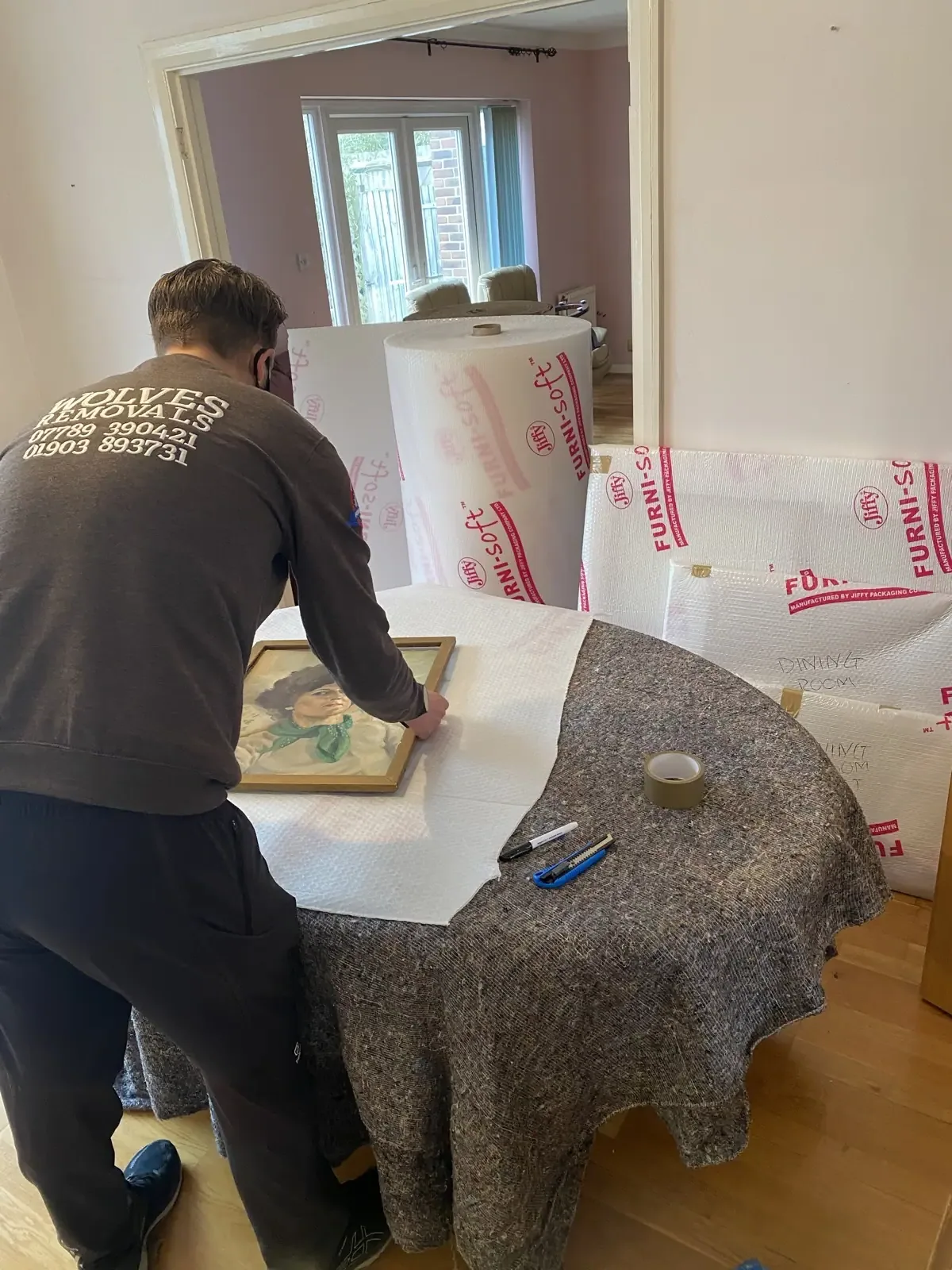
On the sales we work around, agents want a house photographed and viewed with its furniture in, so what happens first is a thinning, not a clearance. The surplus goes, personal things are gathered up, surfaces are cleared, and the pieces that show how each room is used stay until exchange. Anything left for the buyer is listed on the seller’s fittings and contents form and agreed in the contract.

Looking after the house while it is empty
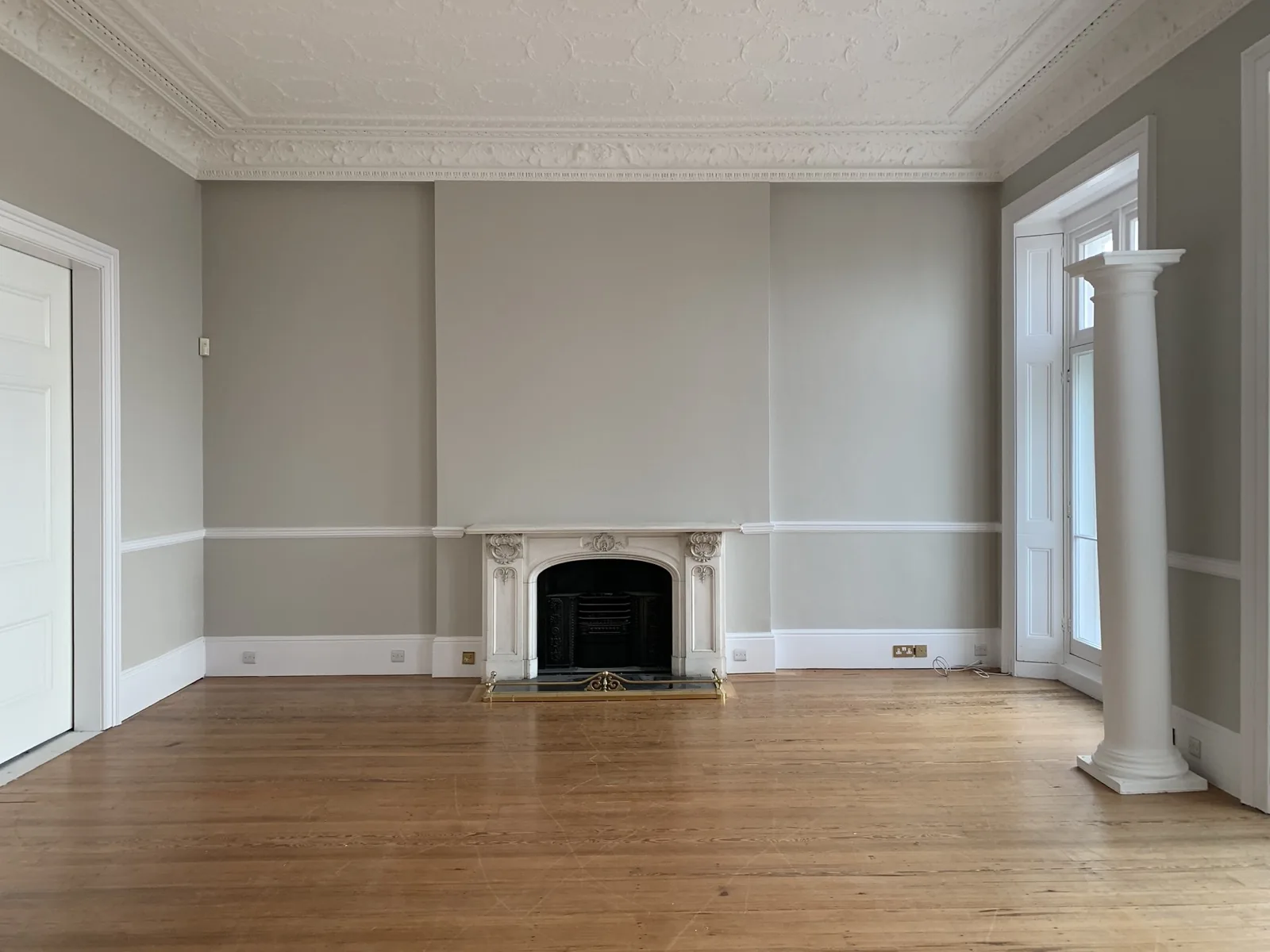
- Insurance. Tell the insurer. The Association of British Insurers says cover is restricted once a home has been empty for a set period, often 30 or 60 days.
- Council tax. No bill is due on a home left empty because the owner moved into a care home. Apply to the council. The exemption only covers a home no one lives in.
- Heating and water. The Met Office advises leaving the heating on low when a home is left, and knowing where the stop tap is.
- Post. Royal Mail redirection runs for 3, 6 or 12 months. An attorney cannot set it up online, and needs the Special Circumstances form.
The sale, step by step
The order we work to
Exchange of contracts is the point at which the sale becomes legally binding, and usually neither side can then pull out without paying compensation. Book the clearance for the days between exchange and completion, with a fallback date. A sale can fall through before exchange, and an empty house is harder to insure. Clearing what no one wants is a separate job: our house clearance service empties the whole property and buys what has a value. What the family keeps goes into long-term storage at our own Ashington warehouse.
The house is sold once. The furniture can wait in a container until somebody has a home for it.Why storage comes before the sale
Tax and money after the sale
If the house is not being sold yet
Some families keep the house for a while, for example because it is let, a relative stays on, or the decision is not ready. Independent Age says renting it out can be time consuming and there are costs involved. Once anyone lives there, the council tax exemption for an empty home stops. The room is still set up first, and family pieces still go to their people or into storage. The rest of this page applies whenever the sale comes. If your parent later moves between homes, our guide to moving from one care home to another covers that day.
About this guide. The rules described apply in England. Sources: the Care and Support (Charging and Assessment of Resources) Regulations 2014; the Care and Support (Deferred Payment) Regulations 2014; the Mental Capacity Act 2005; GOV.UK and the Office of the Public Guardian; HM Land Registry; HMRC; Age UK; Independent Age; the Association of British Insurers; the Met Office; Royal Mail; Citizens Advice. Checked in October 2026. This is general information, not legal, tax or financial advice.
The Wolves Removals Team
Family-run removals · Ashington, West Sussex
We have moved families and businesses across West and East Sussex, Surrey, Hampshire and Kent since 2016, from our Ashington base. We are fully insured, Checkatrade-verified and a LAPADA Approved Service Provider for antiques and fine art. More about us, or read our reviews.
Selling the Family Home When a Parent Moves Into Care — FAQs
Not always, and not straight away. In England the council ignores the home for the first 12 weeks after a permanent move, and altogether while certain people live there. It must offer a deferred payment if your parent has £23,250 or less in capital, not counting their share of the home, and the other conditions are met. The council’s financial assessment decides each case.
Only with authority. If she can make the decision, she signs. Otherwise someone with legal authority may be able to sell, in her best interests. That can be a registered property and financial affairs attorney, an attorney under a registered Enduring Power of Attorney, or a court-appointed deputy. The power or the court order must cover the sale. Take legal advice for a sale below value, to family, or of a jointly owned home.
A diagnosis alone does not decide it: capacity is checked for each decision. If they cannot decide and no Power of Attorney was ever made, a family member can apply to the Court of Protection to be a deputy. The application fee is £432.
The home is not counted in the means test if certain people lived there before the move and still do: a partner, a relative aged 60 or over or incapacitated, or your parent’s child under 18. The council tax exemption for an empty home does not apply while anyone lives there.
No. The move and the sale are separate, and the council does not count the home for the first 12 weeks after a permanent move. Set the room up first, then deal with the house at the sale’s pace.
On the sales we work around, no: agents have wanted a tidy, thinned, furnished house. We move family pieces and the undecided into storage first, and leave the furniture that shows the rooms until exchange.
Yes, with no end date. The containers are inventoried and sealed before they go into our Ashington warehouse. Each person’s share is kept apart, so one household’s pieces can go without waiting for the others.