How to Move a Fridge or Fridge Freezer
After moving a fridge, stand it upright and leave it unplugged before you switch it on: UK manufacturers ask for up to 6 hours if it travelled upright, and up to 24 hours if it lay down.

Check your manual for the exact time.
The quick answer
Travelled upright
Up to 6 hrs
wait before you switch it on
Travelled lying down
Up to 24 hrs
wait before you switch it on
Once it’s on
Up to 12 hrs
to get cold enough for food
No manual? Wait 6 hours if it stayed upright, or 24 hours if it lay down. Those are the longest waits we found.
Source: eight appliance manufacturers’ UK advice, checked October 2026.
How long should you leave a fridge after moving it?
Makers don’t agree. We looked at the UK advice from eight of them.
What eight manufacturers say
Each dot is one maker’s wait. Where two agree, their dots overlap.
If it travelled upright
Straight away to 6 hours
If it travelled lying down
About 2 to 24 hours
Some give one figure for any position, so they appear in both rows. One that says 3 hours asks for 24 if it lay down for more than a day.
Can’t find the manual? Search online for your model number and the word “settle”. Or use the longest wait for how it travelled: 6 hours upright, 24 hours lying down. Waiting longer only means it gets cold later. Switching on too soon is the risk.
Why do you have to wait before switching a fridge on?
A fridge is cooled by a pump called a compressor, which sits in oil. When a fridge is tipped or shaken, some of that oil can run into the thin cooling pipes. Switch it on too soon and, one maker warns, the oil can cause a blockage. Standing it upright gives the oil time to drain back.
The charity Electrical Safety First agrees. It says a fridge freezer that has been moved a lot may need time to settle before it is switched on.
Can you lay a fridge freezer on its side or back?
On its side, yes, if it can’t stay upright. The back is where makers disagree.
Which way up?
Upright
BestAlways the first choice.
On its side
If you mustThe usual second choice. One maker says keep the pipes at the back on top.
On its back
Check manualMakers disagree. Two say never. One says use the back.
On its front
AvoidOne maker rules it out. None we checked recommend it.
So check your manual before it goes down, and note the time. The longer it lies down, the longer it needs to stand. In our experience, a fridge laid down rests its weight on a door edge and the hinges. It can arrive working fine but no longer sealing.
How do you get a fridge ready to move?
Start before moving day. It can’t all be done on the morning.
Getting your fridge ready
A week before
- Eat the food down. Don’t leave yourself a full freezer the night before.
The day before
- Switch it off and empty it.
- Defrost it if it isn’t frost-free. Put towels down: in our experience the water ends up under the fridge, not in the tray.
- One maker says it should be at room temperature before it moves. That can take several hours.
Before it moves
- Take out the shelves, drawers and door racks. Wrap and pack them on their own.
- Tape or strap the doors shut so they can’t swing open.
Can you keep food cold in it during the move? Not really. Here is what the Food Standards Agency says about a power cut:
How long food stays cold with the power off
Food Standards Agency power-cut advice. Doors kept shut, appliance left where it is.
Fridge: up to 4 hours
Keep it at 5°C or below.
Freezer, half full: up to 24 hours
Freezer, full: up to 48 hours
A fridge that has been emptied, defrosted and carried to a van is a different story. Plan to run the food down instead.
How do you move a fridge freezer on moving day?
A full-size fridge freezer is a job for two people. It’s heavy at the top and has nothing to hold on to. The HSE says the law sets no weight limit for lifting, but advises planning the lift and using equipment.
On moving day
HSE manual-handling advice, plus our own crews’ practice.
Before it moves
Plan the lift: the route, and where it ends up
Clear the whole route, front door included
Put floor protection down first, all the way
Moving it
Use a sack trolley with a strap
Side of the fridge against the trolley, never a door
Two people. Lift it over steps, never drag it
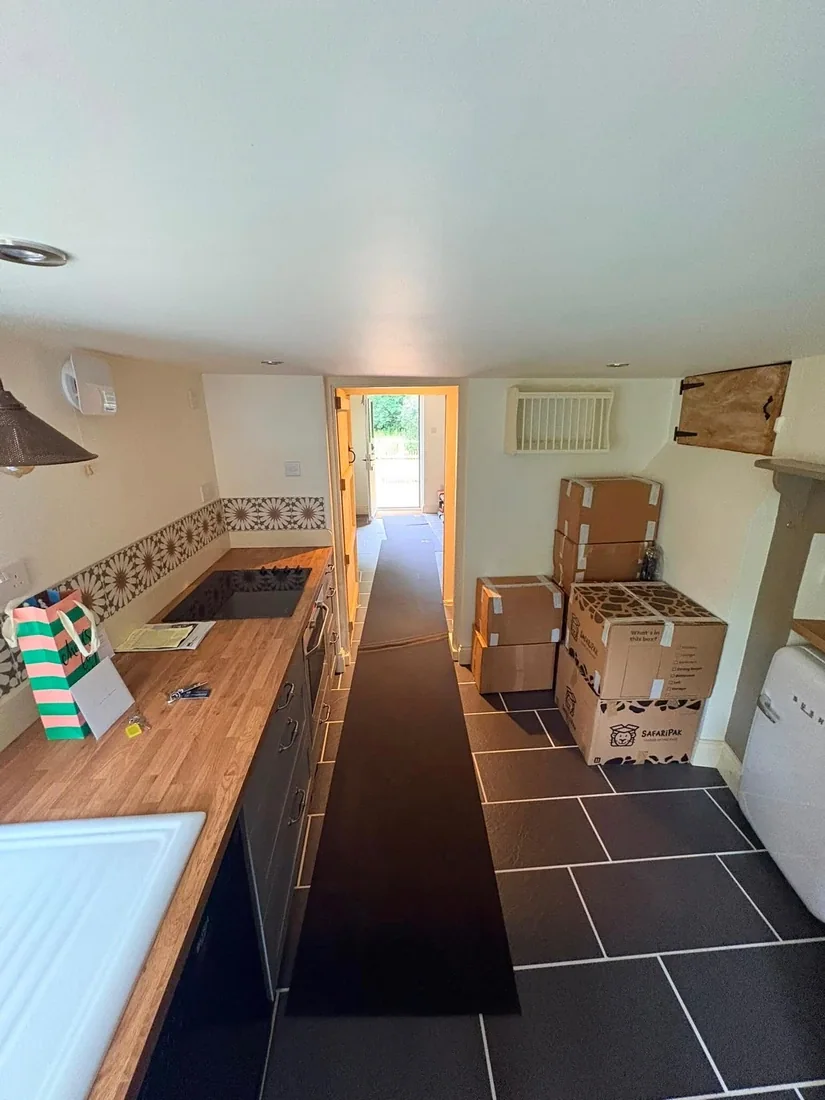
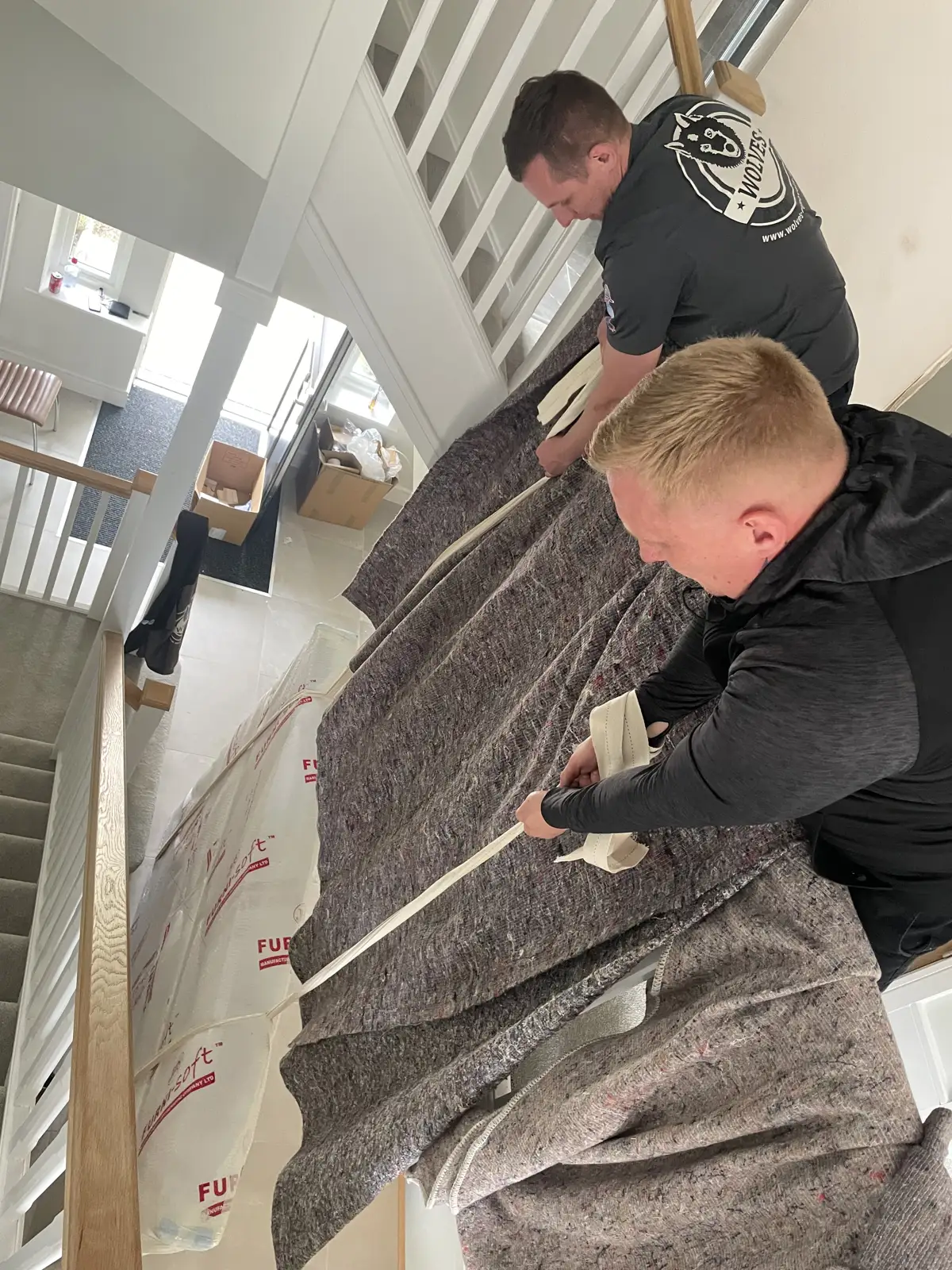
Never drag it. In our experience the feet scratch a wooden floor in one go, and a bump down a step can crack tiles. In the van, it stands upright against the side, strapped to a rail, with blankets wherever it could touch something hard. Load it last and unload it first, so nothing is stacked against it and it can start standing sooner.
Will an American fridge freezer fit through the door?
Often only edge-on: typical models are about 900mm wide but only 700–735mm deep. Measure before moving day.
Will it go through the door?
- Fridge
Typically 900–913mm wide, 700–735mm deep, about 1.8m tall.
- Door
New homes in England: at least 750–800mm of clear space.
- So
Face on, it won’t go. Turned edge-on, it can, just.
Drawn roughly to scale. Sources: Approved Document M, Table 1.1; one manufacturer’s typical sizes.
The clear space is smaller than the door. It’s the gap between the open door and the frame or door stop opposite. Building rules count a standard 826mm door as giving 775mm of clear space. Older homes don’t have to meet these sizes, so measure yours, and measure the fridge’s depth including the handles. If it’s tight, the fridge doors sometimes come off, or the door stop on the frame.
Check the stairs too: the turn at the bottom, and the headroom. New stairs need at least 2m of headroom, and the fridge is about 1.8m tall. The same thinking applies to getting a sofa through a window or moving a wardrobe.
How do you move an integrated or plumbed-in fridge?
Integrated fridges are built into the kitchen units, with a cabinet door fixed to the front. Take the cabinet door off first, then unscrew the fridge from the unit. Bag and label the brackets and screws, and keep them with it. If your new kitchen wasn’t built for the same fridge, it may not fit at all. Check that weeks before.
Plumbed-in fridges, usually American-style ones with ice or water, have a water pipe behind them. The law says home water systems need servicing valves so the water can be shut off for repairs. In our experience, the pipe needs turning off, disconnecting and draining before the fridge moves. Our crews don’t disconnect a hard-plumbed water pipe or anything gas-fed. That’s a job for the right trade. Mention it when you ask for a quote.
What should you do at the new house?
Put it in its final spot straight away, so the wait starts at once. Two makers say it can take up to 12 hours to get cold after you switch it on.
At the new house
Your manual, Electrical Safety First, the Food Standards Agency and GOV.UK.
Switching it on
Upright and unplugged for the wait in your manual
Plug into a wall socket, not an extension lead
Leave a gap behind it so air can flow
Before the food goes in
Fridge between 0 and 5°C, freezer about −18°C
Register it for recall alerts, or check the recall list
What goes wrong when moving a fridge?
Most damage comes from rushing.
Five things we see go wrong
- It was still full and frozen on moving morning, because nobody started the day before.
- The glass shelves stayed inside, and one broke.
- The floor got scratched on the way out, usually within a metre of where it stood.
- It was laid on its door, and arrived working but no longer sealing.
- It was plugged in the moment it arrived, because the kitchen looked ready and the wait felt like fuss.
How do you get rid of an old fridge?
If it isn’t coming with you, there are three options.
Getting rid of the old one
Buying a new one?
Shop take-backShops must take back your old one when you buy a similar new one, and give you at least 28 days to bring it in. Some use a council-site scheme instead. They can charge to collect from your home.
Council collection
Usually a feeGOV.UK says most councils will collect fridges and other large items for a fee.
Paying someone?
Check the registerYou must check they are a registered waste carrier. Old fridges count as hazardous waste: the coolant and foam may be harmful.
Do removal companies move fridge freezers?
Yes, as part of a house move. Tell us at the survey if there’s a large or American-style fridge, because it changes the plan. The time is planned and priced into your written quote.
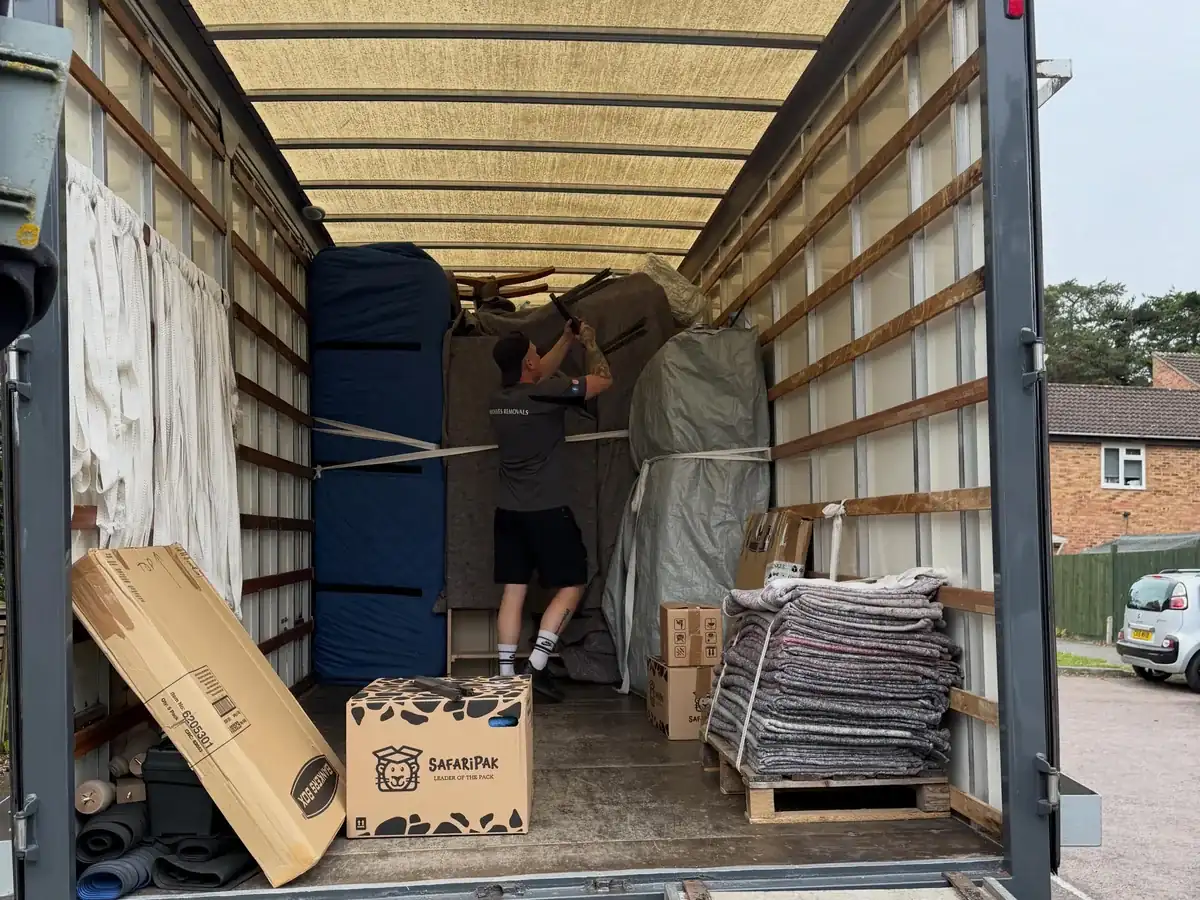
We measure the route before anything is unplugged and protect the floor the whole way. Shelves come out rather than trusting tape. The fridge goes on a strapped sack trolley with two people. It travels upright, comes off first at the other end, and goes straight to its spot. By the time everything else is in, most of the wait is already done.
Our house removals page covers what a survey looks at. The full packing service covers the rest of the kitchen, and our guide to preparing a washing machine or dishwasher covers the other big appliances.
About this guide. Waiting and cooling times come from eight appliance manufacturers’ UK advice, checked in October 2026. We don’t name them, because each one’s advice is for its own fridges. Other sources: Approved Documents M and K (England), the HSE, the Food Standards Agency, Electrical Safety First, the Water Supply (Water Fittings) Regulations 1999 and GOV.UK. Every fact was checked twice against its source. The practical advice comes from our own crews.
The Wolves Removals Team
Family-run removals · Ashington, West Sussex
We have moved families and businesses across West and East Sussex, Surrey, Hampshire and Kent since 2016, from our Ashington base. We are fully insured, Checkatrade-verified and a LAPADA Approved Service Provider for antiques and fine art. More about us, or read our reviews.
How to Move a Fridge or Fridge Freezer — FAQs
Check your manual. UK manufacturers ask for anything from no wait to 6 hours if it travelled upright, and about 2 to 24 hours if it lay down. With no manual, wait 6 hours if it stayed upright and 24 if it lay down.
Tipping or shaking a fridge can push oil from its pump into the cooling pipes. Switching on too soon risks a blockage. Standing it upright lets the oil drain back first.
On its side, yes, if it can’t stay upright. Upright is best. Two of the eight makers we checked say never on its back, but one says to use the back. So check your manual first.
Only if it’s frost-free. Otherwise, one maker says, defrost it first. In our experience, ice left inside melts and leaks on the way. Start the day before, with towels down.
Not face on. Typical models are 900–913mm wide, and new homes need only 750–800mm of clear space. Turned edge-on, on its 700–735mm depth, it usually goes, with little to spare. Measure the gap, not the door.
Two makers say up to 12 hours. The Food Standards Agency says a fridge should be between 0 and 5°C and a freezer about −18°C. Put food back once it gets there.
Yes, as part of a house move. You empty and defrost it, and the shelves come out. The crew secures the doors, protects the floor and moves it upright on a sack trolley. Our crews don’t disconnect hard-plumbed water pipes or anything gas-fed.